


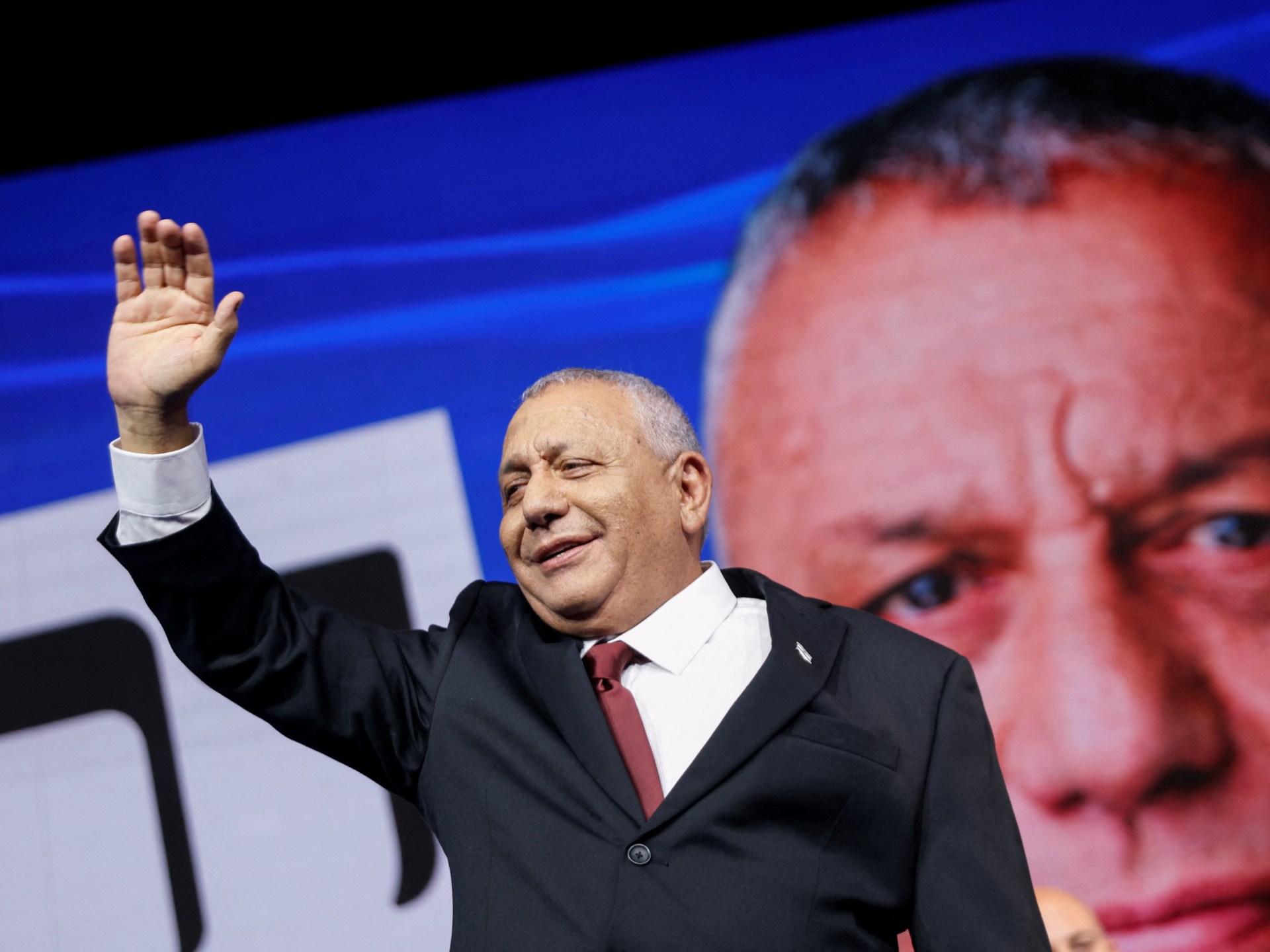
Israeli President Appoints Gadi Eisenkot to Form New Government
In a significant political development following the October 27 general election, Israeli President Isaac Herzog has designated Gadi Eisenkot as the candidate to form the next government. This decision comes after Herzog consulted various political parties, ultimately favoring Eisenkot over former army chief Benjamin Netanyahu.
Consultation Process and Political Landscape
President Herzog held discussions with multiple political factions to determine the most viable candidate for government formation, as neither Eisenkot’s bloc nor Netanyahu’s coalition achieved a majority in the recent election. Eisenkot, leading the Yashar party, received endorsements from 67 lawmakers, including support from Arab-led parties, compared to the 46 votes backing Netanyahu.
Forming a Coalition
Eisenkot now faces the challenge of assembling a coalition that secures at least 61 seats in the Knesset, the Israeli parliament, within a 28-day timeframe, with a potential 14-day extension available. His alliance secured 48 seats in the election, while Netanyahu’s right-wing coalition claimed 53, leaving both short of the needed majority. Notably, Arab-led parties recorded their highest representation, winning 19 seats.
Despite having sufficient support from Arab parties for a broader coalition, Eisenkot has expressly stated he will not collaborate with them. Instead, his strategy may involve negotiating with two ultra-Orthodox parties, Shas and United Torah Judaism, which could bring him to the requisite majority of 61.
Opposition Dynamics
The political climate is tense, with potential opposition from Netanyahu’s bloc seeming likely. Al Jazeera correspondent Nour Odeh suggested that Eisenkot’s challenge lies in fulfilling his campaign promises while navigating the complex landscape of opposition from Netanyahu’s faction. If Eisenkot fails to establish a functional government in the allotted time, Herzog will be obliged to appoint another candidate, with the process potentially leading to new elections if unsuccessful.
Comments on the Situation
Ahmad Tibi, a prominent figure in the Joint List of Arab parties, remarked on Herzog’s predictable choice of Eisenkot, expressing concerns about a possible national unity government but emphasizing the need to prevent Netanyahu from retaining power. He suggested that Eisenkot might gravitate toward a minority government, leaning on external Arab support, which, although not ideal for the Arab parties, remains preferable to the current government led by Netanyahu.
In the backdrop of these developments, Netanyahu has articulated his stance against a government reliant on Arab parties, asserting that such an arrangement would undermine Israel’s stability, while Tibi countered that historical actions by Netanyahu showcase a more troubling legacy of violence.
Conclusion
The situation in Israel remains highly fluid as Eisenkot embarks on the critical task of coalition-building. With both internal and external pressures shaping his approach, the days ahead will be crucial in determining the trajectory of Israeli governance and the effectiveness of the upcoming administration.