


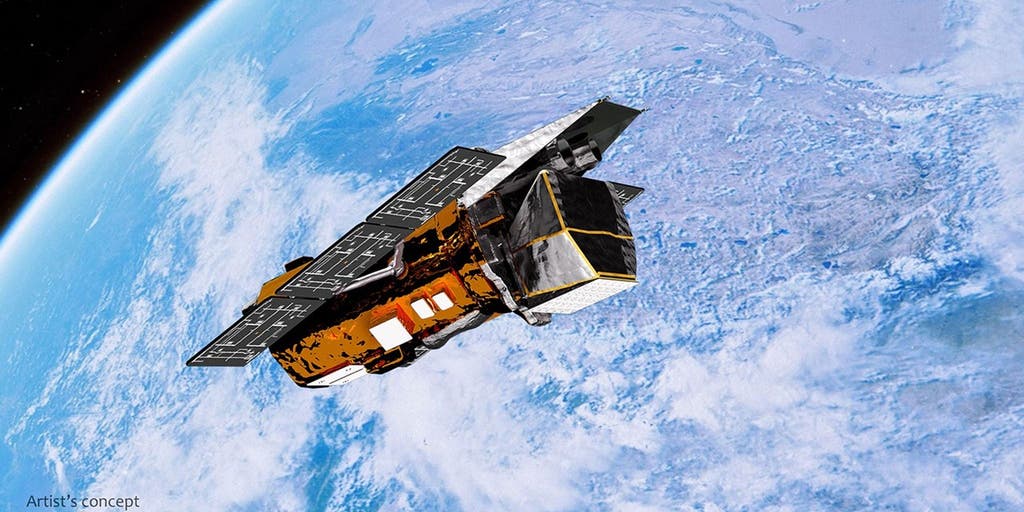
NASA’s Swift Observatory Nears the End of Its 22-Year Journey
A significant event is imminent as NASA’s Neil Gehrels Swift Observatory is expected to re-enter Earth’s atmosphere today. This marks the end of an era for the satellite, which has been operational for nearly 22 years since its launch in 2004.
Final Observations and Achievements
Swift’s last observational data was collected on October 20, 2023. Originally designed to operate for just two years, the mission has far exceeded its lifespan, contributing invaluable insights into some of the universe’s most energetic phenomena, particularly gamma-ray bursts.
The Journey of Swift
Swift was launched to explore massive cosmic explosions, paving the way for discoveries about the behavior of supermassive black holes, active galaxies, and various stellar events. Over its operational lifetime, the observatory has dramatically enhanced our understanding of phenomena such as supernovae, comets, and asteroids within our solar system.
Re-Entry Information
The spacecraft, weighing approximately 3,200 pounds, is predicted to re-enter the atmosphere within hours. While most of its structure is anticipated to disintegrate during the descent, some fragments may survive the journey through the Earth’s atmosphere.
Safety Considerations
NASA and the U.S. Space Force have been monitoring the situation closely. Thankfully, they report that the risk to individuals on the ground from the re-entry is minimal.
Looking Ahead
The re-entry of the Swift Observatory signals the culmination of a remarkable scientific endeavor. As researchers and astronomers reflect on the wealth of knowledge gained over the years, they continue to look toward future missions like the upcoming Nancy Grace Roman Space Telescope, which aims to tackle pivotal questions in dark energy, infrared astrophysics, and more.
For ongoing updates regarding the re-entry of the Swift Observatory, stay tuned to NASA’s official channels.
Image Gallery
Completed Swift Spacecraft at NASA Goddard
(NASA / NASA)
Artist’s Concept of Swift Observatory in Orbit
(NASA’s Goddard Space Flight Center Conceptual Image Lab / NASA)
