


The Rise and Fall of NFT Platforms: Analyzing Blast and Blur
Blast: From Billions to Closure
Once a prominent player in the NFT landscape, Blast attracted over $2 billion in assets by implementing attractive rewards for users who deposited funds. However, this figure dwindled significantly to around $32 million at the time developers announced the platform’s closure. The reason cited was a stark reality: the operational costs exceeded its revenue generation.
Blur: A Rapid Ascent
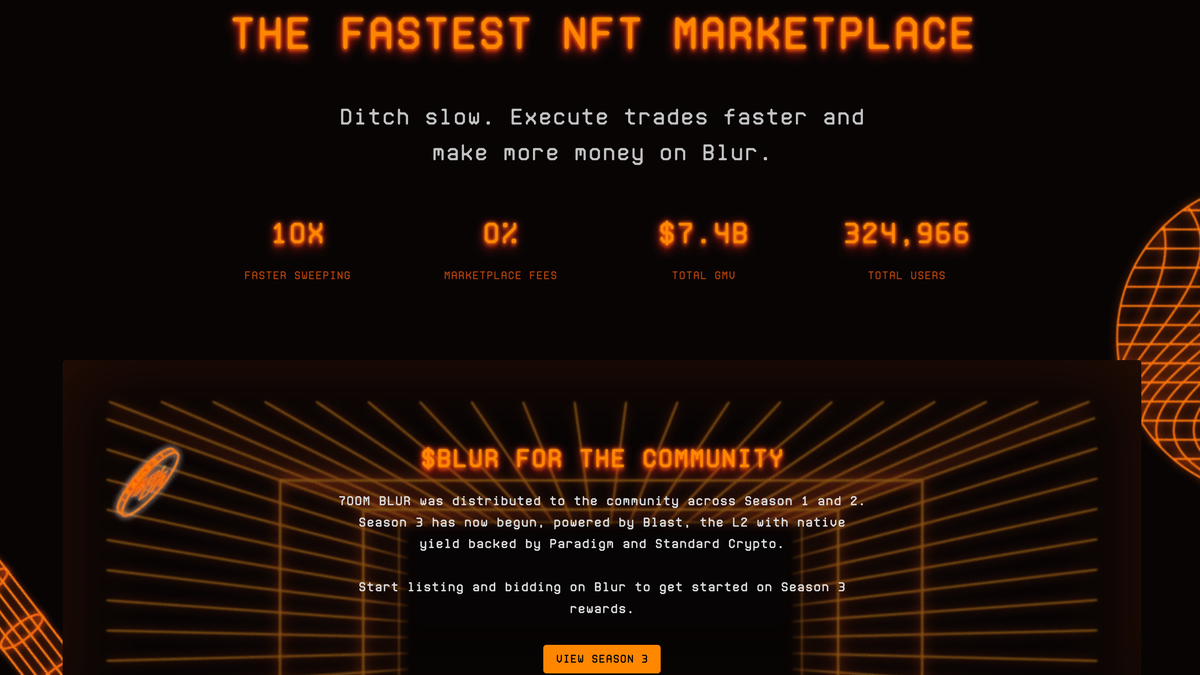
Launched in 2022, Blur quickly emerged as a contender, taking on the leading platform, OpenSea. With a focus on serving professional traders, Blur offered benefits such as expedited transactions, minimal fees, and token rewards.
Due to this strategic positioning, Blur captured over 70% of Ethereum’s NFT trading volume in March 2023, amassing around $1.43 billion in trading activity, according to data from DefiLlama.
Declining Activity and Revenue Challenges
Fast forward to March 2026, and the landscape had changed dramatically. Blur’s monthly trading volume fell to below $7 million, marking a staggering decline of more than 99.5% from its peak.
Despite the high trading activity, Blur did not generate any revenue from transaction fees during this period. Records from Token Terminal show zero protocol revenue over the past three years, despite the billions exchanged in NFT trades. Nonetheless, it remains unclear whether the platform profited from its lending services or other revenue streams.
Controversies and Criticism
Blur’s aggressive incentive schemes have faced scrutiny for fostering speculative trading behaviors. Critics have raised concerns about the potential impact on royalty payments to NFT creators. Furthermore, the trading statistics do not clarify how much of the activity stemmed from legitimate buyers versus traders looking to capitalize on reward systems.
