


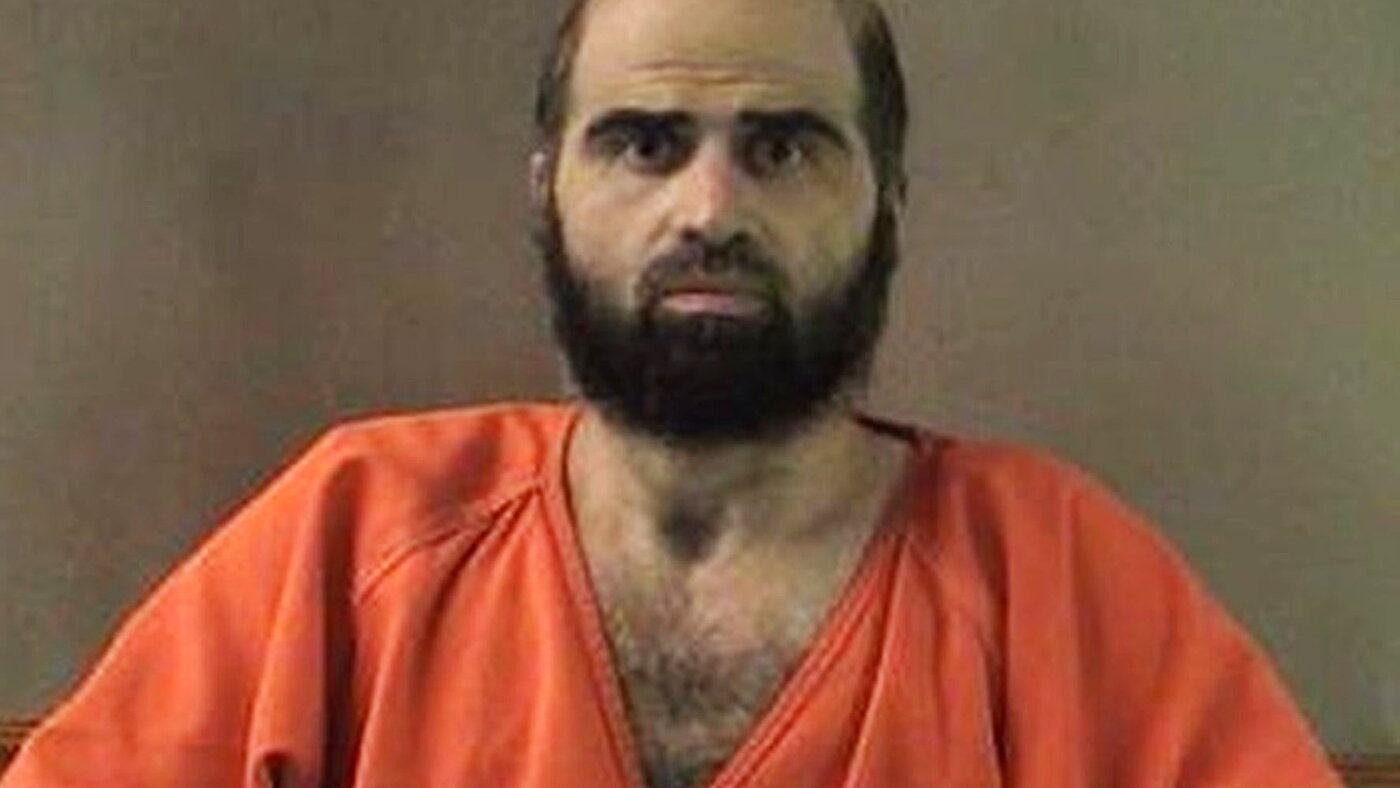
Livestream Execution of Nidal Hasan: A First in Military History
In a remarkable move, the Pentagon has announced that the execution of Nidal Malik Hasan, who was convicted of the 2009 Fort Hood shooting, will be broadcast live to the public. This unprecedented decision marks a significant moment, as it represents the first instance of a military execution in more than 65 years.
The Execution Announcement
The Army confirmed this week that Hasan’s execution is scheduled for December 3 at Fort Hood. Hasan was found guilty of killing 13 individuals and injuring 32 others during the mass shooting at the military base. Defense Secretary Pete Hegseth discussed the intention to make the execution public during an interview, stating, “We’ll make sure that people are able to watch it, that it’s public.” The Pentagon later clarified that it would indeed be livestreamed.
Public Reactions and Legal Perspectives
The decision to allow live viewing has sparked a range of reactions. Legal experts have expressed mixed feelings about the implications of such a public execution. Some see the potential for greater transparency around capital punishment processes, particularly in light of recent controversies, such as a botched execution in Tennessee.
- Deborah Denno, a death penalty expert, believes that livestreaming could illuminate the complexities of capital punishment.
- Brenner Fissell from Villanova Law noted that firing squads are increasingly seen as a more humane alternative to lethal injections, which have faced significant procedural challenges.
- Conversely, Elisabeth Semel from UC Berkeley raised concerns about the motivations behind the government’s decision, questioning the ethical implications of such a spectacle.
Challenges and Delays
There remains uncertainty regarding whether Hasan may choose to challenge his execution. Legal experts caution that he could file a habeas petition, which might delay the process significantly. Eugene R. Fidell, a military law specialist, noted that such actions might extend beyond the current administration’s term, introducing further complexity into the execution timeline.
Background on Nidal Hasan
Nidal Hasan, once a major in the U.S. Army, perpetrated the Fort Hood shooting by opening fire on soldiers awaiting medical treatment, yelling “Allahu akbar” during the attack. He was subsequently paralyzed from the waist down after being shot by law enforcement during the incident and has since used a wheelchair.
Hasan’s trial in 2013 was marked by his decision to represent himself, which effectively limited his defense strategy. He did not call any witnesses and seemed intent on achieving the death penalty. Legal counsel has raised concerns about Hasan’s access to representation and his rights as the execution date approaches.
Historical Context and Future Implications
The last military execution in the U.S. was in 1961, and the imposition of the death penalty in military contexts remains controversial. Hegseth noted that the last execution via firing squad occurred during World War II, highlighting the shift in methods of execution over the decades.
As discussions regarding capital punishment continue to evolve, the upcoming event raises numerous questions about legal ethics, public accountability, and the very nature of justice in America.
