


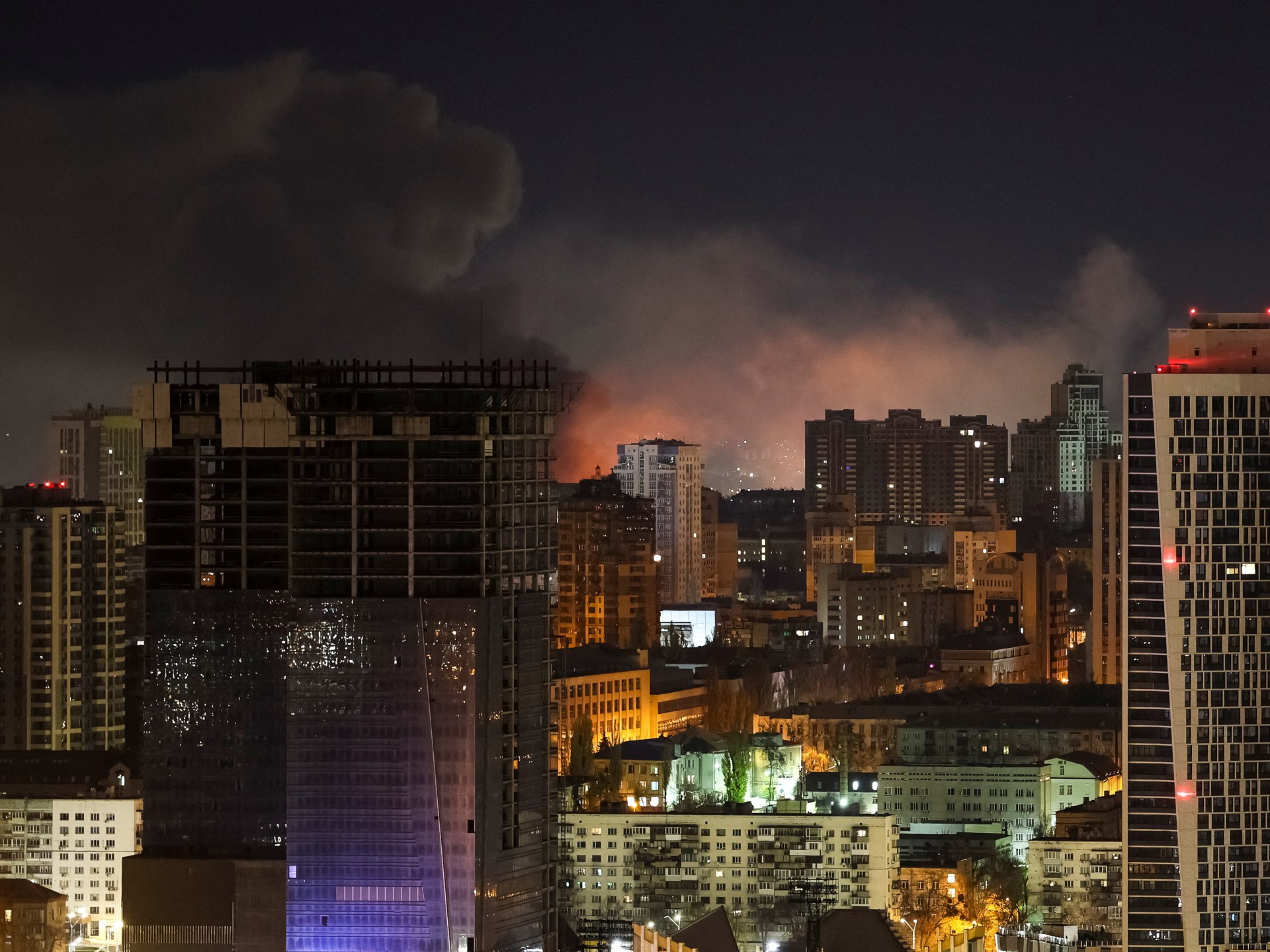
Russia Launches Wave of Air Attacks on Ukraine, Resulting in Casualties
In a significant escalation of hostilities, Russia has orchestrated a series of air strikes across Ukraine, leading to the deaths of eight individuals, including six in Kyiv. The attacks, which occurred overnight from Thursday into Friday, primarily targeted critical infrastructure such as transport bridges and power generation facilities.
Details of the Attacks
According to reports from Ukrainian officials, the air strikes hit essential transport bridges spanning the Dnipro River in Kyiv, causing substantial damage and prompting traffic restrictions. As a result, several regions experienced widespread power outages.
Kyiv Mayor Vitali Klitschko confirmed that crucial infrastructure, including the Podilskyi, Darnitskyi, and Southern bridges, suffered damage from ballistic missiles. Furthermore, the Kyiv City Military Administration reported that both buildings and logistics infrastructure were struck, exacerbating the city’s electricity shortages.
Casualties and Infrastructure Damage
The Ukrainian Prime Minister, Sergii Koretskyi, stated that aside from the fatalities, 28 individuals were injured during the assaults. Elsewhere in the country, one person was reported dead as a result of a strike on a hospital in the Zaporizhia region.
The attacks coincided with a previous threat from Russian President Vladimir Putin, who vowed retaliation following Ukraine’s recent targeting of the Kerch Bridge, a crucial link between Russia and the annexed Crimean Peninsula. Putin described the damage to the bridge as “seriously damaged” and committed to its reconstruction.
Military Objectives and Responses
The Russian Defense Ministry stated that the air strikes were directed at road and rail bridges in Kyiv, which are purportedly used for transporting military supplies. Additional goals included defense industry facilities and energy infrastructure across multiple regions.
In response to the ongoing conflict, Ukraine has also ramped up its military operations, targeting Russian energy and military assets. A Ukrainian drone strike reportedly caused damage to an industrial facility in Russia’s Smolensk region, as part of a broader campaign to disrupt Russian operations.
International Reactions and Diplomatic Efforts
The recent hostilities reflect the stagnation in US-led initiatives to secure a ceasefire. US envoy Jared Kushner indicated that there is a willingness on Russia’s part to involve European nations in negotiations. Ukrainian President Volodymyr Zelenskyy expressed hope for closer cooperation between Ukraine, the United States, and European nations to address the ongoing conflict.
However, Russian Deputy Foreign Minister Sergey Ryabkov reiterated Moscow’s stance against any form of Ukrainian NATO membership, deeming it “unacceptable.” He emphasized the need for discussions surrounding security guarantees for Russia’s sovereignty without the inclusion of Ukraine as a NATO member.
Conclusion
The situation remains tense as both nations continue to engage in military actions while diplomatic efforts struggle to gain momentum. The international community watches closely as the conflict unfolds, with implications reaching far beyond the region’s borders.