


Reflect Orbital’s Night Illumination Project Raises Concerns
Stunning Nighttime Display Captivates Locals
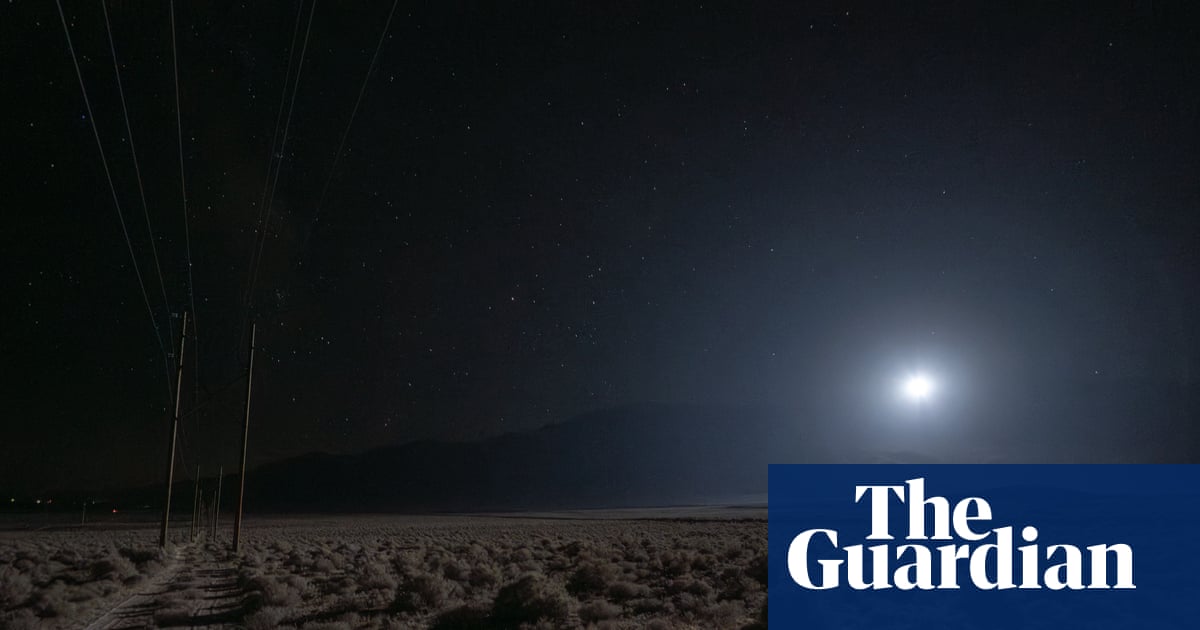
In the rural expanses of California, residents were surprised by an unusually bright light emanating from the Sierra Nevada mountains, casting a glow over the desert terrain below. This phenomenon turned out to be a demonstration of a revolutionary project by Reflect Orbital, a startup with ambitions to develop a system of satellites capable of illuminating Earth during the night.
Project Overview and Initial Demonstration
The demonstration, held near Lone Pine, showcased the aspirations of Reflect Orbital to deploy 50,000 satellites equipped with mirrors that will reflect sunlight back to specific locations on Earth. With the Federal Communications Commission (FCC) approving their proposal in July, the company plans to launch a demonstration satellite next year featuring a large 59-foot mirror designed to beam sunlight across a three-mile radius, ranging from moonlit levels to noon-like brightness.
Applications of the Technology
This innovative approach aims to assist in various practical applications, including:
- Enhancing search-and-rescue operations during nighttime.
- Providing additional light for agricultural needs.
- Replacing malfunctioning streetlights.
- Support for military operations through solar power accessibility.
Reflect Orbital’s spokesperson mentioned, “Search-and-rescue teams are expected to be our first customers, so this was a real-world test conducted alongside teams who would use our technology.”
Environmental and Astronomical Concerns
While some view this technology as groundbreaking, a coalition of environmentalists and astronomers has expressed significant skepticism. Critics argue that such large-scale implementation could disrupt natural cycles, impacting ecosystems and human health. Jan Hasselman, a senior attorney at Earthjustice, warned, “There are a huge number of unresolved questions and significant potential impacts… messing with this is not a good idea.”
Concerns raised include:
- Alteration of the natural day-night rhythm affecting wildlife behavior.
- Increased light pollution harming astronomical research.
- Potential health impacts on humans due to disrupted circadian rhythms and eye strain from intense light sources.
Industry and Scientific Reactions
In light of these concerns, four groups represented by Earthjustice have formally requested a reconsideration of the FCC’s approval. They caution against the unforeseen consequences of admitting numerous mirrored satellites into orbit, which could lead to a surge in satellite launches, exacerbating space debris issues.
Nonetheless, Reflect Orbital asserts that their technology could actually promote environmental benefits by enhancing solar panel efficiency and reducing reliance on fossil fuels. The company has indicated an openness to collaborating with scientists and local communities to address potential concerns.
Conclusion
The ambitious plans by Reflect Orbital illustrate the conflict between technological advancement and environmental preservation. As their project develops, ongoing dialogue among stakeholders will be essential to navigate these complex issues, ensuring that innovative solutions coexist harmoniously with the natural world.
