


Supreme Court Greenlights Border Wall Construction in Texas
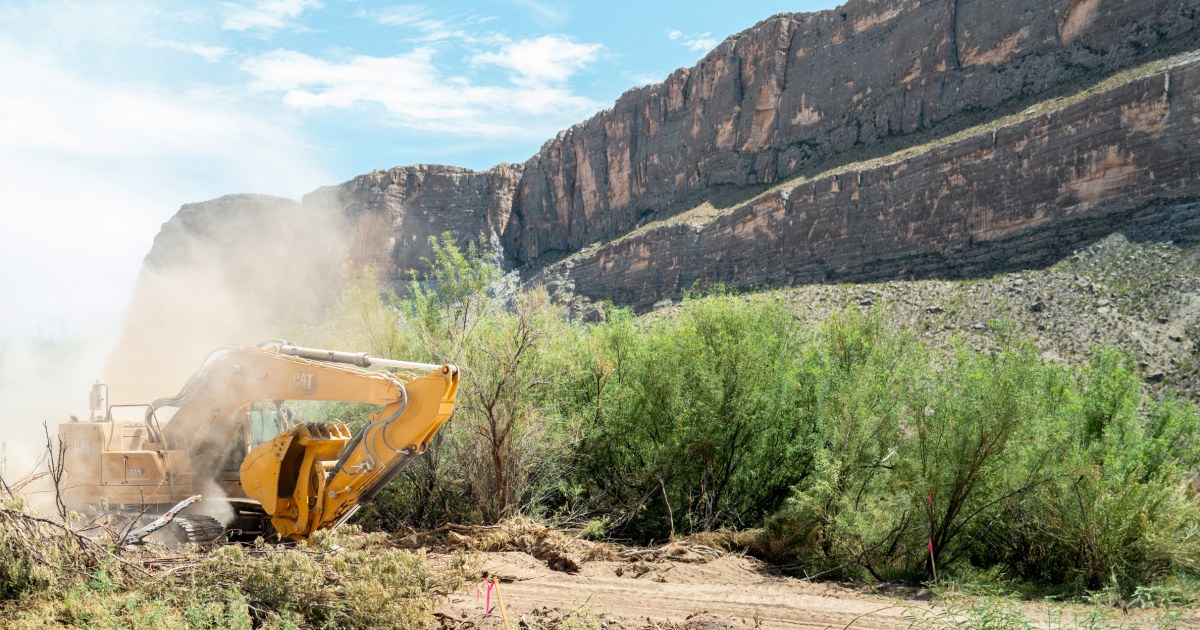
On a recent Monday, the U.S. Supreme Court permitted the Trump administration to advance with the construction of a border wall in the Big Bend area of southwest Texas, a region known for its remote and environmentally sensitive landscapes.
Background of the Legal Challenge
The move to construct in this area faced opposition from environmental advocates and local residents, who argue it poses threats to the environment and heritage sites.
The Supreme Court’s ruling overturned a prior injunction from a federal district judge in Texas that aimed to halt construction during ongoing legal proceedings.
Supreme Court’s Ruling
In an unsigned five-page opinion, the justices asserted that the lower court’s ruling lacked authority, indicating that the administration was “extremely likely to prevail” on this legal matter. The Court highlighted the government’s strong interests in matters pertaining to border security.
Of the nine justices, only Justice Ketanji Brown Jackson dissented.
Context of Border Security Needs
The specific section adjacent to the Rio Grande, characterized by sparse population, has seen approximately 89,000 detentions related to unauthorized entry into the United States in recent years. Critics, including the Center for Biological Diversity and local groups, argued that the wall’s construction could endanger unmatched ecosystems and historical landmarks.
Reactions to the Decision
Laiken Jordahl, a lawyer representing the environmental group, expressed dismay at the ruling, stating, “This horrific decision clears the way for contractors to bulldoze pristine desert and dynamite canyon walls before the courts have even decided whether this destruction is legal.”
Conversely, James Percival, General Counsel of the Department of Homeland Security, welcomed the Supreme Court’s decision. Percival remarked on X, “When we filed in the Supreme Court, I called the district court’s order halting wall construction ‘as unprecedented as it is flawed.’ We just won 8-1.”
Details of the Proposed Construction
The planned construction involves a significant stretch, estimated at 341 miles, overlapping with parts of Big Bend National Park. The legal complexities revolve around waivers issued by former Homeland Security Secretary Kristi Noem and her successor, Markwayne Mullin, which allowed the government to bypass certain environmental regulations.
Solicitor General D. John Sauer argued in a court filing that a 1996 law authorizes broad governmental powers for constructing border infrastructure without extensive bureaucratic delays.
Counterarguments by Opponents
Challengers of the project maintained that moving forward with wall construction could lead to irreversible changes to an unparalleled landscape and jeopardize significant cultural and historic resources. They pointed out that the Big Bend area records some of the lowest rates of migrant apprehensions along the border, countering the administration’s claims of urgency.
Conclusion and Looking Ahead
Previous judicial challenges have stalled construction plans, but the Supreme Court’s ruling marks a pivotal moment in Trump’s ongoing commitment to border security, a key pillar of his administration’s immigration policy since the outset of his first presidential campaign in 2016. Officials cautioned that without completing the border wall in the Big Bend region, other sections may become vulnerable to illegal border crossings.
Enhanced by funding from a Republican-controlled Congress, the administration is focused on fulfilling its vision of a secure border through the installation of various security measures, including steel panels, vehicle barriers, and advanced surveillance systems.
