


Tether’s Gold Holdings Face Temporary Decline Amidst Market Fluctuations
(Kitco News) – Over the last few years, the emergence of digital gold has significantly influenced the traditional gold market. However, recent price fluctuations have impacted various players in this newly developed sector, including Tether, a leading stablecoin issuer, which reported a reduction in its physical gold reserves.
Overview of Tether’s Gold Holdings
In a recent announcement, Tether disclosed that its physical gold reserves decreased during the third quarter of the year. Analysts express cautious optimism, suggesting that this change does not necessarily indicate a halt in the company’s ongoing interest in acquiring the precious metal.
Details of the Decline
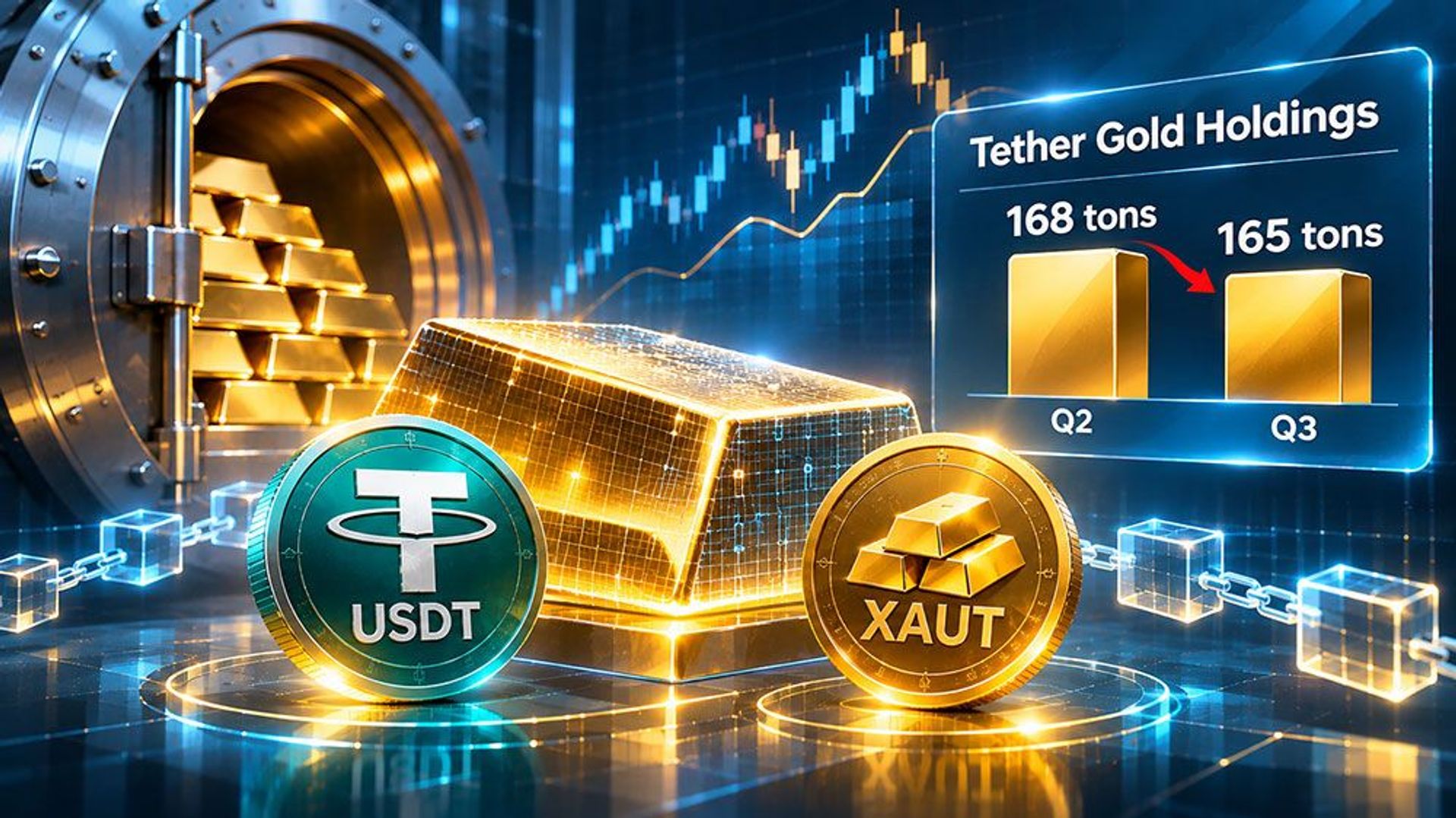
A report by Jefferies, led by analyst Fahad Tariq, revealed that Tether’s gold reserves fell by approximately three metric tons, decreasing from 168 tons at the end of June to 165 tons by September. This reduction follows a significant purchase of about 14 tons in the prior quarter.
This marks the first quarterly decline in Tether’s gold holdings since it began to emerge as a key player in the physical gold market in the previous year. Notably, Tether issues USDT, which is the world’s largest U.S. dollar-pegged stablecoin, alongside XAUT, a digital token supported by physical bullion.
State of USDT’s Gold Backing
As per Tether’s latest reserve disclosures, its gold reserves backing USDT diminished by 3.4 tons, resulting in a total of 142.8 tons by the end of September. Meanwhile, the gold supporting the XAUT token remained stable at approximately 22 tons.
Despite the observed decline, Jefferies’ analysis indicates an enduring confidence in Tether’s commitment to the gold market. “We do not view one quarter of modest selling as evidence of a change in Tether’s broader appetite for gold,” the analysts commented. They consider stablecoin reserves and tokenized gold as emerging avenues of institutional demand for physical gold, albeit with potential fluctuations in Tether’s purchases over time.
Long-Term Perspective on Gold Demand
Jefferies also highlighted the impressive growth in Tether’s gold holdings, which have nearly doubled from around 90 tons in June 2025. The company continues to play a vital role in the physical gold market despite the recent downturn.
Moreover, Tether’s stablecoin supply remained relatively steady during the third quarter, suggesting that the decline in gold reserves isn’t reflective of decreased stablecoin issuance. Interestingly, Tether has expanded its positions in Bitcoin and other investments, though it remains unclear if these acquisitions were financed by the sale of gold assets.
Value Increase Amidst Reserve Changes
Even with the decline in holdings, the value of the gold reserves backing USDT has risen to $19.1 billion, up from $18.8 billion in June, primarily due to increased bullion prices in the quarter. Gold constitutes about 10% of USDT reserves, while U.S. Treasury bills dominate with approximately $123 billion in value.
Tether also reported a net operating profit of $4.5 billion for the first nine months of 2026, which included $1.5 billion in just the third quarter. Much of this revenue stems from U.S. Treasury bills and reverse repurchase agreements.
Broader Implications for the Gold Market
While the recent pause in gold accumulation by Tether may point to short-term adjustments, Jefferies noted that this might not capture the entirety of Tether’s gold exposure. The company’s gold demand originates from three primary areas: reserves for USDT, bullion for XAUT, and additional private investments, with full transparency lacking in the latter.
According to CEO Paolo Ardoino, Tether aims to allocate between 10% and 15% of its investment portfolio to physical gold, separate from what backs its digital tokens. This strategy remains unchanged, further emphasizing Tether’s robust involvement in the gold market.
Conclusion: A Shifting Landscape for Gold Demand
In light of Tether’s recent activities, financial analysts, including those at Société Générale, recognize the firm’s rising prominence in the physical gold space, drawing parallels to the holdings of central banks and significant gold-backed exchange-traded funds. The rapid growth in Tether’s gold reserves reflects a transformative shift in global gold demand dynamics.
As the digital gold sector continues to evolve, the increasing influx of capital into this market may present new demand avenues for physical bullion. However, potential volatility looms, with concerns surrounding shorter selling periods among digital token holders compared to traditional investors.
