


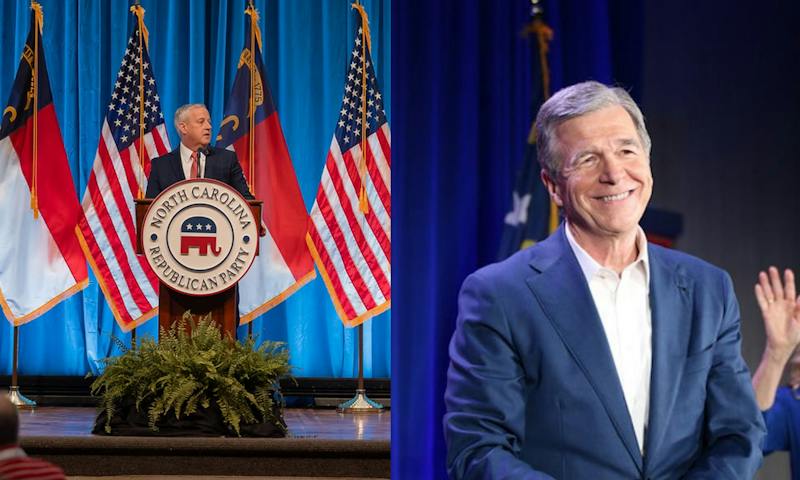
North Carolina Senate Race: Candidates and Strategies Ahead of Election Day
As Election Day approaches, the race for the open United States Senate seat in North Carolina is heating up. The contest features a notable lineup: former Governor Roy Cooper of the Democratic Party, former Republican National Committee Chairman Michael Whatley, Libertarian candidate Shannon Bray, and Green Party’s Michael Dublin. This election comes as current Senator Thom Tillis announces his retirement.
Candidate Profiles
In the Democratic primary, Roy Cooper secured the nomination overwhelmingly, receiving 92% of the votes. Meanwhile, Michael Whatley garnered 64% in the Republican primary, marking his first foray into electoral politics. According to Steven Greene, a political science professor at North Carolina State University, Cooper’s extensive experience gives him an edge. “Running for office across North Carolina is something Roy Cooper is very good at and very experienced at,” Greene noted.
Political Landscape and Strategies
Cooper’s political journey has been marked by a history of electoral victories. His tenure as governor saw significant achievements including the expansion of Medicaid to over 600,000 residents and a 19% raise for teachers. However, his governorship was also characterized by notable confrontations with the Republican-led legislature, leading to the vetoing of 104 bills, with 52 of these vetoes subsequently overridden.
In contrast, Whatley, who has no prior electoral experience, faces challenges as a first-time candidate. His campaign has been significantly affected by the Republican Senate PACs reallocating funds to other races deemed more competitive. According to Politico, this shift suggests uncertainties among party leaders about Whatley’s viability in this race.
“The Republicans are dumping a ton of money in right now…My hypothesis is that it won’t make enough of a difference and they’re going to say this race is just lost,” Greene predicted.
Current Polling and Voter Engagement
The dynamics of the race have been influenced by Donald Trump’s declining approval ratings. Whatley, who has aligned himself closely with the former President and received his endorsement, may find it challenging to galvanize support as his opponent, Cooper, consistently leads in polling. Meanwhile, Whatley is focusing on crime and safety topics to resonate with Republican voters. Jason Husser, director of the Elon Poll, highlighted that voter turnout in midterm elections tends to be lower compared to presidential elections, adding an extra layer of complexity for both candidates in energizing their bases.
Despite the unfavorable polling, Whatley’s supporters remain optimistic, while a segment of Cooper’s base expresses apprehension about the potential outcomes. Husser observed, “There’s some fear in the Cooper base, which is healthy for Cooper and there’s a lot of optimism still in the Whatley base, which is good for Whatley.”
Moving Forward to Election Day
As both candidates prepare for early voting and the Election Day showdown, their strategies will likely focus on mobilizing supporters around critical issues. With Cooper currently leading in most polls, turnouts during early voting will be essential for both to rally support and secure their paths to Capitol Hill.
