


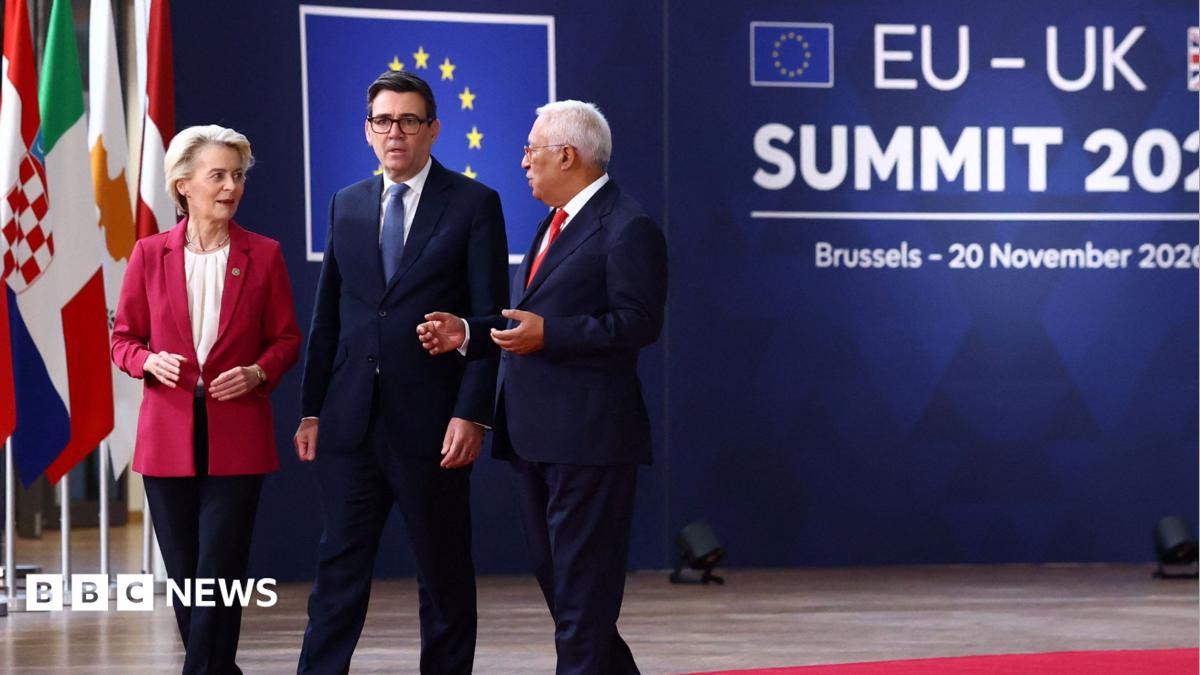
Complexities in Current EU Negotiations and Brexit Discourse
Henry Zeffman
Chief Political Correspondent
Understanding the Dual Nature of Brexit Discussions
Recent comments made by Jonathan Reynolds on the Today programme highlight the intricate political dynamics surrounding the United Kingdom’s ongoing negotiations with the European Union. These negotiations are characterized by two interwoven dialogues occurring on separate timelines.
Immediate Agreements and Longer-term Aspirations
The first dialogue focuses on reaching a mutually beneficial agreement aimed at streamlining various aspects of the Brexit relationship. In contrast, the second conversation is more expansive and speculative, addressing the potential for reversing fundamental elements of the Brexit settlement, possibly even considering a complete reversal of Brexit itself.
Influence Without Voting Rights
During his interview, Reynolds asserted that although the UK will not hold a vote on new EU regulations pertaining to food and farming, Britain will retain a degree of influence. He emphasized that British experts would participate in discussions related to these regulations, which he referred to as “having a say.” This suggests an attempt to portray a participatory role for the UK despite the absence of formal voting rights.
Avoidance of Long-term Conversations
Interestingly, Reynolds showed hesitance to delve deeper into the long-term implications of these negotiations, even as calls for such discussions have emerged within the Labour Party. Andy Burnham, the party leader, had previously touched upon this subject during his inaugural speech at a party conference, signaling the growing urgency for Labour politicians to address these issues more openly.
Future of the EU and Nationalist Dynamics
When pressed about the possibility of rejoining the EU, Reynolds made a notable distinction regarding the upcoming French presidential elections. He pointed out that the outcome could significantly influence the future structure and direction of the EU. The potential rise of Marine Le Pen, a hard-right nationalist, complicates the landscape, as it suggests a shift towards more nationalistic governance within Europe. This sentiment is echoed by unease among some Labour officials regarding Jean-Luc Mélenchon, a left-populist figure, reflecting similar political trends across major EU countries.
Conclusion
The current negotiations with the EU exemplify a multifaceted political scenario where immediate agreements and long-term aspirations are both crucial yet complex. As the landscape evolves, the reactions and strategies of political leaders within the UK and EU will undoubtedly shape the future of the Brexit relationship.
