


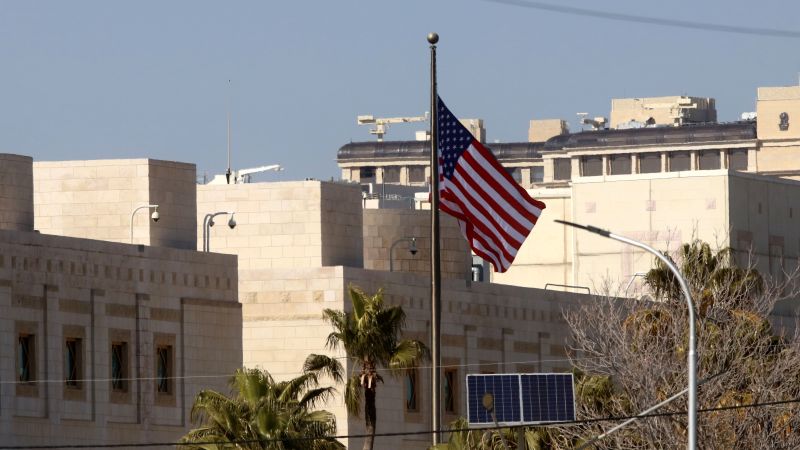
U.S. Diplomats Evacuated Amid Rising Security Threats in the Middle East
The United States government is rapidly relocating certain diplomats and their families from various posts in the Middle East due to an increasing sense of regional instability, as confirmed by multiple sources familiar with the situation.
Repetition of Past Experiences
The current evacuation reflects a disheartening repeat of previous chaotic relocations. Many individuals now departing had only recently returned to their roles after fleeing during the earlier phases of the conflict with Iran.
Concerns About Financial Support
“To say it has been chaotic is an understatement,” remarked a U.S. diplomat, expressing frustrations over inadequate financial assistance for relocating families. Many had to find new housing and enroll their children in schools after previous evacuations and face similar challenges again, often with less support from the State Department.
Reactions from Diplomatic Families
Nikki Gamer, a spokesperson for the American Foreign Service Association, highlighted the emotional toll of these decisions, stating, “They are understandably upset, confused, and angry.” This sentiment resonates with numerous families as they are forced to uproot themselves once more.
State Department’s Official Response
A State Department representative has confirmed that all U.S. direct hire personnel and their families are receiving a per diem allowance and lodging support consistent with government rates in their respective locations.
Escalating Regional Tensions
The urgency of these evacuations has been exacerbated by intensified Houthi attacks on Saudi Arabia, with U.S. officials cautioning that these aggressive moves could lead to broader conflicts beyond the immediate area.
Operational Adjustments in the Region
This week, the State Department mandated the departure of non-emergency personnel and their families from Saudi Arabia in response to the escalating Houthi hostilities. Additionally, there have been adjustments to staffing levels at multiple embassies across the region, including in Jordan, Bahrain, Kuwait, Qatar, the UAE, and Lebanon.
Restricted Operations Status
A representative from the State Department stated that embassies in Lebanon, the UAE, Qatar, and Jordan will experience temporary changes due to “restricted operations.” While no personnel changes have been noted in Kuwait or Bahrain, these embassies are not reported to be over their staffing caps.
“Under Restricted Operations Status, staffing levels are continuously assessed and adapted,” the official explained. However, movements from these embassies have not been publicly announced, unlike the situation in Saudi Arabia, which has been more prominent in news coverage.
Coordination Challenges
Reports from various sources indicate that the coordination surrounding these evacuations mirrors the confusion experienced in previous conflicts. “Communication and coordination around the departures… is just as much of a challenge as early on in the Iran war,” noted an individual familiar with the situation.
Concerns Among Foreign Service Officers
Many foreign service officers are reporting uncertainty regarding the per diem allowances for their families, which are crucial for covering relocation costs. Some embassies have lacked the standard planning discussions preceding such transitions, leading to increased anxiety among staff.
“A lot of people are hearing about it through the news instead of their leadership at post,” added one source, pointing to significant communication gaps.
Call for Clarity and Support
The American Foreign Service Association has denounced the bureaucratic confusion, emphasizing that families are sometimes left without concrete details about their relocation financial assistance. Gamer further stated, “Families deserve to know how they will pay for a place to live before they board a plane.”
State Department’s Commitment
In light of these challenges, a State Department official remarked, “We are committed to using every tool available to help families navigate this difficult time.” Assurance was given that they would address additional expenses and school enrollment issues for affected families.
This article will continue to be updated with any new developments.