


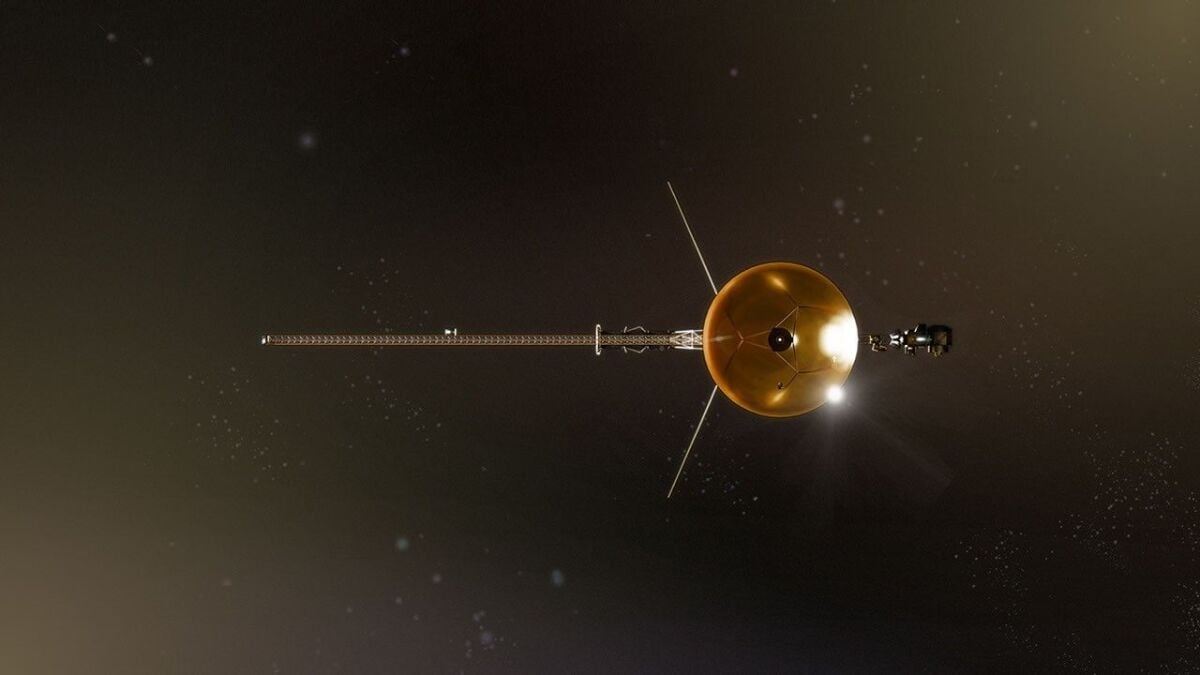
Voyager 1 Reaches 1 Light-Day Distance, Faces Data Transmission Issues
NASA’s Voyager 1 spacecraft has crossed a new milestone, achieving a distance of over 16.1 billion miles from Earth—marking the first human-made object to reach a light-day distance. This milestone was officially recognized at 5:16 a.m. ET on November 18, 2023, although the spacecraft has encountered significant data transmission problems since November 14.
Current Status of Voyager 1
Despite still transmitting a strong carrier signal indicating that Voyager 1 is operational and its antenna is correctly oriented toward Earth, the probe has not sent back any scientific or engineering data for several days. NASA engineers are currently investigating the cause of this anomaly, but the reasons behind the lack of data transmission remain unclear.
Celebration Amid Concerns
On November 19, NASA hosted a one-hour celebration at its Jet Propulsion Laboratory in Southern California to commemorate Voyager 1’s remarkable achievement. While the event focused largely on the mission’s success and featured personal stories from mission panelists, it also briefly addressed the ongoing data issues before inviting questions from the audience. Suzanne Dodd, Voyager’s project manager, remarked on the situation, stating, “We have an anomaly that is not something unseen before. We do have a very strong carrier signal. We currently don’t have a frame sync, so we’re not getting the science or engineering data currently.”
Understanding the Technical Challenges
The carrier signal serves as a basic communication wave, similar to how a radio station transmits sound. Typically, Voyager compresses its data into blocks known as frames on this wave, but a synchronization issue has prevented engineers from accessing this data. So while they know the spacecraft is still operational, no useful information is accessible at the moment. Engineers suspect that the problem lies with an onboard computer responsible for collecting data from the instruments rather than the systems that ensure the spacecraft remains oriented toward Earth.
Previous Anomalies and Troubleshooting
Engineers have encountered similar issues in the past. In 2023, Voyager 1 transmitted a carrier signal but failed to deliver data, which they later traced to a malfunctioning onboard computer. They are also reviewing a situation from October, where the spacecraft lost contact for about 48 hours before reconnecting autonomously. Dodd echoed a sentiment from the engineering team, likening the challenges of aging spacecraft to the human experience, saying, “All of us old people have our aches and pains… I’m confident that it won’t be too long, and it will send us data back.”
Looking Ahead
The communication recovery process is expected to take time, given the two-day response period for commands sent to Voyager 1. NASA anticipates that addressing the current data outage could take several weeks or longer. However, the mission team remains optimistic and dedicated. “An engineer with a problem is like a dog with a bone. So we are very busy and very energized to solve these problems,” said Kareem Badaruddin, Voyager’s mission manager.
Continued Missions and Power Constraints
Similar to Voyager 1, its twin, Voyager 2, remains in good condition with three operational instruments. Nonetheless, both spacecraft are expected to face degradation eventually due to their advanced age. Voyager 1, which operates on diminishing energy from decaying plutonium, now runs primarily two instruments: a magnetometer for measuring magnetic fields and a plasma wave instrument that detects waves in interstellar gas. As power supplies diminish, engineers have successfully transitioned some instruments to lower-power alternatives, extending the probes’ operational capabilities until at least their 50th anniversary in 2027.
As the mission team continues to tackle the challenges posed by the aging spacecraft, they remain hopeful for continued communication and data transmission. “We pulled a rabbit out of a hat,” Badaruddin concluded. “If we can find some more rabbits, we’ll keep doing this.”
Voyager 1, which launched in 1977, is now more than 16.1 billion miles from Earth.Credit: Elif Acar / Anadolu / Getty Images infographic

Engineers in a clean room mount the Golden Record to the Voyager 1 spacecraft before its 1977 launch.Credit: Corbis Historical / Getty Images
