


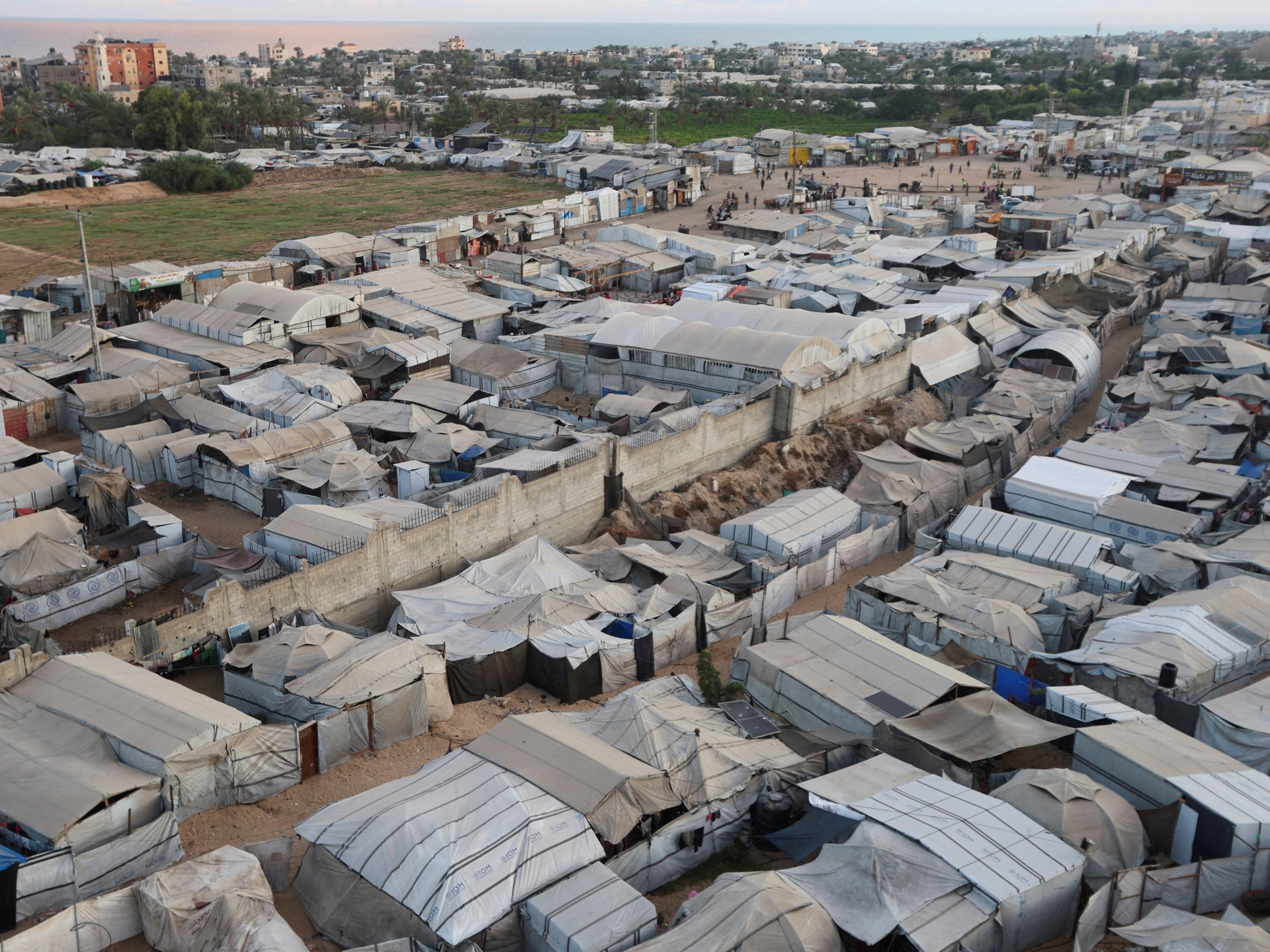
The Board of Peace: A Year in Review in Gaza
Since the establishment of the Board of Peace (BoP) by former President Donald Trump, aimed at alleviating the ongoing conflict in Gaza, a year has passed with mixed outcomes. Initially hailed as a potential pathway to stability, the reality on the ground indicates continued strife for the Palestinian population.
Background of the Board of Peace
Launched in September 2025, the BoP was presented as a crucial element in the quest for peace in the Gaza region. In recognition of its efforts, the United Nations Security Council declared the BoP a “transitional administration” covering Gaza in November of that year. The strategic intent was to mediate a ceasefire between Israel and Hamas, beginning on October 10, 2025, and lay the groundwork for Palestinian statehood.
A Review of Goals and Commitments
The ambitions of the BoP were encapsulated in a comprehensive 20-point peace plan, which outlined measures for both Israeli and Palestinian forces. Key objectives included:
- Withdrawal of Israeli forces to reclaim 50% of Gaza’s territory.
- Release of 250 Palestinian prisoners held in Israel and 1,700 detainees from Gaza.
- Opening of border crossings for humanitarian aid.
- Disarmament of Hamas and their cooperation with a new governing authority.
Achievements Over the Past Year
During its first year, the BoP convened with member states, generating significant pledges for financial support. Notably, in February 2026, a summit in Washington, DC, attracted commitments totaling $7 billion, despite the estimated reconstruction cost of Gaza being around $70 billion. Additionally, the BoP unveiled a recovery plan worth approximately $2.4 billion during the UN General Assembly in September.
Partial Successes
Among the notable achievements since its inception, Hamas successfully released all remaining known captives, and a National Committee for the Administration of Gaza (NCAG) was established to oversee governance. However, this committee has been unable to operate within Gaza due to restrictions imposed by Israel. Israel’s rationale for barring access has not been publicly disclosed.
Unmet Goals and Ongoing Challenges
While certain milestones were reached, other pressing objectives remain unfulfilled:
- Continued violence: Israeli military operations persist, with over 1,400 Palestinian fatalities reported since the ceasefire commenced, including numerous civilians.
- Israeli occupation has expanded: Current estimates suggest Israel maintains control over approximately 60% of Gaza, contradicting agreed terms.
- Humanitarian aid restrictions: Despite a demand for at least 600 aid trucks daily, only about 227 on average successfully enter Gaza.
The Question of UNRWA’s Future
The BoP’s stance on the United Nations Relief and Works Agency for Palestine Refugees in the Near East (UNRWA) corresponds with a broader rejection of the agency’s role in Gaza. Recent statements have asserted that while UNRWA can continue certain operations, its overall capabilities and significance are deemed obsolete by the BoP.
Conclusion: A Complex Path Forward
As the year closes, analysts evaluate the effectiveness of the BoP. Critics assert that the board has not managed to uphold its covenants related to peace and governance, leaving the situation in Gaza increasingly precarious. Observers warn that the ongoing strife reflects a systematic tale of mismanagement and ethnic cleansing, further complicating the road to lasting peace for the Palestinian people.
In summary, as the BoP prepares to navigate the future, its ability to fulfill its foundational goals remains in question.