


Tracing Monero Users: Analysis of Swap Service Data
Introduction: The Intricacies of Cryptocurrency Privacy
Recent findings have raised crucial questions about whether users of the privacy-focused cryptocurrency Monero can be traced through a compromised exchange. The answer is not straightforward, as it does not involve decrypting Monero’s secure blockchain; instead, it relates to the data retained by swap services before and after coins enter the privacy network.
The Incident Claim: A Review of Allegations
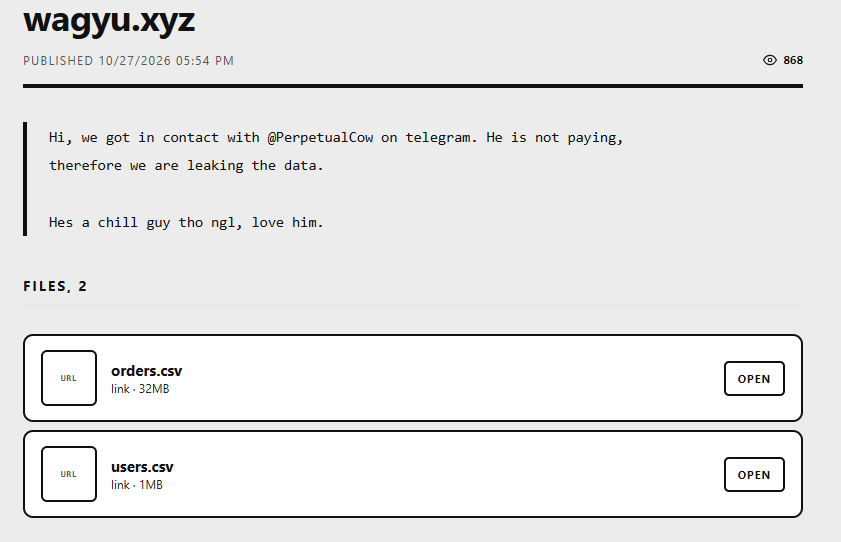
On October 27 and 28, 2026, allegations surfaced involving the ransomware group WhiteArmor, which indexed listings from Wagyu.xyz, a service that allows users to swap Monero and other cryptocurrencies without requiring customer identification (KYC). These accusations involve unfair practices and fees but do not confirm any breach of the Monero protocol itself.
The data accompanying these claims includes transaction history, destination information, identifiers, and connection metadata, though its authenticity is yet to be independently verified.
The Privacy Gap: Analysis of Monero’s Security Features
Monero’s advanced privacy features, such as stealth addresses and ring signatures, are designed to obscure transaction details. However, swap services need to record essential transaction details to facilitate the functionality, which means they can potentially maintain an off-chain database of trades that links customer IPs to their transactions.
For example, a user converting Bitcoin (BTC) to Monero (XMR) could leave a trace that includes their IP address, the amount exchanged, and the receiving address stored in the service’s records.
Two-Way Correlation: Entry and Exit Exposures
The findings suggest that Monero’s privacy does not extend to the metadata retained by swap services. A significant concern arises from the potential for XMR sent to other assets to potentially expose the transaction details once it exits the privacy network. The swap records contain enough information to associate a Monero deposit with an outgoing address on a transparent blockchain.
Privacy can survive on-chain and still fail in the database sitting next to the chain.
Insight into IP Activity and User Metadata
The corresponding user dataset, containing 10,139 entry points, catalogues user activity by IP address and correlates it with swap transactions. This data presents an opportunity for tracing beyond individual users, although it does not necessarily equate to unique human behavior. Variations in usage, such as shared IPs, VPN connections, or corporate networks, can make it challenging to ascertain individual identities.
High-Value Transactions and Their Implications
The data set reveals transactions tied to specific labels associated with hacking incidents, raising concerns about the nature of the funds. Transactions labeled as originating from known breaches or scams were recorded, indicating a potential route for tracing illicit funds back to source wallets, although validation of these claims has not been independently conducted.
Retention of Data and Privacy Considerations
Notably, certain records indicate a potential retention issue for user data marked with a deletion timestamp. This implies that even if users believe their data has been erased from their view, the foundational metadata could still be accessible within the service’s operational records.
Implications for User Privacy
A critical takeaway is that while Monero maintains a high level of transaction privacy through its technology, the surrounding service infrastructure can undermine this privacy through retained metadata and transaction logs.
Security Risks and Potential Abuses
The retained transaction data may heighten the risk of targeted scams and phishing attempts, as attackers could leverage specific transaction details to create convincing fraudulent communications. This could lead to a dangerous intersection where user data becomes a tool for exploitation, despite the anonymity provided by the underlying technology.
Conclusion: Navigating the Privacy Landscape
The analysis presented does not indicate a flaw in Monero’s cryptography but highlights the potential vulnerabilities introduced by associated services handling private transactions. With the right connections made from metadata, investigative leads can form that may assist in identifying users, despite the anonymity typically afforded by Monero itself. Understanding these limitations is crucial for users seeking to maintain their privacy in cryptocurrency transactions.
Methodology Overview
This article is based on an analysis of transaction data from Wagyu.xyz and relevant user activity records. The dataset was inspected for completion, integrity of recorded data, and potential correlations between source funds and swap transactions. Claims have been verified against the dataset provided but remain subject to further independent verification.
