


Apple Partners with OpenEvidence for Innovative Health AI Study
Introduction
In a move to enhance the integration of artificial intelligence within healthcare, Apple is embarking on a study aimed at understanding user interactions with AI for health-related inquiries. This initiative, set apart from other AI developments in the industry, emphasizes the necessity for clinically substantiated answers.
Study Details
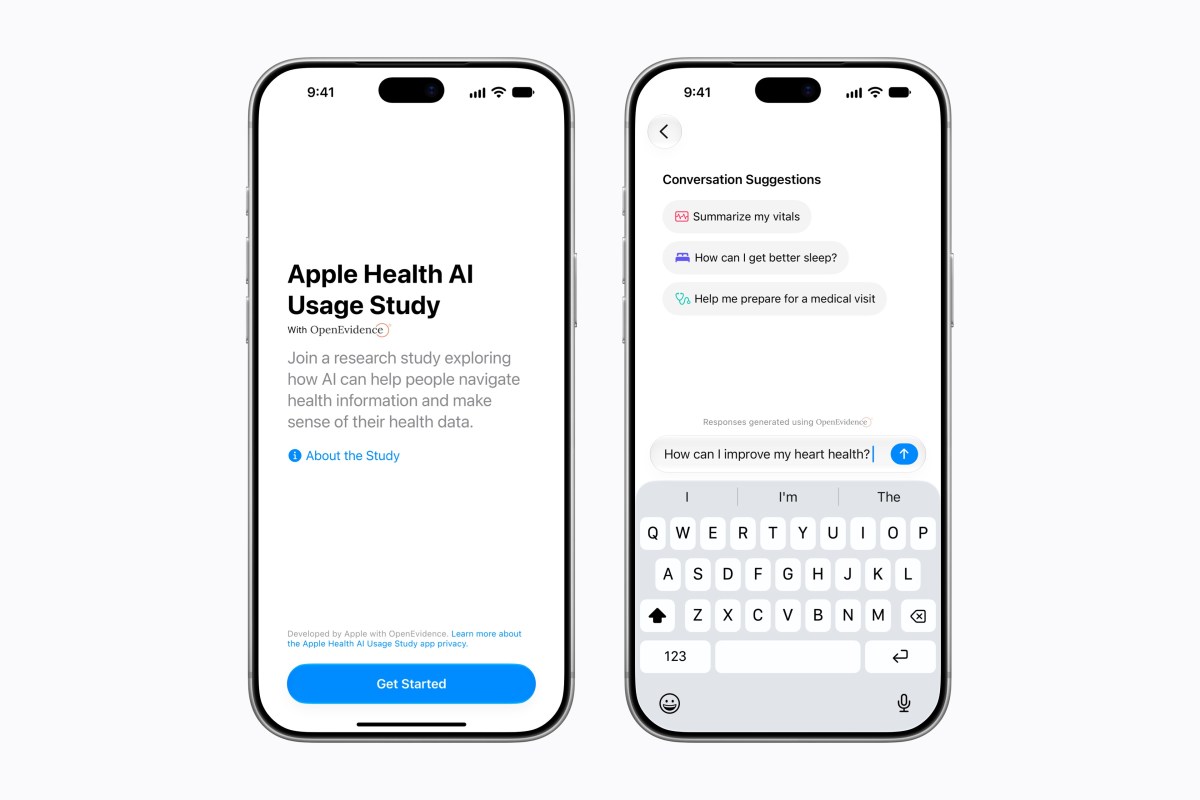
Apple is collaborating with OpenEvidence, an AI company focused on healthcare, to develop a new app that enables U.S. users over the age of 21 to pose health questions. This initiative is available to those using iPhone 15 or later devices running on iOS 26 or newer, with Apple Intelligence activated.
The study aims to recruit up to 200,000 participants over a period exceeding 12 months.
Features of the New App
The app is designed to facilitate health-related inquiries similarly to chatbots like ChatGPT or Claude, with responses informed by credible medical publications such as:
- The New England Journal of Medicine
- Journal of the American Medical Association
- Nature
It will focus on delivering clear and concise answers to common medical questions. Users will have the opportunity to evaluate these answers and supply feedback through monthly surveys.
Personalized Health Insights
Participants can share anonymized data from HealthKit, such as resting heart rate, physical activity, sleep patterns, and laboratory results. This data exchange aims to provide more tailored responses that can assist users in preparing for medical appointments and directing them to specific healthcare providers for urgent concerns.
Apple has assured that all data will be anonymized prior to being transmitted to a secure third-party cloud service, with no application of this data for training AI models. Furthermore, OpenEvidence will eliminate any query and response data after a 24-hour period.
Expert Insights
“At Apple, we believe responsible innovation starts with scientific rigor and clinical grounding. Health is deeply personal, and conducting a dedicated research study is the most thoughtful way to understand how people engage with, comprehend, and evaluate health AI in everyday life,” stated Dr. Sumbul Desai, Apple’s Vice President of Health and Fitness. He elaborated on the study’s potential, saying, “Insights from this study will help advance the broader scientific conversation and ensure that as technology evolves, we continue building trusted tools that genuinely support people wherever they are on their health journey.”
Availability and Future Prospects
Starting immediately, U.S. users can download the app. It remains unclear whether Apple plans to integrate AI responses into its existing Health app or Siri. Nonetheless, the demand appears robust, as OpenAI reported over 300 million health-related queries each week earlier this year.
When you purchase through links in our articles, we may earn a small commission. This doesn’t affect our editorial independence.
