


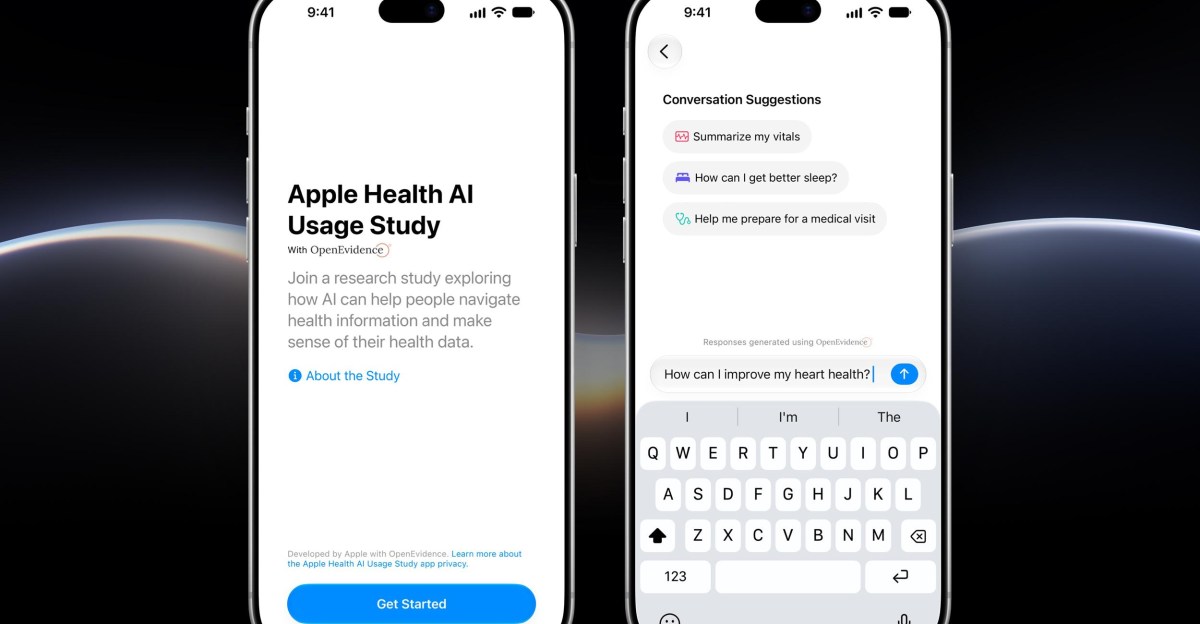
Apple Launches Health AI Study in Collaboration with OpenEvidence
Apple has initiated a comprehensive research effort aimed at exploring how users engage with conversational AI health tools. Dubbed the Apple Health AI Usage Study, this initiative is undertaken in partnership with OpenEvidence, a clinical AI platform leveraging peer-reviewed medical sources, such as The New England Journal of Medicine.
Study Objectives and Participation Criteria
The study seeks to gain insights into the effectiveness of AI-generated health responses. Participants will utilize a newly developed iOS application to pose medical inquiries and subsequently evaluate the received answers based on their precision, depth, and pertinence. The app has been made available for download, and enrollment has commenced, targeting an ambitious participant pool of up to 200,000 individuals.
To qualify, participants must be at least 21 years old and reside within the United States. Notably, the application is compatible with iPhone 15 Pro devices running iOS 16 or later, though it does not utilize Apple Intelligence functionalities.
Functionality of the Application
The app offers users a platform to inquire about health-related topics while receiving clear and comprehensible responses, alongside references to credible clinical studies. Interaction is primarily text-based, and while the use of dictation via the iOS keyboard is an option, integration with Siri or other Apple Intelligence systems is not included.
Privacy Considerations and Data Sharing
During the enrollment process, study participants may opt to share their Apple HealthKit data, such as information on physical activity, sleep patterns, or clinical lab results. This data aims to provide a personalized context for the AI-generated responses. However, Apple emphasizes its commitment to user privacy, ensuring that all information collected will remain confidential and will not be employed to train AI models. The overarching goal is to enhance AI health tools’ design and performance, enabling them to deliver more relevant and actionable health information.
Statements from Apple Leadership
“At Apple, we believe responsible innovation starts with scientific rigor and clinical grounding. Health is deeply personal, and conducting a dedicated research study is the most thoughtful way to understand how people engage with, comprehend, and evaluate health AI in everyday life. Insights from this study will help advance the broader scientific conversation and ensure that as technology evolves, we continue building trusted tools that genuinely support people wherever they are on their health journey,” stated Dr. Sumbul Desai, Apple’s Vice President of Health and Fitness.
Conclusion
The Apple Health AI Usage Study represents a significant step towards understanding and improving interactions with AI powered health tools, reinforcing the importance of accuracy and user experience in digital health solutions.
