


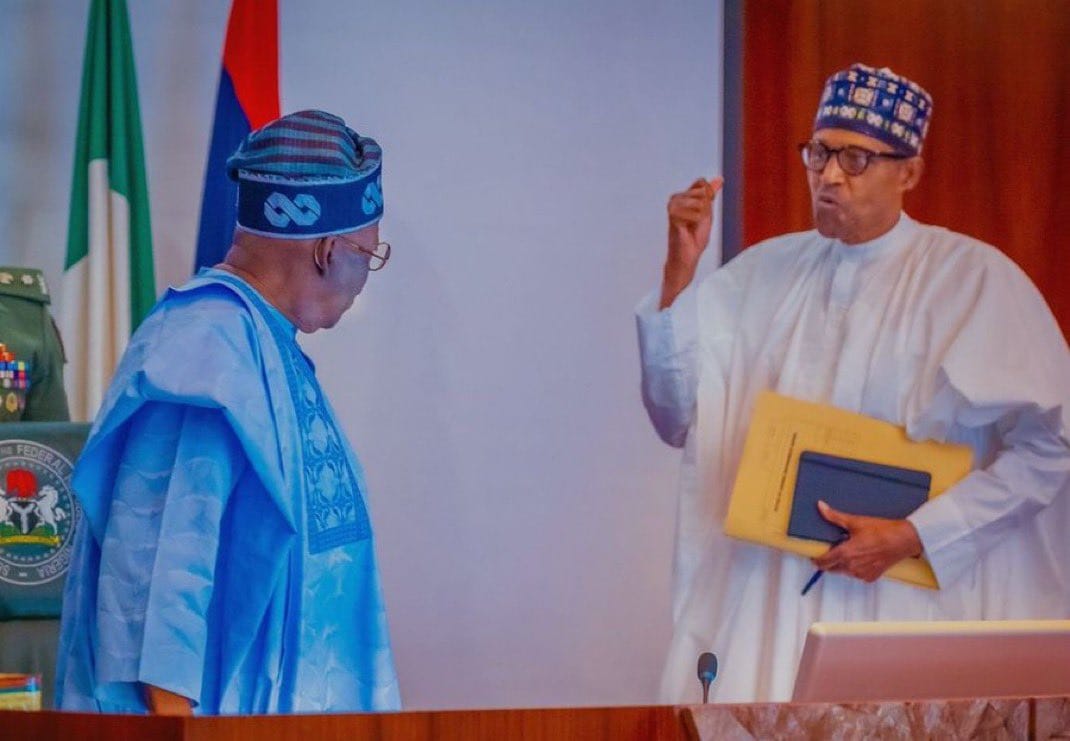
Buhari’s Resistance to Tinubu’s Presidency: Insights from Hakeem Baba-Ahmed
Recent statements from Hakeem Baba-Ahmed, the National Chairman of the Peoples Redemption Party (PRP), have shed light on former President Muhammadu Buhari’s apprehensions regarding Bola Tinubu’s candidacy for the presidency. Baba-Ahmed claimed that Buhari resisted political pressures advocating for Tinubu’s succession due to concerns over the potential negative impact on Nigeria.
Concerns Over National Interest
At a summit organized by the Northern Elders Forum, Baba-Ahmed criticized Tinubu’s administration, stating that it has led the nation to its lowest point. He stressed the importance of prioritizing national interest over personal political ambitions, asserting that the upcoming electoral cycle must not allow individual aspirations to compromise Nigeria’s welfare.
The Implications of “It’s My Turn”
During the summit, Baba-Ahmed highlighted Tinubu’s proclamation of “Emilokan,” a Yoruba phrase translating to “it’s my turn.” He suggested that this mindset reflects a troubling sense of entitlement that should not characterize the presidency of a nation as diverse and populous as Nigeria, which has approximately 250 million citizens. “We have a presidency of a country of 250 million people. My turn? To do what? To become president?” he questioned.
Assessing Tinubu’s Administration
Baba-Ahmed described the economic hardships faced by Nigerians under Tinubu’s governance, punctuating his concerns with a call to action against what he sees as an administration dragging the country down. “He has dragged the country as low as it is possible to go,” he asserted, emphasizing the urgency of halting this decline.
Call for Collective Action
Echoing sentiments of shared responsibility, Baba-Ahmed stated that the opposition has been mobilizing efforts toward a coalition aimed at defeating Tinubu in the 2027 presidential election. He characterized this initiative as a significant opportunity for various political factions to unite, setting aside differences for a common goal. “Let’s put aside some of our differences and see if we can actually create a momentum strong enough to remove this Tinubu,” he urged.
Nourishing Hope for Recovery
While he voiced criticism of the current administration, Baba-Ahmed remained optimistic about Nigeria’s potential to overcome its challenges. “We are very resilient people. We have seen crises bigger than this, and we survived it,” he remarked. He affirmed a commitment to ensure the country’s survival for future generations despite the ongoing difficulties.
Conclusion
As Nigeria approaches the next electoral cycle, the call to action from leaders like Baba-Ahmed emphasizes the need for collective responsibility and vigilance against unilateral ambitions. It remains to be seen how this political landscape will evolve, particularly with the potential coalition efforts among opposition parties poised to challenge Tinubu’s administration in the upcoming election.
