


California’s Budget Outlook: A Precarious Situation Ahead
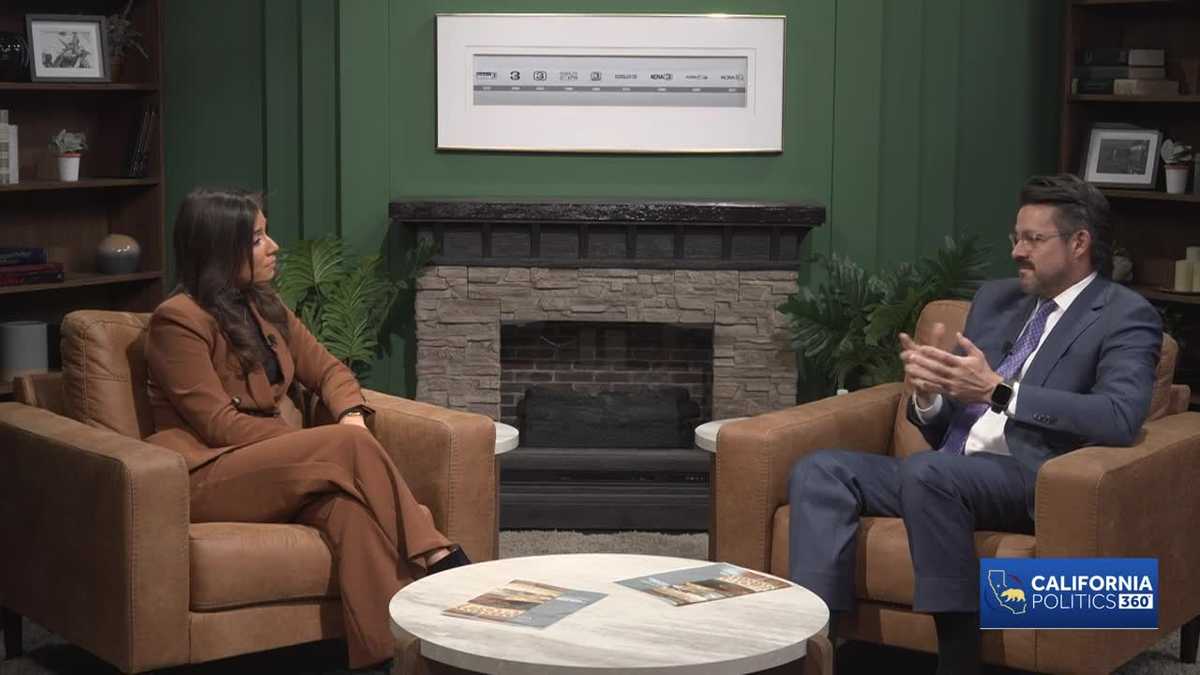
In a recent interview, Gabe Petek, the Legislative Analyst for California, described the state’s current financial condition as “precarious.” His insights draw attention to a series of ongoing challenges, including persistent budget deficits, volatility in the stock market, and broader structural issues impacting the state’s fiscal health.
Persistent Budget Deficits
Petek highlighted that California is experiencing its fifth consecutive year of budget deficits, despite being in the midst of a stock market boom that has pushed revenues close to record levels. “We’re looking at the fifth consecutive year now where the state is facing a budget deficit,” he stated, emphasizing that even with strong performance in the stock market, the budget remains on shaky ground for the upcoming fiscal year.
Risks Associated with the Stock Market
The analyst noted that California’s economy currently resembles the “speculative phase” of a financial bubble. He pointed out that household stock holdings have surged to 220% of disposable income, significantly above the historical norm of about 80%. Petek drew parallels between current market indicators—like margin debt and price-to-earnings ratios—and those observed at the peak of the dot-com bubble.
While he refrained from predicting a stock market collapse, Petek cautioned that the state’s budget should proactively account for this possibility. “From a state budgeting standpoint, it would be prudent to consider this as a significant risk,” he remarked.
Impact of Artificial Intelligence
The recent performance of the stock market has been significantly influenced by advancements in artificial intelligence (AI). However, Petek acknowledged that uncertainties in the AI sector, including regulatory challenges and potential market fluctuations, further complicate the state’s financial outlook. “The state really does not have that luxury,” he noted regarding the need for cautious planning amid unpredictable dynamics in emerging technologies.
Structural Challenges and Spending Growth
Despite record revenue figures, the state government is grappling with an imbalance where expenditures exceed income. Petek pointed out that California’s spending habits, particularly the commitments established during previous years, contribute to this ongoing structural deficit. Many pandemic-era surpluses were funneled into one-time expenditures, but some fiscal commitments were integrated into the baseline budget, exacerbating the current challenges.
Budgetary Scenarios and the Need for Action
Petek outlined two potential paths for California’s financial future:
- In the first scenario, without a stock market crash, the state would still confront a $2 billion budget gap.
- In the alternative scenario, a market downturn could necessitate severe budget cuts to essential programs such as Medi-Cal for undocumented residents, childcare services, funding for the University of California, and enhanced firefighting operations.
“There needs to be one or the other,” Petek explained, stressing that either tax increases or reduced spending are essential to recalibrate the budget and align expenditures with revenues.
Strategies for Prudent Fiscal Management
To mitigate overcommitting in future budgets, Petek suggested that policymakers adopt cautious revenue assumptions. This approach would mean being less optimistic about revenue projections, allowing for more realistic financial planning. “What that means is you’re not overcommitting as much necessarily,” he stated.
The Role of the Rainy-Day Fund
The state’s rainy-day fund is projected to reach approximately $25 billion by the end of the 2027-28 fiscal year. However, Petek indicated that this amount would be insufficient in the event of a major market downturn, as annual deficits could exceed $35 billion in that scenario. “A reserve of $25 billion would cover a mere fraction of that over the course of the next several years,” he cautioned.
Looking Back and Forward
Reflecting on California’s financial trajectory since the Great Recession, Petek acknowledged progress in building reserves but expressed concern about entering a potential downturn while maintaining a structural deficit. “We went into the Great Recession with a structural deficit,” he noted, warning that the state faces a similar predicament today.
In conclusion, Petek urged policymakers to focus on long-term strategies rather than reactive measures, emphasizing the importance of thoughtful deliberation over rushed decisions during budget negotiations. “It’s great if you have time to think through the policy implications,” he said, reinforcing the necessity of making well-informed choices as California navigates its complex fiscal challenges.
Reported by Ashley Zavala, KCRA 3 Political Director. Stay informed on California politics and policy issues by tuning in to “California Politics 360,” airing every Sunday at 8:30 a.m. on KCRA 3.
