


Detention of Cockroach Janta Party Leaders Raises Legal Concerns
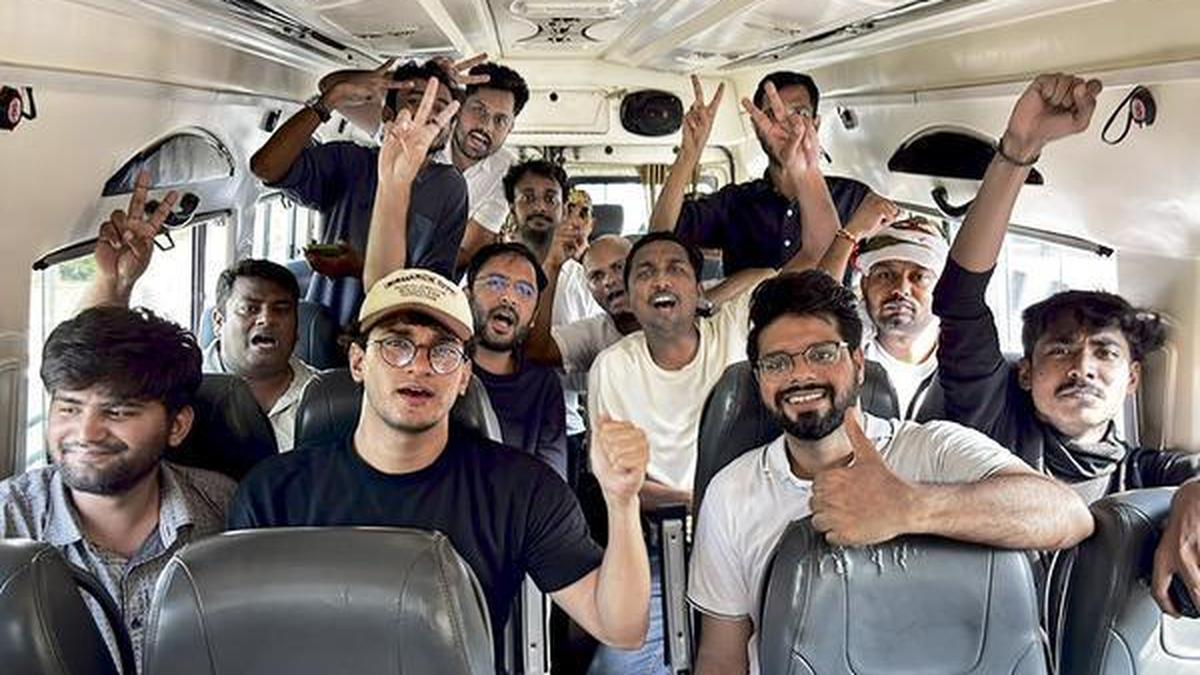
Cockroach Janta Party (CJP) chief spokesperson Saurav Das, national spokesperson Ashutosh Ranka, and other supporters inside a police bus after being detained for entering Jantar Mantar despite heavy barricading. Photo: Handout via PTI.
Background of the Incident
On October 14, 2026, leaders of the Cockroach Janta Party (CJP), Saurav Das and Ashutosh Ranka, were placed in judicial custody for five days following their unauthorized entry into Jantar Mantar, a location that had been stripped of its status as a designated protest site. They reportedly scaled the gates to access the area, where they subsequently unfurled the national flag and chanted slogans.
Legal Proceedings and Delays
The bail hearing for CJP leaders was scheduled for October 18, but faced significant delays due to the absence of the Special Executive Magistrate (SEM). Activist Ratna Singh indicated that the session was originally set for noon, yet the presiding SEM had not arrived by late afternoon, causing growing frustration among supporters.
Singh commented, “This is really concerning. They have rejected four sureties till now for vague reasons,” hinting at potential issues with the judicial process surrounding the cases against the detained leaders. There was no immediate comment from police regarding these allegations.
CJP’s Response and Allegations
On social media platform X, Singh emphasized that “unfurling the Indian National Flag is not a crime” and called for the immediate release of the detained leaders, arguing that procedural delays should not keep them behind bars. Additionally, he criticized the functioning of SEM courts in the capital, suggesting a misuse of legal authority.
Future Legal Actions and Protests
In a proactive stance, the CJP threatened legal action if Das and Ranka were not released by the following day. “If Ashu and Saurav are not released by tomorrow, we will pursue legal action against all those who deliberately ensured that they continue to be in illegal custody, especially when they have not committed nor charged with any offence,” the organization stated.
The CJP has been vocal in its protests against Chief Election Commissioner Gyanesh Kumar, asserting that recent changes to the electoral roll process undermine voters’ rights.
Conclusion
The ongoing situation surrounding CJP leaders raises significant questions about the intersection of law, political rights, and the freedom to protest in India. As the legal proceedings continue, stakeholders are closely monitoring the developments, reflecting broader concerns within the democratic framework.
