


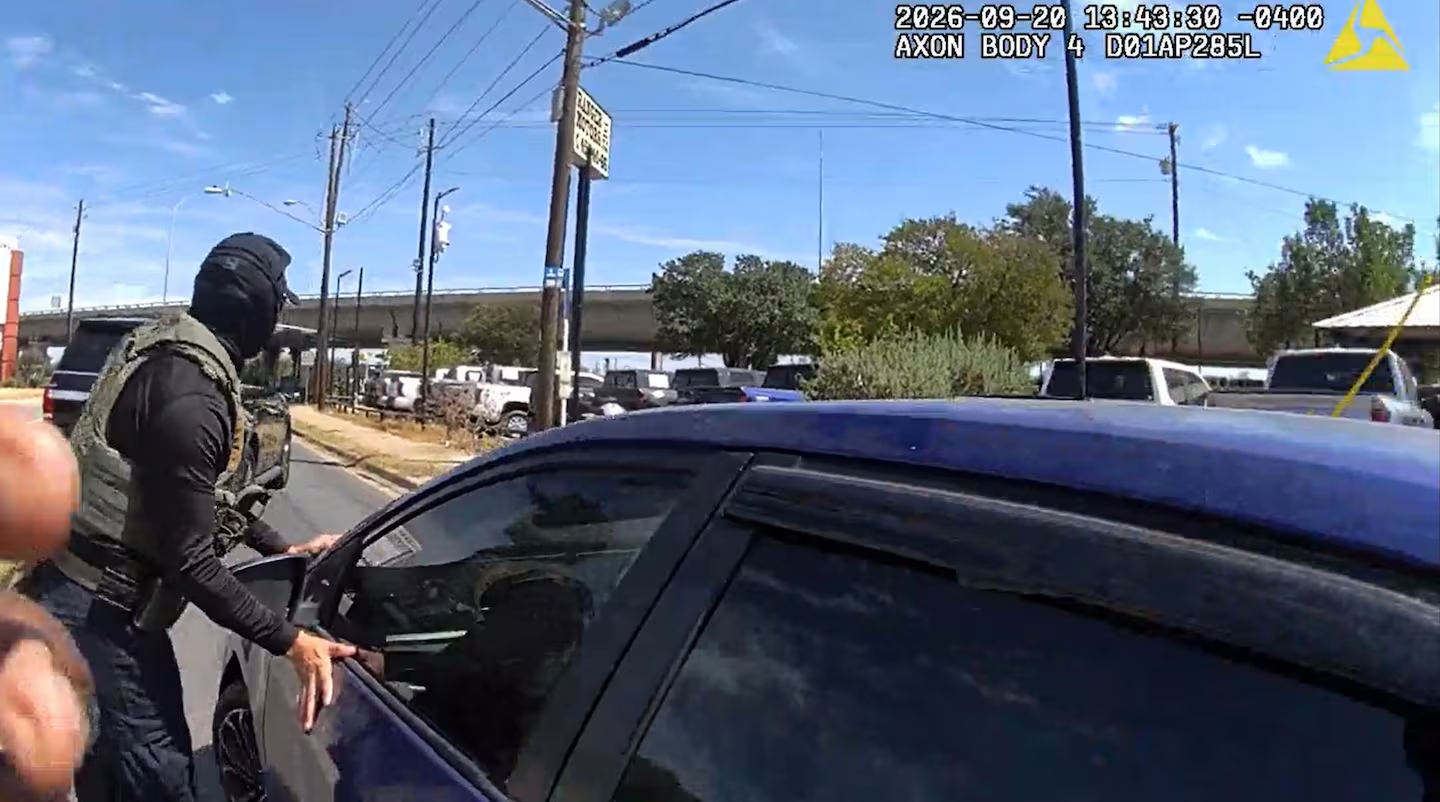
Department of Homeland Security Responds to Body Camera Recommendation
The Department of Homeland Security (DHS) has expressed reservations regarding a recent recommendation made by a government oversight agency. The proposal suggests that body-worn cameras should be automatically activated whenever federal immigration officers draw a firearm or use a stun gun. DHS officials argue that implementing such technology raises significant privacy issues, particularly the potential for cameras to activate unintentionally.
Implications of Automatic Activation
The recommendation aims to enhance transparency and accountability within immigration enforcement procedures. However, DHS representatives contend that the risk of accidental camera activation could lead to privacy violations for individuals captured on video without proper context.
Potential Concerns Raised by DHS
- Privacy Violations: There is concern that inadvertent recordings could compromise the privacy of uninvolved bystanders or sensitive situations.
- Operational Considerations: Automatic systems may encounter technical failures or malfunctions, leading to unintended consequences.
- Policy and Training Needs: The implementation of such technology would require extensive policy reviews and officer training to mitigate risks.
The Need for Balancing Accountability and Privacy
DHS’s response highlights the delicate balance between ensuring accountability in law enforcement and protecting individual privacy rights. The debate centers around how best to utilize technology in a manner that fosters both oversight and respects personal freedoms.
Conclusion
As discussions continue, the intersection of technology, law enforcement, and civil liberties remains a critical focus for both agencies and the public. Future decisions regarding the adoption of body-worn cameras in immigration enforcement will necessitate careful consideration of all potential implications.
