


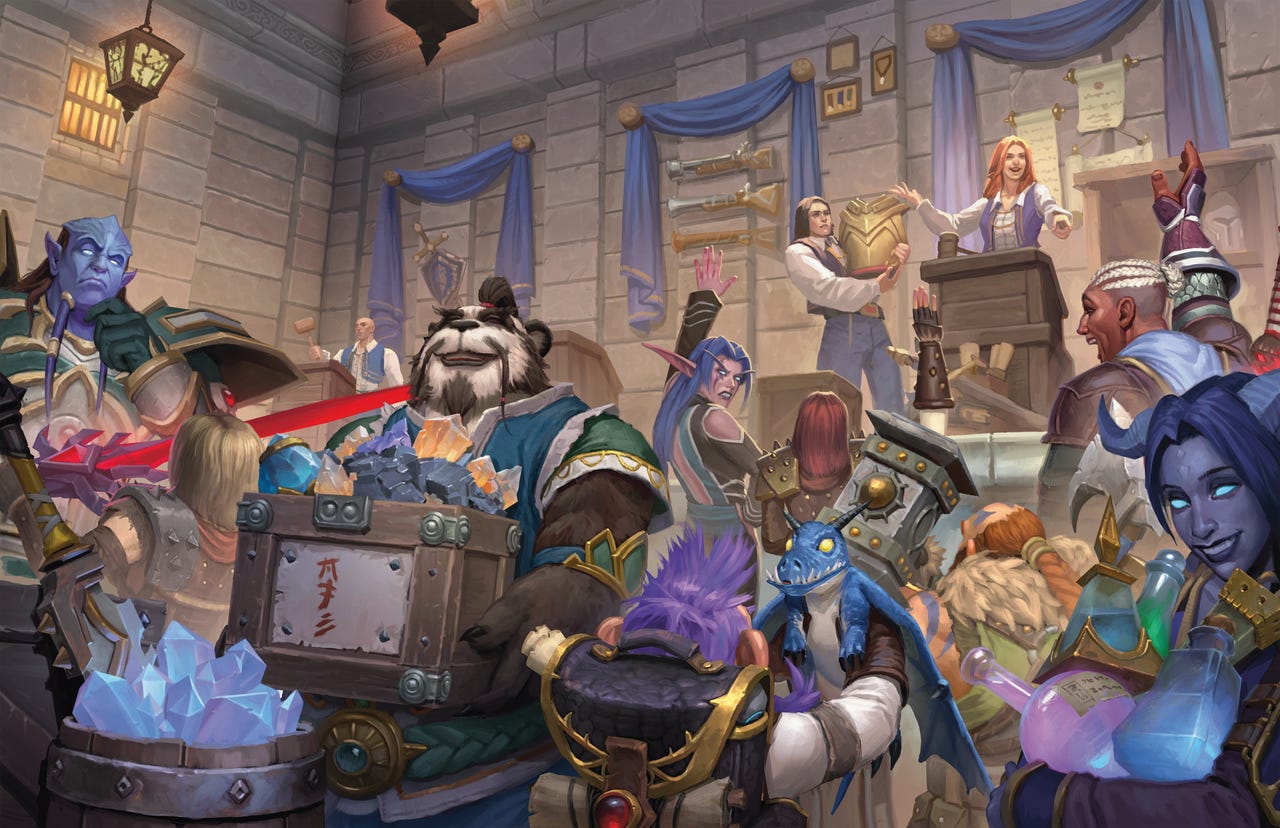
Dungeons and Dragons: World of Warcraft – A New RPG Experience
In July, the announcement of Dungeons and Dragons: World of Warcraft marked an exciting moment for Tabletop RPG enthusiasts. This expansion is a significant milestone as the inaugural release under the Universes Beyond initiative, drawing its vast inspiration from the celebrated MMORPG.
An Expansive Undertaking
While this marks the first crossover expansion for Dungeons and Dragons (D&D), Wizards of the Coast has previously explored similar ventures with numerous Magic: The Gathering sets. The depth and breadth of D&D: World of Warcraft is comparable to that of a standalone game, filled with rich lore, various quests, and character professions that can keep players engaged for an extended period.
The World of Azeroth Awaits
As a franchise, World of Warcraft boasts a rich lineage that dates back to 1994, and its lore continues to evolve two decades later within this new tabletop setting. The release embraces the expansive universe of Azeroth, incorporating influential narratives up to The War Within. Each area within the game is designed with a suggested difficulty level. According to Game Designer Joey Haeck, “WoW has a starting zone for Orcs in Durotar, so it makes sense for that to be a level 1-4 zone in D&D.” However, players have the freedom to customize their campaigns, emphasizing the creative aspect of D&D gameplay.
While the current expansion focuses solely on Azeroth, users familiar with other realms, such as Argus or Draenor, may have to adapt or create their content, though this may not pose a significant issue for many players.
Integrating Key Conflicts and Adventures
D&D: World of Warcraft incorporates notable historical conflicts from the game’s narrative, like the longstanding struggle between the Alliance and the Horde, and other significant events such as the Burning Crusade invasion. The Dungeon Master’s guide recommends selecting three main conflicts to structure campaigns, enriching the gaming experience with relevant themes, adversaries, and quests.
An innovative aspect of this expansion is the mechanism known as Chromie Time, allowing players to navigate timelines fluidly. As explained by Wyatt, “Chromie will tell you, ‘Look, I made a timeline just for you!’” This setup enhances campaign flexibility and storytelling possibilities.
Dungeons and Raids: A Distinct Approach
Dungeons and raids are integral components of World of Warcraft, and this expansion adapts them to fit D&D’s narrative style. Dungeons are designed for strategic exploration rather than rush tactics commonly employed in the MMO. Each location invites players to employ creativity, diplomacy, or stealth as alternative approaches. For instance, in the Scarlet Monastery, a subtle approach could allow players to build a legendary reputation based on clever strategies performed.
The dungeons featured in this expansion include:
- Deadmines
- Blackfathom Deeps
- Dire Maul
- Scarlet Monastery
- Azjol-Nerub
- Shadowfang Keep
- Onyxia’s Lair
Reimagining Dragons in the Game
Dragons remain a pivotal element in both D&D and World of Warcraft, but they exhibit unique characteristics in this newer adaptation. The game distinguishes between the lore of dragons from both settings. As noted by Carl Sibley, “One of the cool things about WoW dragons is that they hold very distinct places in lore from the places in lore that D&D dragons hold.” This distinction extends to their powers and abilities, creating rich and varied interactions in gameplay.
The new bestiary will comprise an extensive array of creatures native to Azeroth, with detailed lore and varying challenge ratings, from Murlocs at CR1 to the imposing Lich King at CR25.
Professions: Expanding the Crafting System
This new addition introduces a comprehensive crafting system, expanding upon existing D&D mechanics. Players can undertake gathering professions like Fishing and Herbalism, and then transition material into crafted goods through various crafting professions, including Alchemy and Engineering. The system contrasts with that of World of Warcraft by being less formulaic and instead requiring players to gather a set GP amount of materials.
Here’s a brief overview of the professions included:
Gathering Professions
- Archaeology
- Fishing
- Herbalism
- Mining
- Skinning
Crafting Professions
- Alchemy
- Blacksmithing
- Cooking
- Enchanting
- Engineering
- Inscription
- Jewelcrafting
- Leatherworking
Reputation Without the Grind
The reputation system has been redesigned to be more forgiving compared to the grind often seen in the original MMO. Players increase their reputation organically through gameplay, receiving rewards that range from faction assistance to various perks. The structure emphasizes participation in tasks aligned with a faction’s goals rather than repetitively completing quests.
Wizards of the Coast has smartly streamlined the process, beginning players at a Renown score of 3, requiring only 50 points to achieve the highest ranking, Exalted.
Conclusion: A New Era for RPGs
Both Dungeons & Dragons and World of Warcraft represent substantial contributions to gaming culture. The upcoming expansion Dungeons and Dragons: World of Warcraft is set to enhance the D&D experience with many immersive elements from the MMO, delivering a rich, expansive gaming experience. Players can look forward to exploring this innovative blend launching on November 17, coinciding with the 22nd anniversary of World of Warcraft.
