


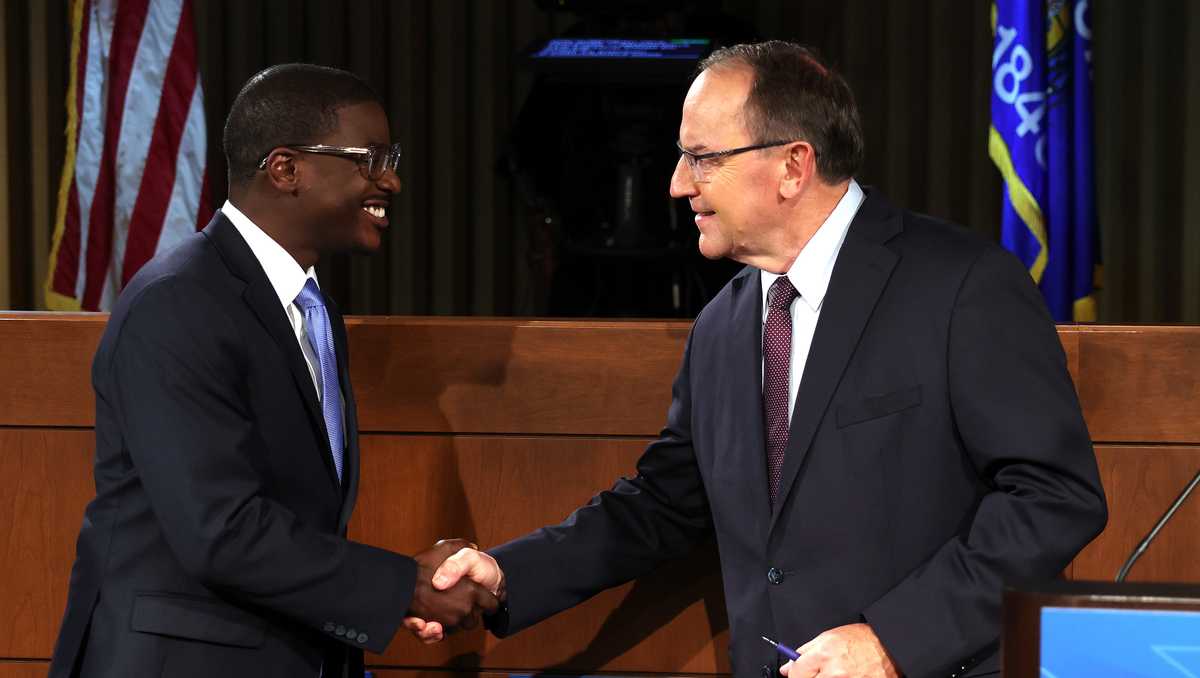
Highlights from the 2026 Wisconsin Gubernatorial Debate
On Wednesday, WISN 12 News conducted the only debate between Democratic candidate David Crowley and Republican candidate Tom Tiffany for the gubernatorial race in Wisconsin. The debate, moderated by Political Director Matt Smith and “UPFRONT” co-host Gerron Jordan, featured discussions on various critical topics including the cost of living, education, and healthcare.
Key Issues Discussed
Cost of Living and Taxes
Both candidates emphasized the importance of affordability in Wisconsin, albeit through different strategies:
- Tiffany’s Proposals: Suggested cutting income taxes for middle-income households and removing taxes on tips and overtime. He also claimed to end a longstanding property tax increase, asserting, “We’re going to put more money into people’s pockets.”
- Crowley’s Position: Advocated for a more equitable tax system, arguing that revenue from taxation should ensure all Wisconsinites can afford essential needs like housing and groceries. He criticized Tiffany’s approach as favoring wealthy individuals at the expense of broader health and service funding.
Handling the State Budget Surplus
The candidates debated how to utilize Wisconsin’s nearing $3 billion budget surplus:
- Tiffany: Called for the surplus to be returned directly to taxpayers, with no specific details on individual reimbursements.
- Crowley: Supported a bipartisan tax relief initiative, emphasizing that the surplus could aid in reducing property taxes and enhancing services in education and healthcare.
Education and School Choice
The candidates shared opposing views on education funding and school vouchers:
- Tiffany: Proposed increased funding for schools while enhancing accountability standards, advocating for more school choice through potential voucher program expansions.
- Crowley: Opposed the expansion of voucher programs, demanding additional funding for public schools and asserting that any school accepting vouchers should adhere to the same standards as public institutions.
Transportation Issues
In terms of transportation funding:
- Tiffany: Rejected the idea of new transportation fees or tolls, suggesting that state budgets should cover transportation projects.
- Crowley: Expressed openness to user fees and tolling but opposed a gas tax tied to inflation, contending that Tiffany’s tax cuts would hinder available funding for necessary public services.
Data Centers and Environmental Concerns
On the topic of data centers:
- Crowley: Emphasized community input on data center development and proposed protections for environmental resources.
- Tiffany: Stated that data centers should not lead to increased utility rates and argued against taxpayer subsidies for their establishment.
Election Security
The candidates touched upon election security, with Tiffany raising concerns over private funding in election processes and Crowley pushing back against challenges made to the 2020 election results.
Abortion Laws
Both candidates outlined their stances on abortion:
- Tiffany: Identified his intention to maintain Wisconsin’s existing abortion law, which prohibits procedures after 20 weeks.
- Crowley: Called for a constitutional amendment to protect abortion rights, emphasizing decisions should be made by healthcare providers and patients.
Immigration Enforcement and Healthcare
In the realm of immigration enforcement, Tiffany asserted the need for local agencies to comply with federal immigration laws, while Crowley called for transparency and judicial oversight in ICE’s operations. Crowley also highlighted potential funding solutions through marijuana taxes to improve healthcare access.
Closing Remarks
In their closing statements:
- Crowley: Pledges to lower costs and enhance healthcare and educational services, concluding with “I’ll work for you.”
- Tiffany: Shared a personal story of survival and expressed his commitment to showcasing Wisconsin’s strengths, stating, “As your next governor, I’m going to make sure you see the best of Wisconsin.”
The debate took place at the Lubar Center at Marquette University Law School’s Eckstein Hall and was not open to an in-person audience. Voters are encouraged to cast their ballots on November 3rd as the campaigns gain momentum in this pivotal election year.
