


The Legacy of Emperor Antoninus Pius in Southern Scotland
Recent archaeological discoveries in southern Scotland have unveiled significant insights into the Roman occupation of the region, particularly related to Emperor Antoninus Pius. The findings highlight the influence of Roman culture and governance in Scotland during the second century AD.
A Monumental Discovery
Archaeologists have proposed that a colossal statue of Emperor Antoninus Pius, who reigned from 138 to 161 AD, likely once stood in what is now the Scottish Borders. This hypothesis emerges from excavations and recent findings that suggest the presence of grand monuments affiliated with Roman authority.
Bronze Leg Found in Scottish Bog
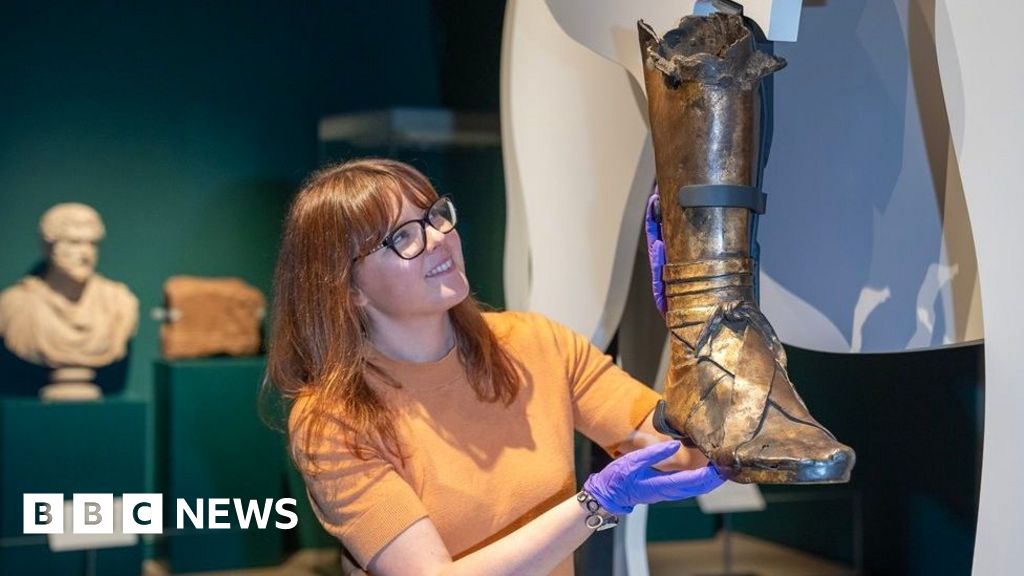
One of the most intriguing artifacts linked to this period is a bronze leg unearthed from a bog in Scotland. This piece is believed to be part of a larger statue, potentially confirming the existence of a monumental representation of Antoninus Pius. The leg, which has been meticulously preserved, provides vital clues about the craftsmanship of Roman artisans and their techniques in creating large-scale sculptures.
Historical Context
Emperor Antoninus Pius is recognized for solidifying the Roman Empire’s boundaries and fostering peace throughout his reign. The Antonine Wall, a frontier defense structure in Scotland, further signifies his efforts to extend Roman influence and protect the northern territories. The statue’s presence would symbolize not only Roman power but also the cultural integration of Roman and local Scottish identities.
Exhibitions and Public Engagement
The significance of these discoveries is highlighted in various exhibitions, particularly in Edinburgh, where visitors can deepen their understanding of Scotland’s historical ties to the Roman world. This exhibition effectively narrates the complexities of Roman life in Scotland, showcasing artifacts and providing contextual information that enriches public knowledge.
Conclusion
As studies continue and new findings emerge, the story of Roman Scotland becomes increasingly intricate. The colossal statue of Antoninus Pius, alongside discoveries like the bronze leg, not only emphasize the impact of Roman enterprise in Scotland but also invite contemporary audiences to engage with the historical narrative. Each artifact recovered from Scottish soil adds a layer to our understanding of the past, bridging the gap between ancient civilizations and modern perspectives.
To learn more about the ongoing research and discoveries related to Roman Scotland, visit BBC News.