


Spain’s Historic General Strike: Citizens Protest Housing Crisis
Overview of the Strike
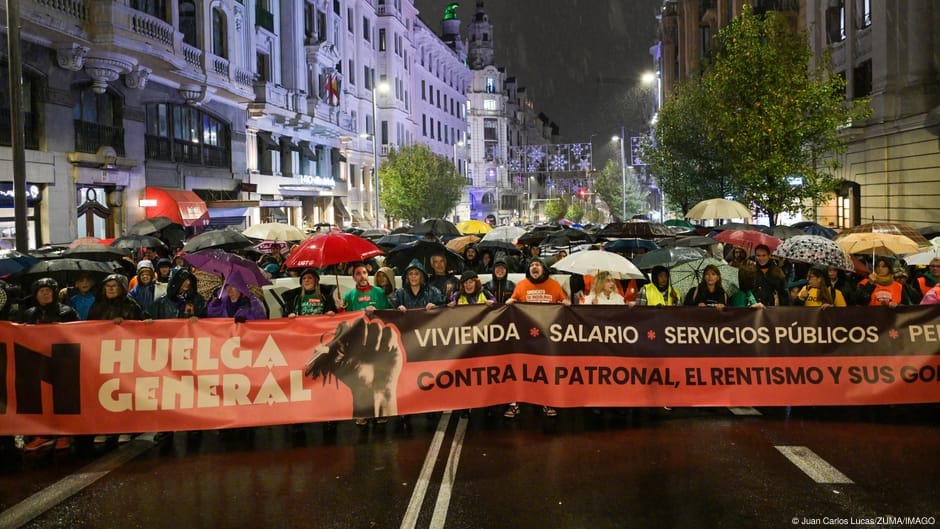
On Wednesday, amidst heavy rain, approximately 120,000 protesters gathered in Madrid as part of a general strike—the first in 14 years—aimed at addressing critical issues related to housing and living costs. The slogan for the strike was “Salaries. Housing. Prices,” reflecting widespread discontent among workers across Spain.
Protests in Major Cities
In Barcelona, city officials reported a turnout of 55,000 demonstrators marching under the banner “Live. Not just survive.” However, local housing activists claimed that the actual number of participants was around 400,000. While most demonstrations remained peaceful, some violent incidents included young groups vandalizing storefronts and clashing with police.
Details of the General Strike
Earlier in the day, workers from various sectors united to demonstrate, despite inclement weather. The strike was ignited by increasing housing shortages and exorbitant rental prices, exemplified by the tragic death of 87-year-old Maricarmen Abascal in Madrid, which highlighted the urgency of the crisis.
In the face of opposition in parliament, Prime Minister Pedro Sanchez’s administration attempted to introduce legislation aimed at alleviating the housing crisis but faced obstacles that culminated in scheduling an early election on November 29 to seek greater support.

The Housing Crisis in Spain
Current estimates indicate a shortfall of approximately 750,000 homes in Spain, projected to exceed one million by 2028, according to the central bank. The surge in rental demand has led to soaring rent prices, with average rates around €1,176 ($1,315)—an amount that represents nearly the entire salary of the typical young worker, according to Spain’s youth council.
Political Reactions to the Strike
Spain’s government expressed its support for the strike, framing it as a movement for rights rather than against a particular party. Conversely, Alberto Nunez Feijoo, leader of the conservative People’s Party (PP), critiqued the implications of the strike, suggesting that such events are unprecedented in other European Union countries.
While the UGT labor union organized the strike, there are discussions about its timing benefiting the current government as they gear up for the upcoming election.
Conclusion
The general strike signifies deep-rooted concerns over housing and workers’ rights in Spain. As tensions rise, the public’s call for reform echoes throughout the nation, setting the stage for critical dialogue leading into the forthcoming elections.