



The Dawn of Fully-Automated AI Cyber Attacks
Recent observations from the Google Threat Intelligence Group (GTIG) indicate a concerning trend: the increasing reliance on artificial intelligence (AI) in cyber attacks. Threat actors are leveraging agentic workflows driven by AI-based offensive frameworks to streamline the discovery and exploitation of vulnerabilities, effectively increasing the speed and scale of attacks.
The Shift Towards Automated Frameworks
AI was initially experimented with in offensive strategies; however, its adoption has surged, particularly among financially motivated and state-sponsored cybercriminals. Noteworthy incidents include the use of the open-source multi-agent penetration testing framework, CAIRN, in attacks against the U.S. aerospace sector. Additionally, suspected North Korean hackers have utilized Claude Code to disseminate malware.

Predictions for AI-Driven Attacks
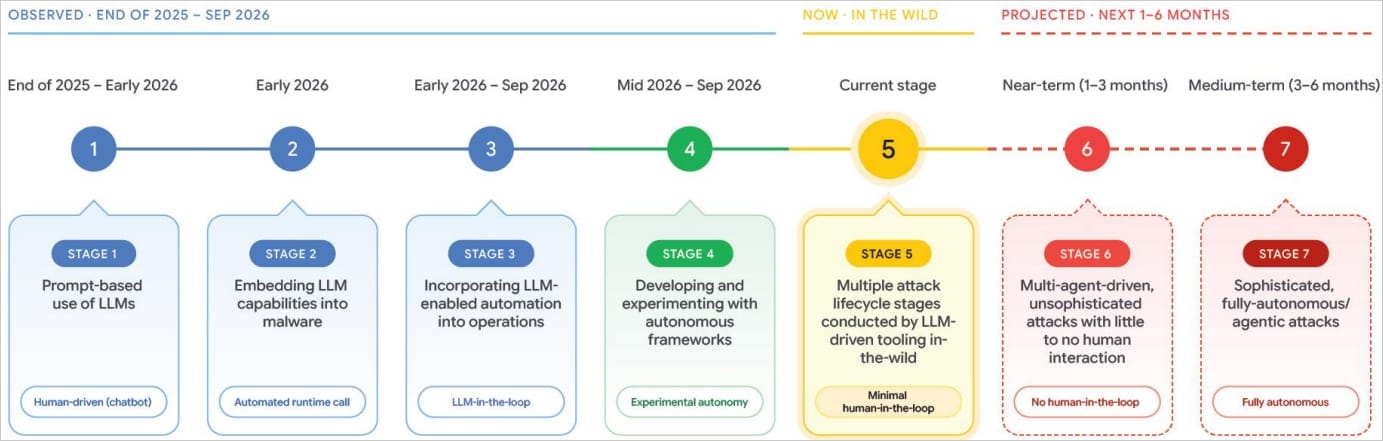
Experts at GTIG estimate that within the next three months, threat actors will be capable of initiating unsophisticated automated attacks that require “little to no human interaction.” Furthermore, they predict the emergence of “sophisticated, fully autonomous” attacks within the next six months.
Source: Google
The Weaponization of AI Frameworks
As part of their advisory issued last week, the FBI highlighted the weaponization of the ARTEX AI pentesting framework since August. This framework has reportedly been used in attacks targeting various sectors, including finance, government, technology, defense, and healthcare.
According to Google, attackers are now systematically exploiting open-source pentesting tools to execute full-scale automated assaults, utilizing frameworks such as ARTEX, CAIRN, CyberStrikeAI, and HexStrike AI.
These tools have enabled attackers to adaptively target internet-exposed endpoints that exhibit low-complexity vulnerabilities, allowing them to create exploits using large language models (LLMs). A particular case described by GTIG involved hackers employing a multi-agent system called ‘exploit_agent’ to automate vulnerability discovery and exploitation against French media, entertainment, and educational sites.
“In the past quarter, GTIG identified threat actors using LLM frameworks to fully automate vulnerability discovery and exploitation without a human in the loop for the first time,” stated Google. They also discovered an exposed staging server containing the multitier ‘exploit_agent’ framework, which integrated multiple LLMs.
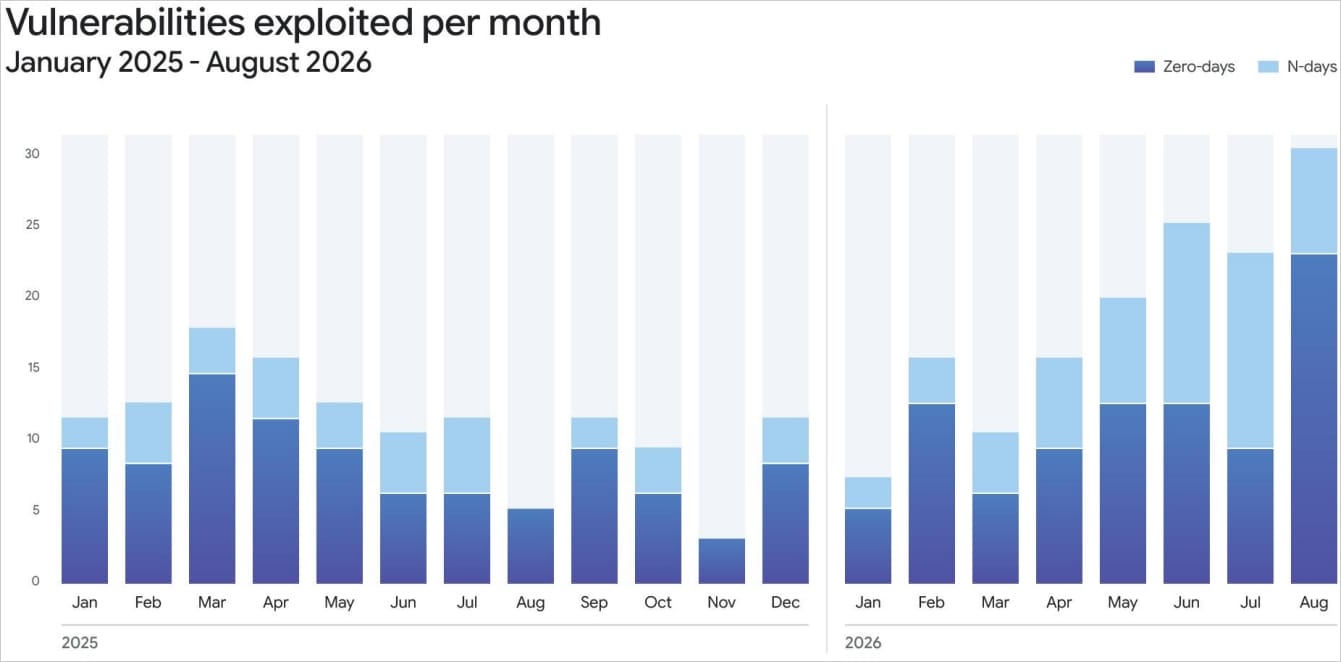
The framework functions by analyzing updates on widely-used web applications to identify potential security weaknesses and automatically attempts to exploit these vulnerabilities, significantly reducing the window of opportunity for defenders to implement patches. Moreover, the emergence of AI-generated proof-of-concept exploits, such as those observed with PHP2Shell, places an added burden on organizations tasked with verifying this code and developing protective measures.
Source: Google
Emerging Trends in AI Utilization
Beyond the realm of automated attacks, Google has identified numerous attacks attributed to a threat group known as UNC6836, suspected of having links to “Midnight Neptune.” These actors targeted cryptocurrency firms across North America and Europe, modifying Claude Code to facilitate the download of the SOMBERMEME backdoor after the initial breach.
Google’s findings illustrate a trend where AI is increasingly deployed in influence operations by state-sponsored entities, commercial vendors, and political factions. The issue of LLMjacking is also on the rise, as attackers exploit this new avenue for substantial financial gain, posing significant risks to affected organizations.

Adaptive Security’s AI agents analyze email intent, context, and behavior to uncover phishing, business email compromise, and invoice fraud.
Discover what’s being intercepted with a 14-day read-only scan of Microsoft 365 or Google Workspace, with no MX changes.
Start your free email security scan.
