


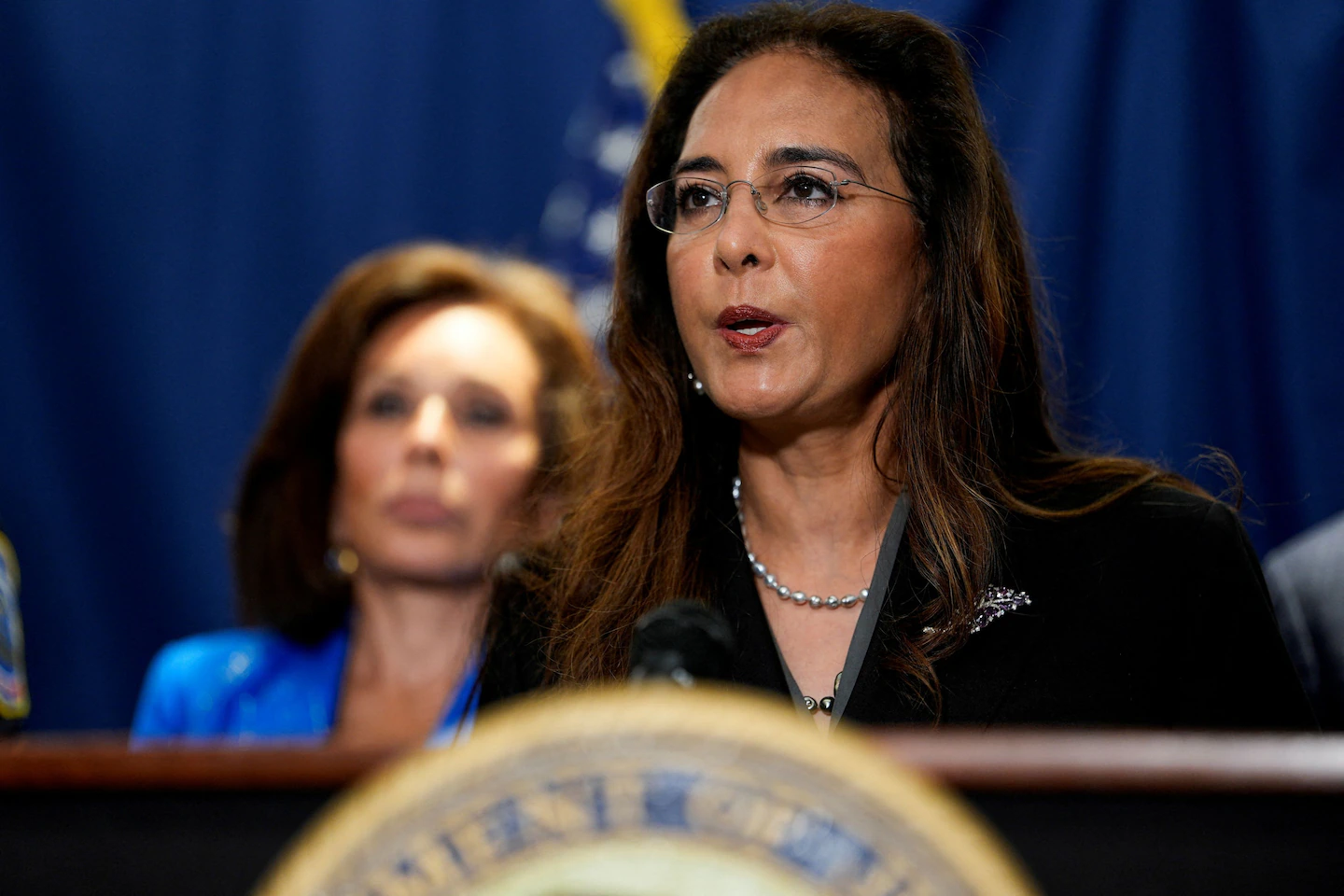
Significant Leadership Shift in the Justice Department’s Civil Rights Division
In a notable development within the U.S. Justice Department, Harmeet K. Dhillon, who has been at the forefront of the Civil Rights Division, announced her resignation on Thursday. This transition follows the recent midterm elections, during which the Democratic Party secured control of both the House of Representatives and the Senate.
Background on Harmeet K. Dhillon
Dhillon previously held a substantial role in the Justice Department, overseeing the operations of its Civil Rights Division—an agency known for its critical function in upholding civil liberties and combating discrimination. Under her leadership, the division faced numerous challenges, which became a focal point in the broader discussion surrounding civil rights in the United States.
Implications of the Resignation
This resignation by Dhillon signals the beginning of significant changes within the Justice Department, particularly as the Democratic Party aims to reshape various government agencies following their electoral success. The outcome of these elections appears to have triggered a reevaluation of personnel at high levels, potentially leading to a new direction for the Civil Rights Division.
The timing of Dhillon’s exit is noteworthy, as it reflects the shifting political landscape and the implications it may have on key initiatives within the Justice Department. The agency plays an essential role in enforcing federal laws that protect individual rights and liberties.
Future Prospects
As the Justice Department prepares for this new chapter, the focus will likely shift to finding a successor capable of navigating the challenges ahead and fostering the division’s mission to advocate for civil rights. Stakeholders and advocates are keenly observing the forthcoming changes that may arise in leadership, direction, and policy priorities.
The coming days will undoubtedly reveal more about the implications of this leadership change, shaped by both internal dynamics and external pressures in the evolving political environment.
