


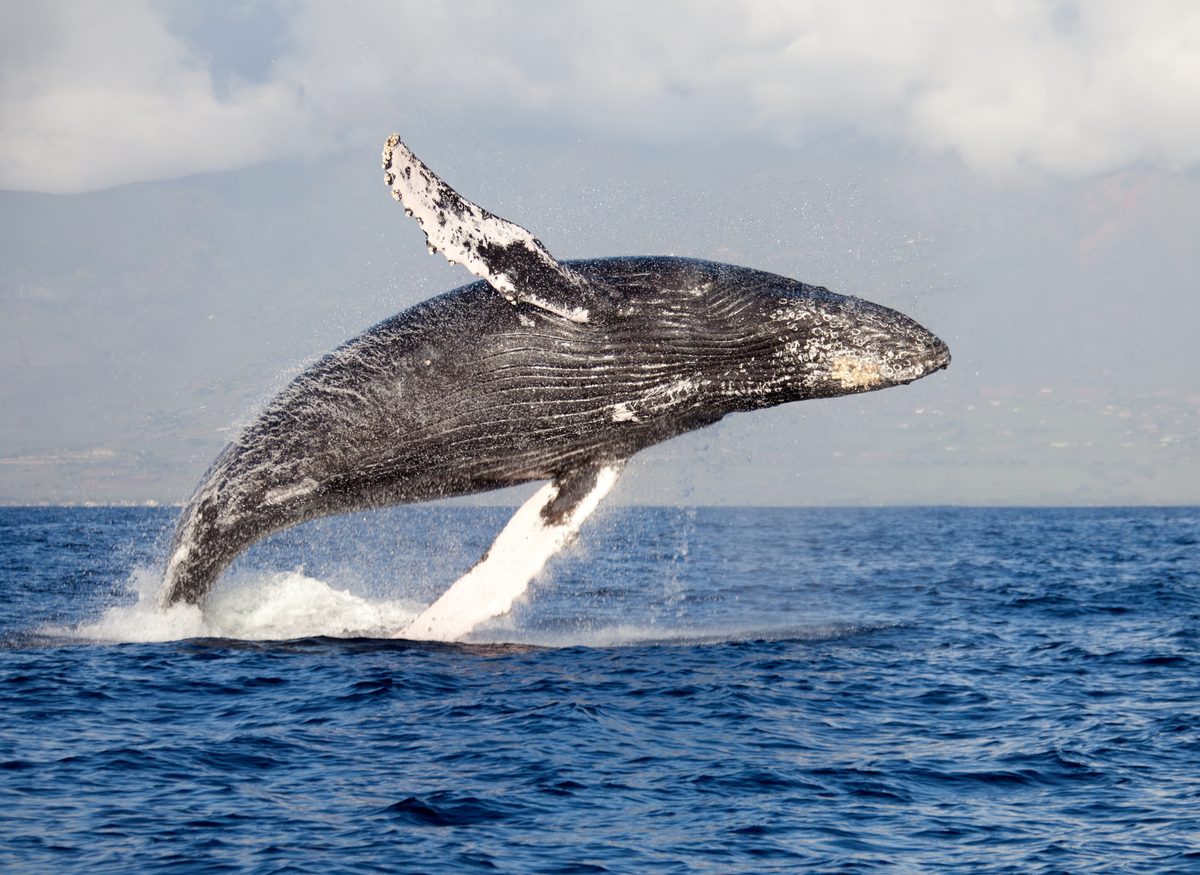
Understanding Humpback Whales: Communication and Interaction
Complex Behaviors and Intelligence
Humpback whales are renowned for their sophisticated social structures and impressive intelligence. Their interactions with other marine species, especially during feeding, have been the subject of extensive research and observation.
Collaborative Feeding Techniques
One of the most notable behaviors exhibited by humpback whales is their cooperative hunting strategy. These whales often gather to create bubble nets—a technique where they blow bubbles to encircle small fish, making it easier to feed. This collaboration raises intriguing questions about the communication methods utilized among the whales during these events.
Research into Whale Communication
In a pioneering study conducted in 2021, researchers from the SETI Institute engaged in what was described as a ‘conversation’ with an individual humpback whale named Twain. By playing recorded whale calls through an underwater speaker, Twain responded with similar vocalizations, suggesting a basic form of communication.
A subsequent study in 2024 further investigated the sounds produced by humpbacks during bubble feeding. Initially thought to be random, these calls were found to serve a variety of purposes, including what appeared to be instructions or observations directed toward other pod members.
Interactions with Humans
While the earlier studies focused predominantly on communication within pods and feeding techniques, a 2025 study by researchers from SETI and the University of California took a broader approach. Published in Marine Mammal Science, this research explored humpback whales’ voluntary interactions with humans, particularly their production of bubble rings during friendly encounters.
According to co-lead author Dr. Fred Sharpe, “Humpback whales live in complex societies, are acoustically diverse, use bubble tools and assist other species being harassed by predators.” The study suggests that bubble rings may be an attempt by humpbacks to engage playfully with humans, potentially as a form of communication.
Linking Earthly and Cosmic Communication
The SETI Institute aims to unravel the mysteries of life beyond Earth. The intriguing patterns observed in whale behavior, including their bubble rings, are compared to the search for interstellar signals, dubbed ‘candidate signals’. The researchers draw parallels between interpreting these whale messages and the efforts to decode signals from outer space.
Co-lead author Jodi Frediani noted, “We’ve now located a dozen whales from populations around the world, the majority of which have voluntarily approached boats and swimmers blowing bubble rings during these episodes of curious behaviour.” This indicates a potential willingness on the part of whales to interact with humans.
Future Avenues of Research
The Whale-SETI team envisions using their findings to enhance techniques for deciphering cosmic signals that might indicate extraterrestrial life. By applying advanced observational methods and artificial intelligence, they aspire to better understand not only whale communication but also the broader implications of non-verbal dialogue among species.
Through continued research, the team hopes to unlock the mysteries of both marine communication and potential extraterrestrial interactions, advancing our understanding of intelligent life in the universe.
Watch Whales Communicate
Experience the sounds of bubble-making from humpback whales:
