


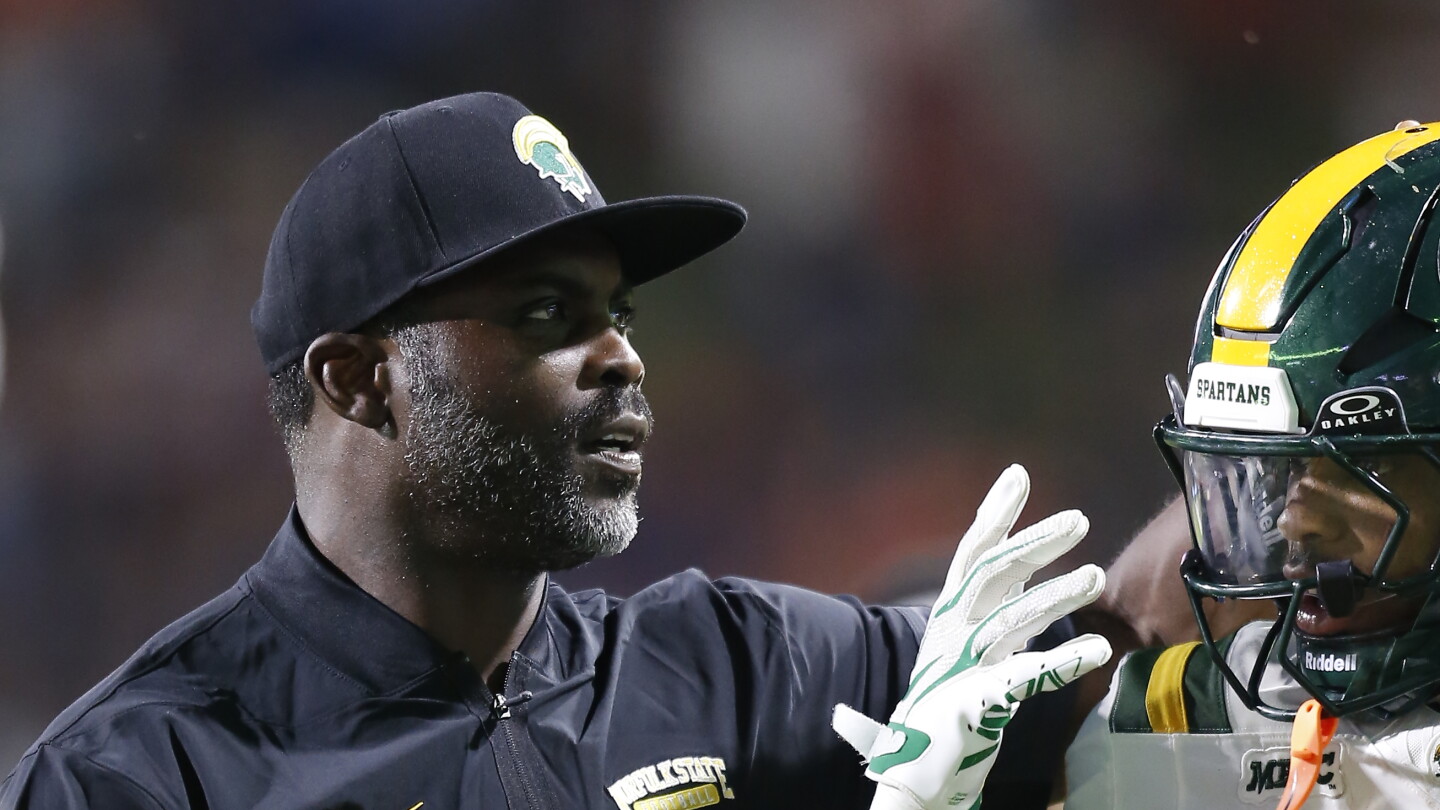
Mike Vick’s Coaching Decision Costs Norfolk State in Narrow Loss
In an unfortunate sequence of events, Mike Vick’s directive as head coach of Norfolk State fell by the wayside, resulting in a surprising defeat against North Carolina Central on Saturday. The game showcased the challenges that can arise during critical moments in football when communication and execution falter.
Game Situation Overview
With just 1:34 remaining in the game, Norfolk State held a slim 28-23 lead and was in a favorable position. They had the ball at midfield and only needed to manage the clock effectively to secure the win, as North Carolina Central had no timeouts left.
In a strategic move, Vick instructed his players to enter victory formation, a standard approach to kneel down and run the clock. However, rather than following this directive, the offense lined up in a shotgun formation, leading to a risky play that culminated in a fumble.
Turning Point: The Fumble
As the quarterback attempted to scramble left, he was struck by a defender, resulting in a fumble that North Carolina Central swiftly recovered at the Norfolk State 37-yard line. Just five plays later, North Carolina Central scored a touchdown with a 26-yard pass, bringing the score to 29-28 after a failed two-point conversion attempt, leaving only 27 seconds on the clock.
Post-Game Reactions
After the game, Vick expressed bewilderment over the decision-making process, stating, “I called victory formation. All we had to do was take a knee, kneel the clock out. That’s just situational football.” He highlighted his expectation that players would adhere to his final instructions but was disappointed by the outcome.
Vick elaborated, “I looked up and we was running the ball, and then I seen the fumble. But my final instructions was victory formation.” This moment has now become a cautionary tale on the importance of clear communication and adherence to a game plan.
Coaching Dynamics and Accountability
As the situation unfolded, Vick observed that the play called did not align with his instructions. The offense’s formation indicated that a different strategy had been adopted, possibly against Vick’s orders. Analysis of the post-game footage revealed Vick attempting to clarify his instructions, yet preparations for a run play continued.
If Vick believes that Offensive Coordinator Brian Sheppard or other coaching staff overruled him, it raises questions about accountability and the dynamics of decision-making on the sidelines. Conversely, some might contend that Vick should have remained more engaged in the moment to ensure adherence to his game plan.
Conclusion
This loss not only impacted Norfolk State’s record, dropping them to 4-6 for the season, but it also highlighted critical lessons in coaching and game management. Vick’s experience serves as a robust example for collegiate football programs, emphasizing the necessity for unambiguous communication and adherence to strategic play-calling as vital components of securing victory.
