


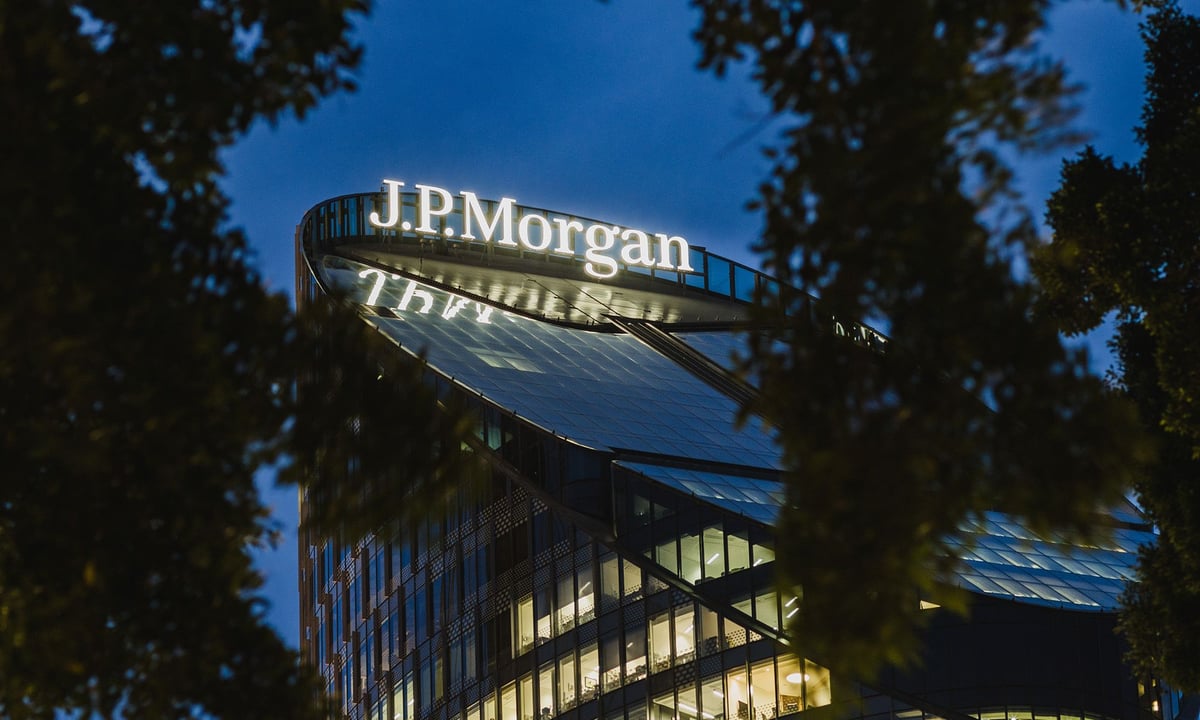
Exploring Profit Strategies of Major American Banks in Q3 2023
The landscape of American banking is shaped by major players such as JPMorgan Chase, Bank of America, Wells Fargo, Citigroup, Goldman Sachs, and Morgan Stanley. Despite being household names, each institution employs distinct methods for revenue generation. In the recent earnings reports for Q3 2023, several trends and performance factors came to light.
JPMorgan Chase: Diversified Revenue Streams
As the largest bank in the U.S., JPMorgan Chase benefits from a multifaceted business model. In Q3, its asset management division reported an impressive $5.9 billion in fees, marking a 15% year-over-year increase. Investment banking saw a 13% rise in fees, totaling $3 billion, bolstered by a notable surge in advisory fees.
The bank’s credit card segment also performed well, with income rising by 25% to $1.43 billion. Revenue from card services reached $8.28 billion, while leasing activities contributed an additional $1.2 billion to its income.
Bank of America: Strong in Wealth Management
Bank of America exhibits a robust wealth management sector, driving significant growth with $7.1 billion in revenue for Q3, a 13% increase year-over-year. Its Global Transaction Services section, which aids businesses in managing financial transactions, contributed $3.04 billion, reflecting an 11% uptick.
While its investment banking segment faced a decline from $1.16 billion to $971 million, traditional consumer banking operations still flourished, yielding a net income of $3.52 billion from revenues of $11.6 billion.
Wells Fargo: Traditional Lending Focus
Wells Fargo maintains a traditional focus on lending, which significantly influences its earnings. In Q3, both loan and deposit averages surged by 11%, enhancing net interest income to $12.52 billion. However, its net interest margin did narrow to 2.43% from the previous year’s 2.61%.
The Consumer Banking and Lending divisions recorded revenues of $10.66 billion, with net income climbing by 21% to $2.76 billion, attributed to improved cost management.
Citigroup: Behind-the-Scenes Performance
Known for its consumer banking, Citigroup‘s core profitability is increasingly driven by its Services segment, which aids corporations in cash management and international transactions. In Q3, this segment’s revenue increased 15% to $6.6 billion, with net income rising by 27% to $2.64 billion.
Additionally, Citigroup’s wealth management branch has shown notable growth, earning $585 million, up from $303 million the prior year.
Goldman Sachs: Focused on Financial Markets
Goldman Sachs distinguishes itself through its emphasis on capital markets and corporate financing rather than traditional consumer banking. In Q3, the firm generated $6.44 billion from equities trading, which constituted over one-third of its total revenue, significantly benefiting from heightened activity in its prime brokerage services.
Morgan Stanley: Wealth Management Success
Morgan Stanley has notably increased its presence in wealth management. In Q3, it achieved a record $9.07 billion in revenue, a 10% year-over-year increase. The division reported a strong pretax profit margin of 30.4%, enhanced by both rising asset management revenue and interest income.
Furthermore, the firm attracted $232 billion in net new assets during the quarter, substantially up from $81 billion last year.
Conclusion: Investing Insights from America’s Leading Banks
Despite competing for similar customer bases, these major banks operate using varied strategies to generate profits. JPMorgan Chase leads with a diversified approach; Bank of America and Morgan Stanley capitalize on wealth management; Citigroup excels in corporate services; while Wells Fargo remains grounded in traditional lending. Understanding these differentiators is crucial for investors looking to navigate the complex banking landscape.
