


Enhancing Women’s Safety in Serbia with SafeSteps
The Context of Safety for Women in Serbia
In Serbia, the safety of women and girls extends beyond mere physical protection; it significantly affects their mobility, decision-making, and participation in society. Numerous reports, including those from the Youth Umbrella Organisation of Serbia (KOMS), highlight escalating concerns over insecurity and a diminishing trust in institutional frameworks among the youth. These challenges are compounded by reports of pressure and threats faced by young activists advocating for social reform.
The Commissioner for the Protection of Equality documents the ongoing issues of gender-based discrimination, inadequate support for women experiencing harassment, and the social repercussions that deter many from reporting such incidents. These issues hinder women’s right to dignity and safe access to public spaces.
Initiative Overview: SafeSteps
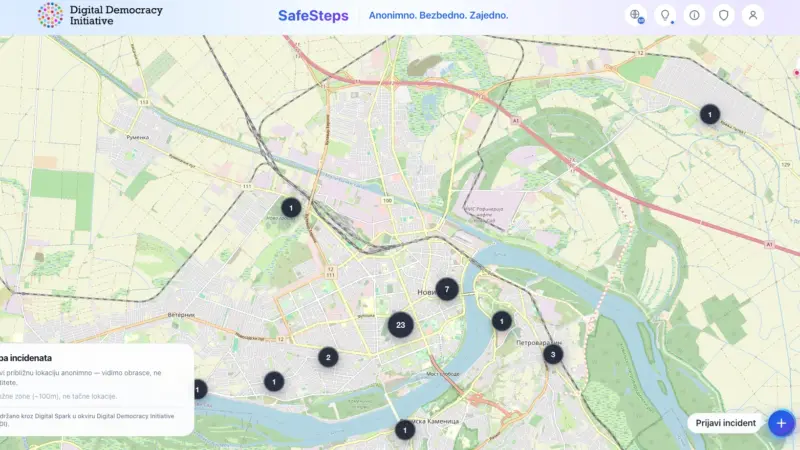
To address these formidable challenges, Varvara Lazarevic, the head of the NGO Omladina JAZAS Novi Sad, has spearheaded the SafeSteps project. This initiative, part of the Digital Sparks granting scheme, provides a digital platform that allows women to anonymously report their experiences of insecurity in public spaces. It aims to illuminate patterns of behavior and increase community dialogue, thus advocating for necessary changes.
Engagement with Digital Sparks
“Digital Sparks was important to us because it gave us the opportunity to connect areas we have been working on for years — communication, human rights, and youth work — with technology and turn them into a practical tool,” said Varvara Lazarevic.
The SafeSteps platform was born from Lazarevic’s desire to address the often unreported experiences of women, shifting the focus from personal safety measures to systemic changes within public spaces. It allows users to provide feedback on safety conditions without compromising their anonymity, making it a crucial tool for advocacy.
Implementing SafeSteps
One of the project’s significant achievements was transforming a conceptual framework into an operational platform where individuals can safely report experiences of harassment and insecurity. Key features include:
- Anonymity: No personal identification required.
- Approximate location reporting to maintain privacy.
- A robust communication strategy via social media to engage users and encourage contributions.
- A network of over 20 support contacts providing resources for victims.
Community Impact
“The most important change is that we have created another way for people to make their experiences visible,” Lazarevic noted. “SafeSteps offers a space where they feel safe and have control over the information they provide.”
SafeSteps empowers individuals, particularly youth, by demonstrating that technology can facilitate meaningful conversations about safety and societal issues. Early feedback indicates potential for substantial impact, as the platform fosters a deeper understanding of communal experiences around safety.
Lessons Learned and Future Directions
Through participation in the Digital Sparks project, Lazarevic has gained valuable insights into the intersection of technology, civic engagement, and privacy. Key takeaways include:
- Technology is valuable only when it meets real needs responsibly.
- Implementing strong data protection measures is vital in maintaining user trust.
- Collaborative efforts among organizations can enhance knowledge sharing and community impact.
Looking ahead, the SafeSteps initiative is designed to evolve. Future goals include broadening outreach efforts, collecting more usage data, and forging partnerships with various institutions to ensure safer public environments. Lazarevic envisions SafeSteps as a framework that could eventually expand to other cities, thus allowing a collective voice to shine a light on safety issues across Serbia.
