


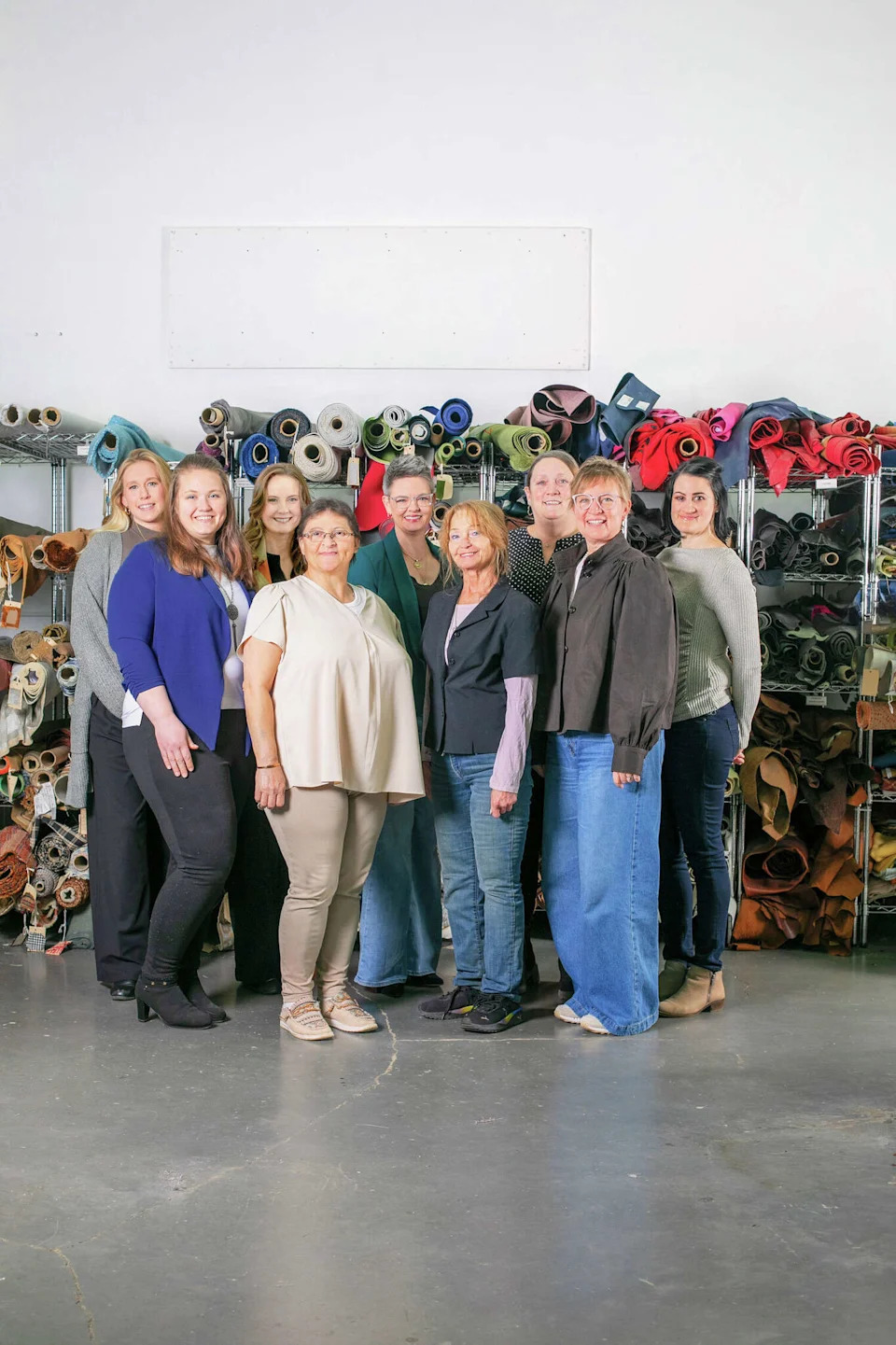
In Wappingers Falls, a progressive collaboration between two local nonprofits aims to significantly improve the lives of women recovering from addiction. By addressing essential needs for safe housing and job opportunities, this partnership is fostering empowerment and long-term sobriety among its participants.
Women completing their rehabilitation at the Walter Hoving Home in Garrison can now transition into a two-year employment program at Unshattered. This Wappingers Falls-based organization specializes in training women to craft handbags and accessories from recycled materials. Additionally, they have the opportunity to reside in accommodations leased by Hudson River Housing, which has supported affordable housing initiatives for over 40 years.
According to Kelly Lyndgaard, CEO and Founder of Unshattered, successfully completing a year-long treatment program is often just the beginning of a challenging journey for many in recovery. “I asked myself, Who is making sobriety sustainable? I couldn’t find anybody who was doing that,” she shared. Recognizing this gap, Lyndgaard left her previous role as an IBM executive in 2016 to develop programs that empower women to rebuild their lives.
The impact of Unshattered’s program has been remarkable: 94% of its participants sustain long-term sobriety, and 86% secure employment for a minimum of 12 months. Recently, two individuals from this program received recognition as 40 Under 40 honorees from the Dutchess County Regional Chamber of Commerce. Furthermore, Lyndgaard highlighted that each woman who completes the program contributes an estimated $150,000 in economic benefit to the community through enhanced employment, decreased reliance on public services, and increased community engagement.
Unshattered has been assisting women in recovery since 2016. (Unshattered)
Under this new initiative, four employees from Unshattered now have access to affordable housing conveniently located near their workplace. However, this partnership has even greater aspirations. Unshattered is currently renovating its facility to upscale its capacity, aiming to assist up to 150 women annually—a tenfold increase over their current service level.
Excitement is palpable within the organization as Hudson River Housing’s CEO and President, Christa Hines, expressed her enthusiasm, stating, “We are really excited to grow this program and provide additional housing options not only for Kelly’s program participants but also for other employers who recognize the housing challenges their employees face.”
Cecelia Jones, one of the women benefiting from this housing initiative, offers a poignant personal account. While the average onset age for substance use among Unshattered employees is around 11, Jones presents a different narrative. She began using opioids, prescribed during her pregnancy to alleviate severe headaches stemming from preeclampsia, a serious condition that can arise during pregnancy.
Her path to addiction was steep, leading to the dissolution of her marriage and the loss of her career and home. Jones reflected on her past, stating, “I started using anything I could get my hands on. Being in active addiction, I never had the skills to maintain a full-time job.” However, through Unshattered, she is now working to complete a state apprenticeship as an industrial sewing machine operator—the first person from Unshattered to achieve a trade card.

Unshattered employees participate in various workshops focused on finance and personal development. (Unshattered)
In addition to practical skills in sewing, participants also attend workshops designed to enhance financial literacy, self-esteem, and spiritual well-being. Lyndgaard articulated the organization’s mission, saying, “We are really trying to help women rise to their highest level of potential and thrive for the long term.”
For Jones, engaging in this program signifies a pivotal moment in her life, affirming that one is never too far gone to seek help. “There’s always help out there, if you’re ready for it,” she remarked. “You have to want it for yourself.”
This initiative underscores the critical intersection of housing security and employment in the recovery process, representing a progressive step toward sustainable sobriety and reintegration into society for women in the Hudson Valley.
