


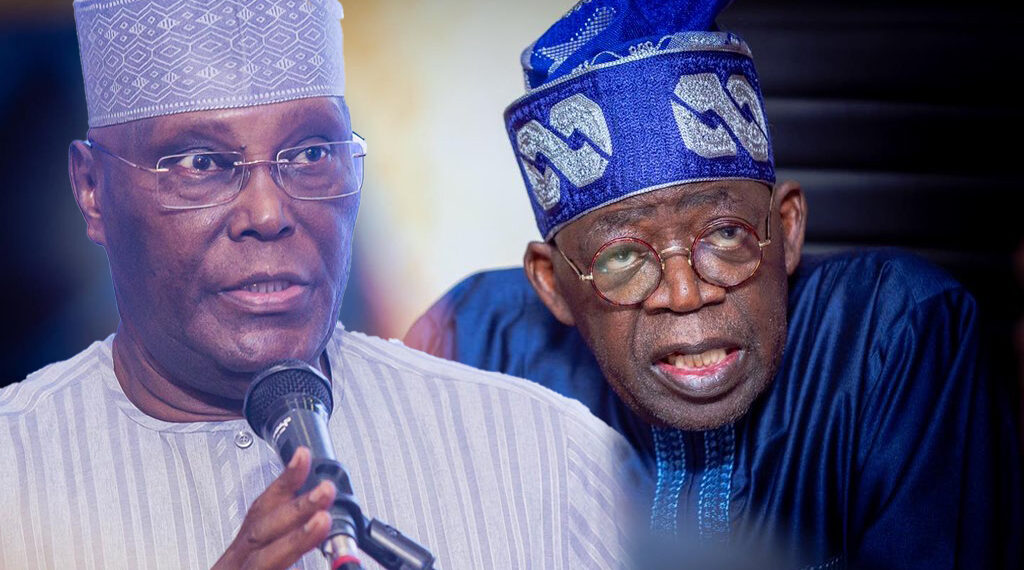
Tinubu Defends His Administration Amid Economic Challenges
By Ayobami Okerinde
Context of Criticism
President Bola Tinubu recently addressed criticisms directed towards his government regarding the prevalence of hardship and hunger in the nation. Speaking at the Rainbow Coalition presidential campaign rally in Port Harcourt, Rivers State, he attributed much of the current economic malaise to the legacy of past administrations, notably that of former Vice President Atiku Abubakar.
Defending His Administration
During his speech, Tinubu emphasized his commitment to resolving issues he inherited, countering claims of widespread hunger. He stated, “Those people talking of hunger, I’m cleaning the mess they created. Atiku was one of them.” This statement highlights his assertion that the current economic difficulties are a byproduct of their governance.
Questioning Atiku’s Critique
Tinubu further challenged Atiku’s credibility to criticize his administration, recalling Atiku’s time as Vice President under former President Olusegun Obasanjo. Referencing Atiku’s establishment of a university while serving in office, Tinubu questioned, “Ask him how he built a university while in office as vice president in charge of our economy. Who built the university for him? It’s your money. It’s your effort.” This pointed question aimed to highlight perceived discrepancies in Atiku’s financial integrity and moral standing.
Expressing Gratitude to Supporters
Tinubu took the opportunity to express his gratitude to the people of Rivers State for their support during the 2023 presidential election. “Thank you for the last election. In 2022, 2023, I looked very hopeless, but you trooped out to support me and gave me the mandate,” he acknowledged. He reaffirmed his intention to seek a second term, stating, “I’m seeking a second term because you believe in me and that I care for you.”
Conclusion
As the political landscape evolves, President Tinubu’s response to criticism illustrates the ongoing discourse surrounding accountability and governance in Nigeria. The focus on inherited challenges rather than immediate outcomes raises questions about the expectations placed on current leaders and their capacity to effect meaningful change.
