


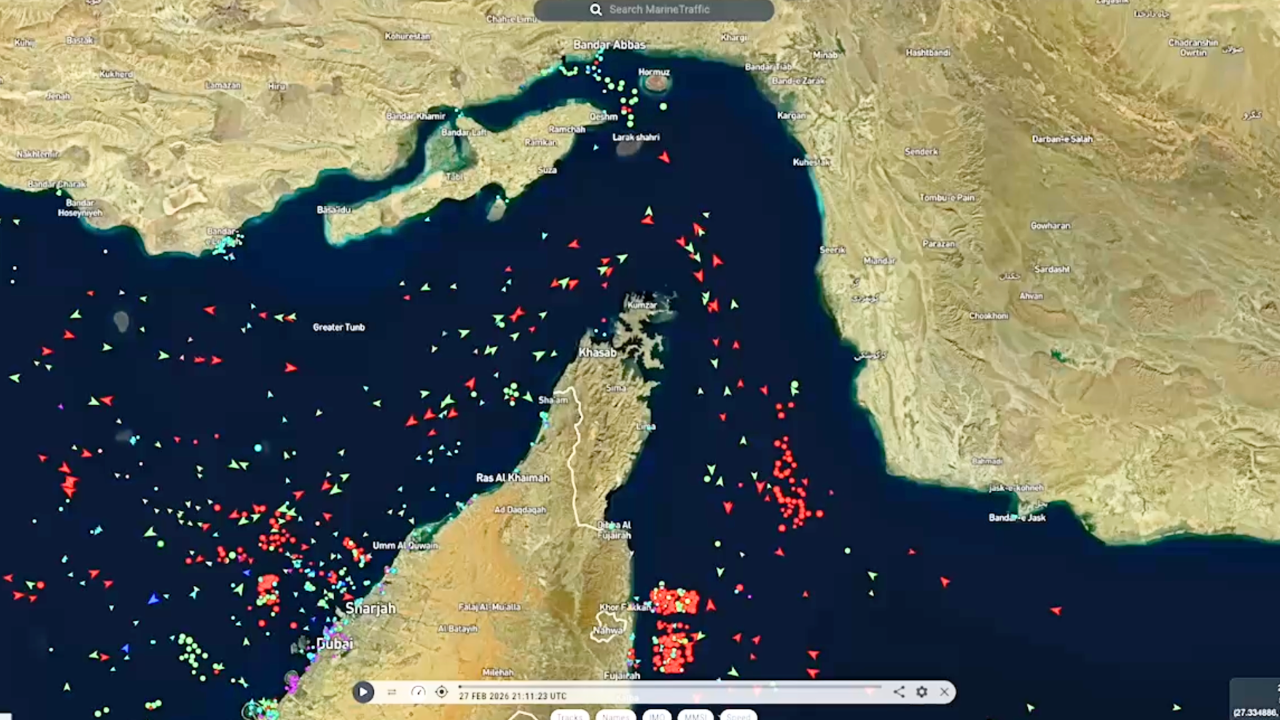
Iran Proposes Reopening of Strait of Hormuz Amid Ongoing Negotiations
Iran’s Foreign Minister Abbas Araghchi reaffirmed on Sunday the nation’s proposal to reopen the strategically crucial Strait of Hormuz within a week. This announcement comes as tensions with the United States persist over the ongoing conflict that has lasted for eight months.
Details of the Proposal
Presented initially in September, the proposal emerged following the breakdown of a temporary ceasefire. Araghchi emphasized in his remarks made in Baghdad, “Our situation is clear and based on the seven-days proposal presented to the U.S.” He indicated that Iran is actively reviewing the feedback shared by U.S. officials while firmly stating that their proposal remains available for discussion.
Highlighting the importance of sincerity, Araghchi said, “If there is any honesty on the U.S. part, which there isn’t, the way to reopening the Strait of Hormuz is obvious.” This sentiment underlines the political complexities surrounding the maritime passage, which is critical for global shipping and energy supplies.
Strait of Hormuz: A Critical Maritime Route
The Strait of Hormuz remains a focal point in the geopolitical landscape, with President Donald Trump asserting that the waterway is open to all vessels except for those under Iranian jurisdiction. A recent incident involving the GFS Pride, a container ship flagged in Singapore, underscored the fragility of maritime safety in the region when it was reportedly struck by an Iranian projectile.
U.S. Central Command spokesperson Navy Capt. Tim Hawkins addressed the situation, stating that, despite some Iranian attempts to disrupt shipping, the vast majority of vessels have successfully transited the strait. “The U.S. military has assisted in providing coordinated protection for thousands of ships that have safely transited,” Hawkins stated, adding that approximately 97% of vessels have navigated the strait without incident.
Negotiation Challenges
Araghchi claimed that the Strait of Hormuz could be reopened within six days if the U.S. accepts Iran’s stipulations, with a resumption of peace talks proposed for the following day. However, the U.S. administration has made it clear that any negotiations would necessitate a discussion of Iran’s nuclear program as a preliminary point. Vice President JD Vance previously articulated that Tehran must implement a “meaningful” reduction in its uranium enrichment activities to move forward.
As the two nations continue to grapple with their divergent priorities, Iran insists that discussions should first focus on reopening the Strait of Hormuz, a key route responsible for transporting approximately one-fifth of the world’s oil and liquefied natural gas before the onset of conflict. The outcome of these negotiations holds significant implications for global maritime trade and regional stability.
For more information, visit this source.
