


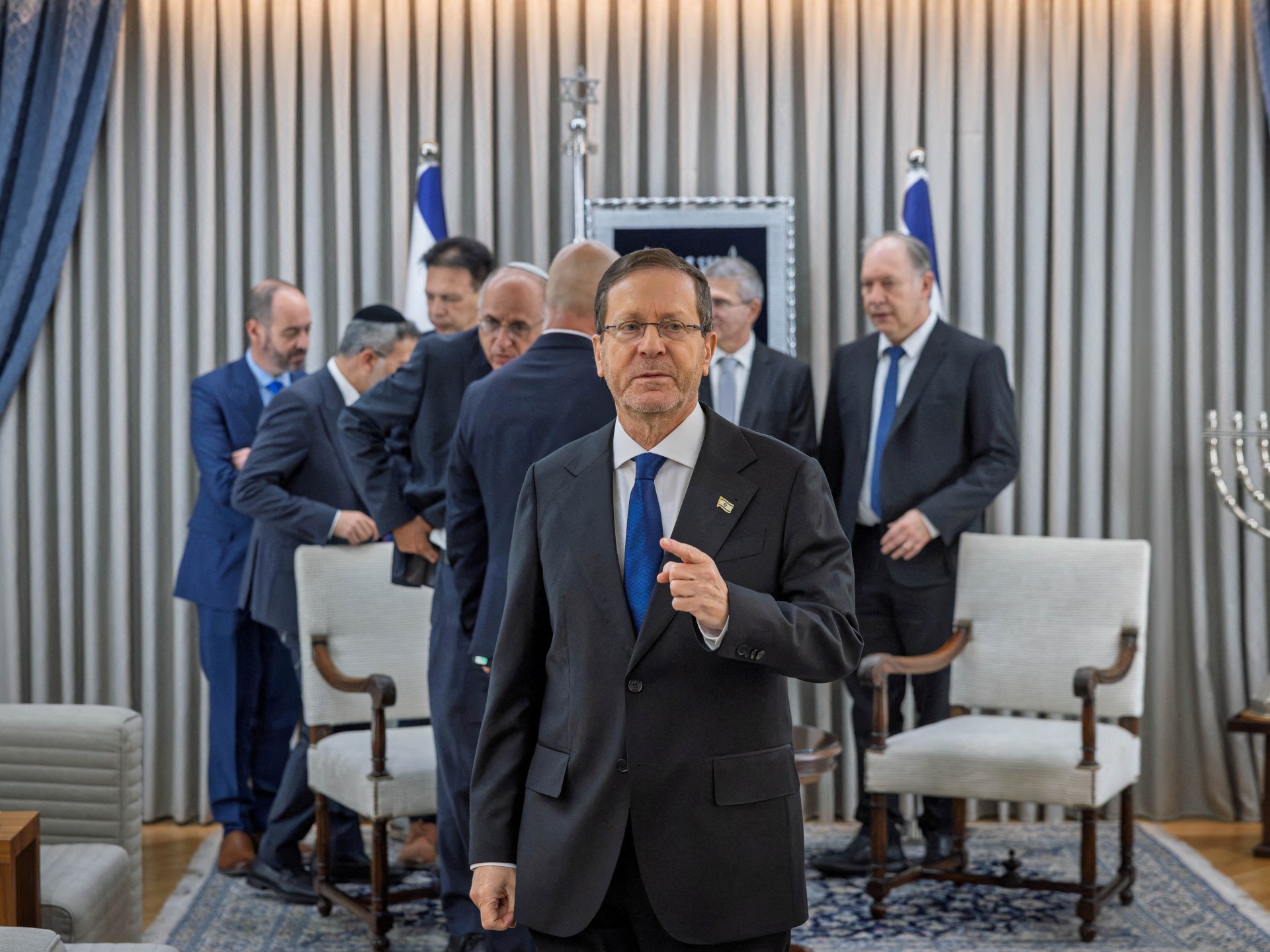
Israel’s President Herzog Moves Forward After Parliamentary Elections
Following the recent parliamentary elections in Israel, President Isaac Herzog has officially accepted the certified results. The president has initiated discussions with party leaders to determine the next steps in forming the government.
Political Landscape Post-Elections
Herzog’s actions on Wednesday represented a significant setback for Prime Minister Benjamin Netanyahu, who has cast doubt on the legitimacy of the vote. In the October 27 election, Netanyahu’s coalition lost its majority in the Knesset, the 120-member Israeli parliament, while Arab-led parties made unprecedented gains.
“The elections are over. Now is the time to face reality,” President Herzog remarked, emphasizing the need for cooperation among political factions.
The Election Results
In the election, neither Netanyahu’s coalition nor the block led by his primary opponent, Gadi Eisenkot, attained the necessary 61 seats to govern outright. Netanyahu’s coalition secured 53 seats, while Eisenkot’s bloc received 48 seats. This outcome opens possibilities for coalition negotiations either between Netanyahu and Eisenkot or between Eisenkot and the Arab parties, Ra’am and the Joint List, which together gained a historic 19 seats.
Consultation Process
Herzog completed the first round of consultations with party leaders on Wednesday evening and plans to continue discussions into Thursday. He received recommendations from factions including Religious Zionism, Zehut, Shas, and Yisrael Beytenu about which Knesset member should be tasked with government formation. While three factions aligned with Netanyahu have endorsed him, a fourth recommended Eisenkot, complicating coalition dynamics.
Further consultations are scheduled for Thursday, which will involve eight additional parties, including both Arab-led factions. The meetings will conclude with discussions involving Eisenkot’s Yashar party and Netanyahu’s Likud party.
Potential Alliances
Eisenkot’s position has strengthened with Ra’am’s endorsement, boosting his expected backing to 56 lawmakers—though still short of the majority threshold. The Joint List’s stance remains uncertain; reports indicate they may coordinate with Eisenkot, potentially helping him exceed the 61-seat requirement if they choose to support him.
Conversely, Netanyahu’s coalition may struggle to rally the full 53 endorsements from his allies. Notably, Degel HaTorah from United Torah Judaism has opted not to recommend either candidate, citing disagreements with Netanyahu’s coalition management.
Next Steps and Implications
After the consultation process concludes, Herzog will identify the candidate he believes has the best chance of assembling a viable coalition, likely either Netanyahu or Eisenkot. The president will have several days to reach this decision, after which the selected candidate will be given 28 days to form a government, with a potential 14-day extension available. Should neither candidate succeed in forming a coalition, Israel could face another election early next year.
Addressing Allegations of Irregularities
In the meantime, Netanyahu has alleged that the election might have been compromised, claiming that Arab-led parties “stole” the election. However, the Israeli elections commission has stated that an extensive investigation found “no evidence of irregularities that compromised the integrity of the election or affected its results.” Attorney General Gali Baharav-Miara has also dismissed requests to question elected officials without substantial proof of wrongdoing.
President Herzog has urged all parties to work towards compromise to avert another election cycle. He stressed the importance of pragmatism, acknowledging that not every electoral promise could be fulfilled under the current circumstances. “In the current reality, in which there is no clear winner after the elections, I ask for originality and creativity, courage and goodwill, so that the State of Israel emerges the winner,” Herzog stated.
He further expressed respect for the Palestinian-Israeli community, which constitutes approximately 20% of the population, and condemned any racially charged rhetoric observed in recent political discourse.