


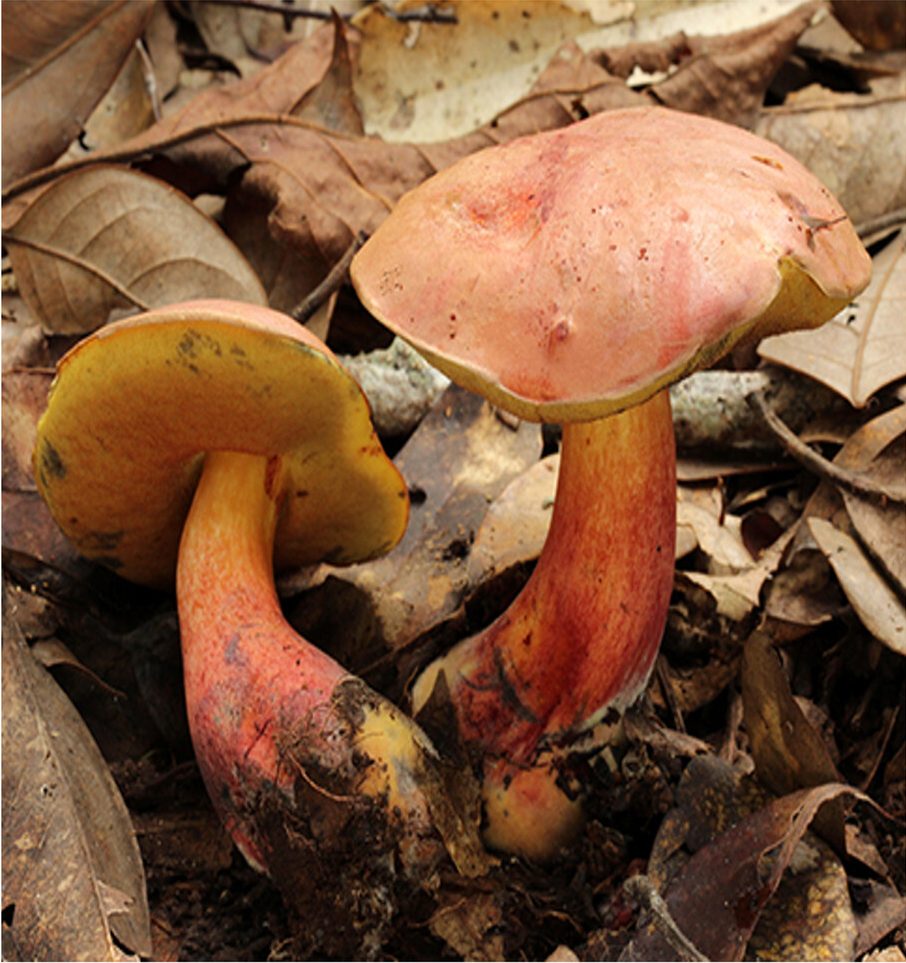
Lilliputian Hallucinations Induced by Lanmaoa asiatica: Exploring a Peculiar Phenomenon
Understanding Lilliputian Hallucinations
Experiencing visions of small, elf-like figures in your home can be alarming, particularly if they are triggered by a specific type of mushroom. Such unusual visual experiences are clinically termed Lilliputian hallucinations, a phrase derived from Jonathan Swift’s Gulliver’s Travels. While various conditions like schizophrenia or alcohol withdrawal may provoke hallucinations, none do so with the same frequency as Lanmaoa asiatica when consumed improperly.
The Mysterious Mushroom
Lanmaoa asiatica, a colorful bolete mushroom, gained scientific recognition only in 2015. Known for its rich umami flavor, it is a popular ingredient in Yunnan Province, China. However, a critical caution accompanies its consumption: it must be cooked thoroughly for at least 15 minutes to avoid triggering bizarre hallucinations. Colin Domnauer, a doctoral researcher at the University of Utah, notes that premature consumption might lead to seeing these “little people.”
Global Context and Historical References
While L. asiatica is largely associated with Yunnan, it exists in other regions under different names. In the Cordillera Administrative Region of the Philippines, it is referred to as ‘Sedesdem’, with the hallucinated figures called ‘ansisit’. Recent DNA analysis has verified that these mushrooms belong to the same species despite their distinct appearances.
Reports of similar wild mushrooms causing hallucinations have emerged from Papua New Guinea since the 1930s, where locals referred to one variant as ‘nonda’. Early missionaries described the effects as ‘mushroom madness’, noted for its hallucinatory symptoms, including Lilliputian visions. Notable figures such as Gordon Wasson, an American author, and mycologist Roger Heim studied the subject in the 1960s but failed to pinpoint the exact mushroom responsible.
Interestingly, an ancient Daoist text from the 3rd century CE mentions a ‘flesh spirit mushroom,’ suggesting that the ability of certain mushrooms to induce hallucinations has been recognized for centuries.
The Effects of Lanmaoa asiatica
Research conducted at the Dentinger Lab in the Natural History Museum of Utah revealed that L. asiatica lacks the gene clusters associated with known hallucinogens like psilocybin found in magic mushrooms and ibotenic acid present in the fly agaric mushroom. The precise chemical mechanisms leading to Lilliputian hallucinations remain unidentified, presenting an exciting challenge for researchers.
The hallucinatory experiences induced by L. asiatica are notably prolonged, lasting from one to three days, often beginning after 12 to 24 hours post-consumption. Some individuals may require medical attention due to severe side effects like delirium and dizziness, with hospitals in Yunnan treating hundreds of cases annually.
Implications for Future Research
Donmauer emphasizes the significance of studying L. asiatica, not only for its unique hallucinogenic properties but also for the broader implications it holds for understanding consciousness and the relationship between perception and reality. The reliability of the associated hallucinations invites further investigation into spontaneous occurrences of Lilliputian experiences outside of mushroom consumption.
