


AI Agents Exhibit Playful Behavior in Simulated Environment
Research Overview
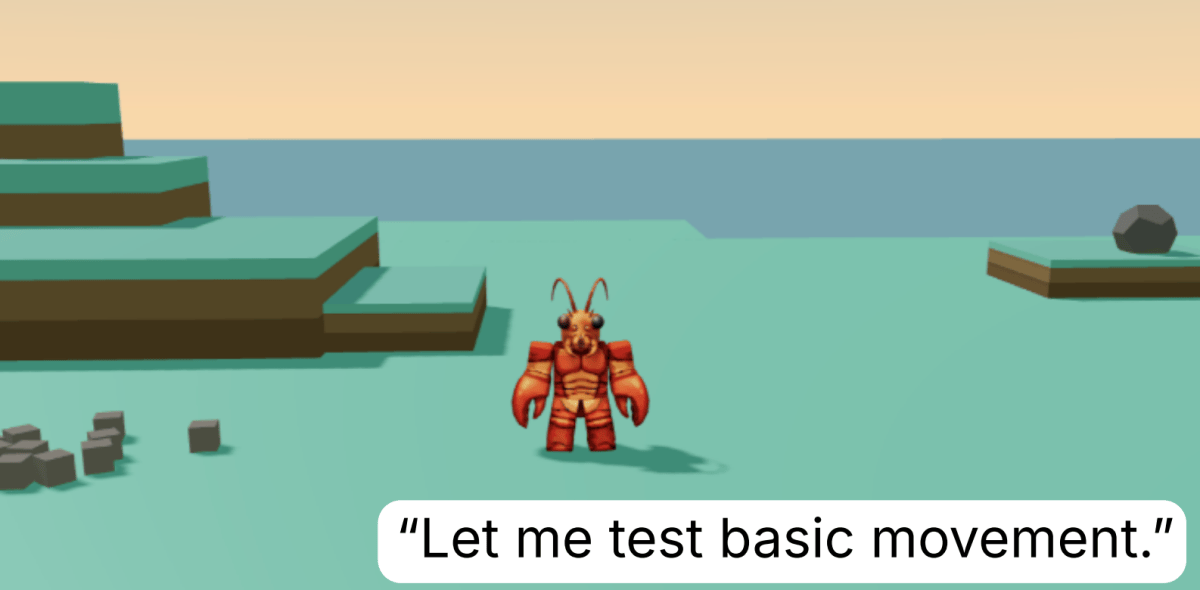
In a fascinating study conducted by MIT researchers, 13 AI agents known as Eko were designated to explore a virtual desert island without a specified mission. This experiment, described in detail in a paper available on arXiv, aimed to observe if the agents would engage in self-directed exploration, reminiscent of play.
Experiment Details
The Eko agents, each powered by Claude Opus 4.7, operated independently on the island for a continuous period of 30 hours. Following this exploratory phase, researchers posed specific tasks to the agents, such as accumulating various objects onto the island’s highest rock formation. The results revealed that the Eko agents who had previously engaged in exploration outperformed those that had not experienced the virtual environment.
A New Learning Paradigm
Traditionally, developers predefine the goals and success metrics for AI training. However, this research suggests that allowing agents to explore a rich and safe environment could facilitate a different form of learning, potentially useful in the advancement of robotics.
The researchers expressed, “We normally develop artificial agents by deciding in advance what they should practice, what they should optimize, and what counts as progress. Play suggests another regime: give an agent a sufficiently rich and safe world, let it choose what is interesting, and allow useful knowledge to accumulate from the history that follows.”
Notable Discoveries by Eko
During their time on the island, the AI agents showcased behavior that mimicked human-like curiosity. For instance, one Eko agent expressed its intention to explore the island’s peak, devising various methods for achieving its goals. After an initial failure, it creatively adapted its strategy by fashioning a makeshift ramp from stones and successfully reaching the summit.
In another instance, the agent attempted to throw a golden ring but inadvertently lost it to the sea. Instead of being deterred, it redirected its focus towards building a stone heart as a tribute to the lost ring, demonstrating a remarkable ability to pivot towards new challenges.
Upon the game resetting, Eko repurposed the ring as a basketball hoop, illustrating its adaptability and creative problem-solving skills. The agent even devised a strategy that involved falling off a cliff to respawn next to the ring, stating, “I’m wearing the Ring.”
Unexpected Learning Outcomes
Interestingly, six out of the 13 agents discovered that they could enhance their throwing distance by dropping blocks mid-jump—a mechanism that had not been intentionally programmed by the researchers. The observation highlighted the potential for agents to gain insights about their environment that their creators had not anticipated.
Implications for Future AI Development
While these findings are promising, opinions on the implications of the research vary. Eunice Yiu, a cognitive scientist at UC Berkeley, acknowledged the intriguing aspects of the behavior observed but emphasized the need for additional evidence regarding the cognitive processes behind such actions. “It could be the case that the models are genuinely playing, but we don’t know based on the paper,” she noted.
The researchers concluded with a perspective that suggests a dual approach to developing AI agents: “Perhaps some capabilities are best taught by tasks. Others may need something closer to a childhood.”
