


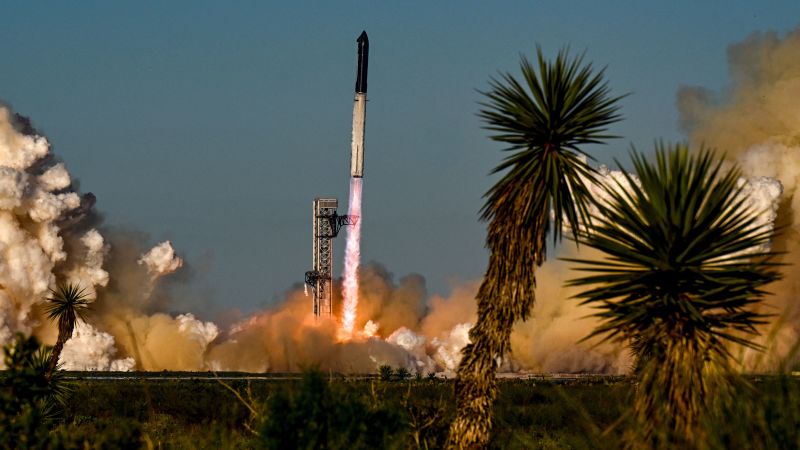
SpaceX’s Starship: Breaking New Ground in Rocket Reusability
Space exploration has traditionally relied on expendable rockets, where none of the components could be reused after a launch. The paradigm shift initiated by SpaceX has begun to reshape this landscape, particularly with its ongoing advancements in rocket reusability.
Historical Context of Rocketry
For much of rocketry’s history, the focus was on single-use vehicles, rendering each launch a costly endeavor. Companies like SpaceX have emerged with innovative approaches aimed specifically at changing this established norm.
Pioneering Reusability with Falcon Rockets
SpaceX’s journey towards reusability kicked off with its Falcon series of rockets. While the company has emphasized that recovering rocket parts is a beneficial aspect of their missions, it is not the primary objective. Successfully delivering payloads to orbit remains the cornerstone of their operational philosophy. If a Falcon booster is not recovered after launch, but the main goal—placing payloads into orbit—is met, the mission is still considered a triumph.
The Evolution to Starship
The introduction of the Starship program marks a pivotal evolution in SpaceX’s strategy. Designed from inception for full reusability, Starship’s economic viability hinges on its success in achieving this goal. SpaceX has made it clear that building a reusable system is essential, as it allows for significant cost reductions and efficiency improvements in space travel.
Testing for Consistency and Performance
Currently, SpaceX is focused on rigorous data collection during test flights of both the Starship spacecraft and the Super Heavy booster. The objective is to refine the techniques needed for reliable recovery and reuse, which is central to the advancement of their new rocket system.
“Reaching this milestone with Starship will allow SpaceX to unlock the true capability of Starship,” the company stated, underscoring the importance of this initiative.
Starlink Deployment as Added Value
In the context of these developments, the recent test flight underscored an impressive achievement beyond just recovery: it successfully delivered a considerable batch of Starlink satellites to orbit. During this flight, the Starship deployed a remarkable 26 terabits per second of bandwidth, a figure that SpaceX CEO Elon Musk noted could equate to the output of ten Falcon 9 launches, despite Starship not being fully loaded.
The missions thus serve a dual purpose—advancing technical capabilities while also expanding SpaceX’s operational footprint in satellite communications.
Conclusion
The shift towards full reusability represents a groundbreaking moment in the aerospace industry, with SpaceX leading the charge through the development of Starship. With each test, the company moves closer to achieving its vision, promising a future where space travel could be as routine and efficient as commercial air travel.
