


Final Senate Debates in Michigan and Kansas Reveal Sharp Contrasts
As the November 3 midterm elections approach, candidates in critical United States Senate races have squared off in their final debates. These encounters provided a platform for candidates to present their views and address urgent issues impacting their states.
Michigan Debate: A Collision of Views
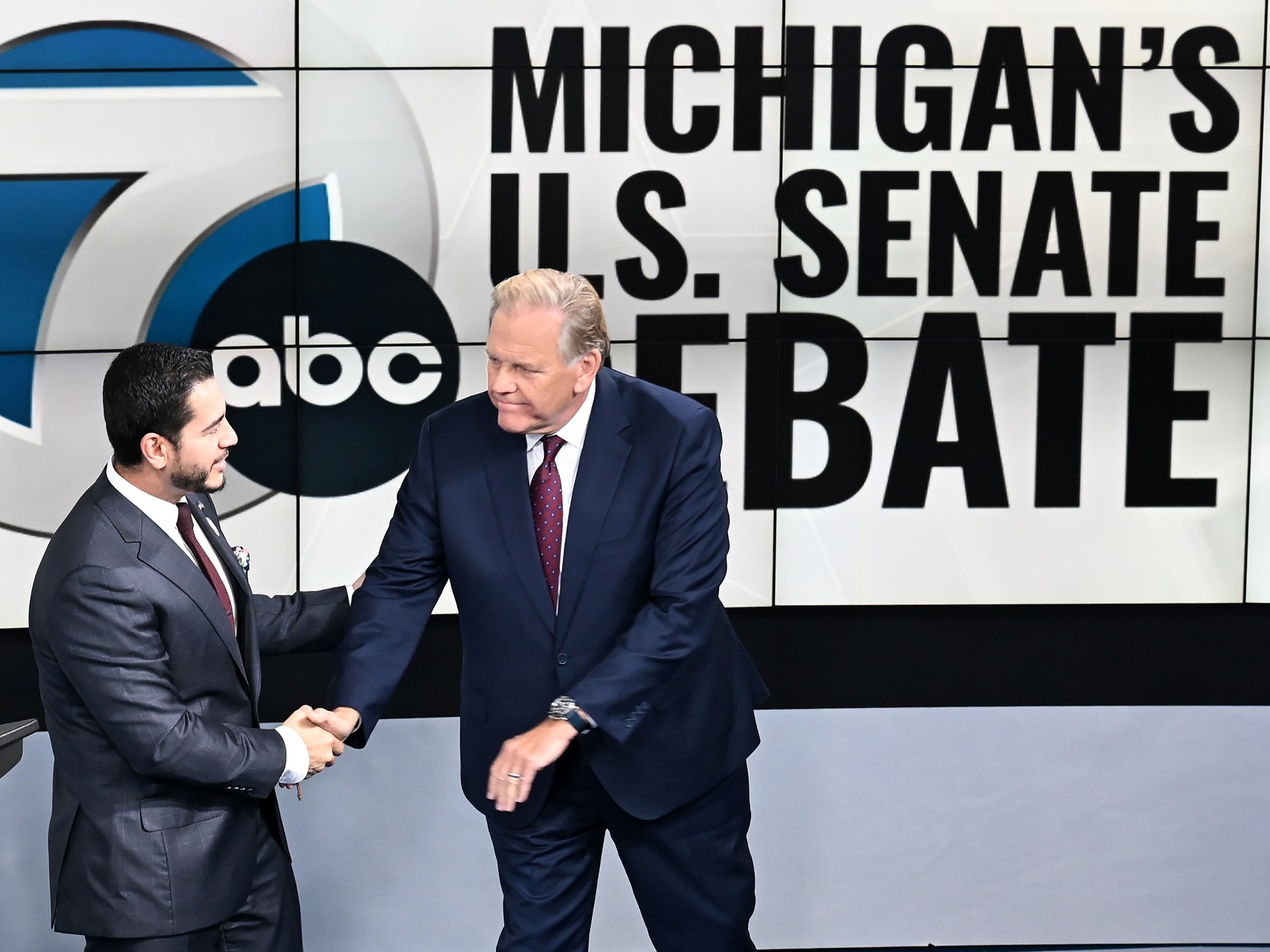
In Michigan, Democrat Abdul El-Sayed and Republican Mike Rogers engaged in a vigorous debate, touching on contentious topics such as foreign policy and domestic economic issues.
Rogers Takes a Stand on Tariffs
Rogers distanced himself from some of former President Donald Trump’s tariffs on imports, labeling them as a “mixed bag.” While he endorses revitalizing Michigan’s automobile manufacturing sector by bringing jobs back from China and Mexico, he expressed skepticism about tariffs imposed on Canadian goods.
“I have stepped back and said maybe these Canadian tariffs were not well thought through,” Rogers stated, emphasizing his commitment to prioritize Michigan’s interests.
Foreign Policy and Fuel Prices
El-Sayed accused Rogers of supporting military actions related to Iran, claiming that such policies have contributed to rising fuel prices. He highlighted the historical context of the 2015 nuclear deal while arguing that Trump’s withdrawal from it further destabilized the situation.
“The consequences of this war are that you are paying nearly $5 [per gallon] in gas,” El-Sayed declared, urging voters to consider the economic repercussions of foreign conflict.
Contentious Claims and Immigration
Rogers made a controversial assertion linking El-Sayed’s supporters to groups like Hamas, which prompted a fierce rebuttal. The debate also featured a spirited exchange on immigration policies, with Rogers defending ICE operations while El-Sayed criticized their methods.
“He supports ICE running through your streets,” El-Sayed argued, highlighting his opposition to such tactics.
Kansas Debate: Economic Concerns and Immigration Policies
In Kansas, Republican Senator Roger Marshall faced challenge from Democrat Adam Hamilton, with the discussions reflecting intense political divisions over economic and social issues.
Diesel Prices Under Scrutiny
The rising cost of diesel fuel took center stage, with Marshall attributing the spike to the ongoing conflict in Ukraine. He referenced Trump’s proposal to bring Russian diesel into the US market as part of a broader strategy.
“If this brings Russia to the bargaining table and it ends the war, then I am all for it right now,” Marshall stated, although he expressed reservations about the deal.
Conversely, Hamilton criticized Marshall’s stance, accusing him of neglecting the implications for Ukraine in the geopolitical landscape.
Divided Opinions on Immigration and Security
Both candidates also debated immigration policies, focusing on recent ICE raids. Hamilton condemned these actions, stating they instilled fear within communities and disrupted agricultural labor.
“We don’t want people terrified in our communities,” Hamilton said, highlighting the tension surrounding recent immigration enforcement practices.
U.S. Support for Israel
A discussion arose regarding U.S. arms sales to Israel, with Hamilton expressing concern over the humanitarian impact of military actions in Gaza. He called for a more ethical approach to arms support, emphasizing civilian welfare.
“They’re using our aid to buy our weapons and then dropping them on innocent civilians,” Hamilton charged, while Marshall defended Israel as a vital ally.
The outcomes of these Senate races could significantly impact the balance of power in the Senate, where Republicans currently hold a majority. With both debates showcasing contrasting ideologies and approaches to governance, voters will soon make their voices heard at the polls.
