


Mystifying Object 1998 KY26: Unraveling the Enigma of Acceleration in Space
In the vast expanse of our solar system, the small celestial body known as 1998 KY26 has captured the attention of astronomers worldwide due to its unusual behavior. Discovered by Tom Gehrels in 1998, this object is not adhering to the expected laws of gravitational dynamics—most notably, it is exhibiting unexplained acceleration. Despite various hypotheses, the scientific community continues to grapple with its origins and characteristics.
Key Characteristics of 1998 KY26
Measuring approximately 36 feet in diameter, recent observations have corrected earlier estimates that suggested it was significantly larger. 1998 KY26 is notable not only for its size but also for its rapid rotation, completing one spin every five minutes. Additionally, it possesses a high albedo, reflecting about 50% of incoming sunlight, compared to the Moon’s 12% reflectivity.
The Acceleration Phenomenon
The primary enigma surrounding 1998 KY26 is its unexpected acceleration. One avenue of exploration involves the possibility that this object behaves similarly to comets, which accelerate as they release gas and debris during sublimation. However, 1998 KY26 lacks a visible tail that typically accompanies comets, which raises questions about this theory’s applicability.
The Dark Comet Hypothesis
A category of celestial bodies known as “dark comets” has been identified, which may be undergoing sublimation without visible gas emissions. Initial theories suggested that 1998 KY26 could fall into this class, but recent temperature measurements indicate a temperature of approximately -53 degrees Fahrenheit, too warm for ice. This finding casts doubt on its classification as a comet.
Theories of Acceleration: A Closer Look
Momentum from Photons
One possibility stems from the physics of momentum transfer from photons. Although they have no mass, photons exert pressure, potentially influencing an object’s trajectory. The Yarkovsky effect, which involves the heat emitted from an object, could also contribute to its acceleration. However, scientists remain skeptical, as the forces generated by these phenomena seem insufficient to explain the level of acceleration observed in 1998 KY26.
Asteroid Dynamics
Another theory proposes that 1998 KY26 might actually be an asteroid. Its rapid rotation could lead to the ejection of material, providing additional thrust if ejected particles are expelled in a specific direction. Yet, this notion prompts further inquiry into why such ejections would occur exclusively in one direction.
Speculation on Origins
Astrophysicist Avi Loeb, known for his controversial theories regarding extraterrestrial objects, has postulated that 1998 KY26 might not be a natural entity at all. He suggests that it could be a remnant from the Soviet Union’s Phobos 1 mission, an ill-fated probe intended for Mars exploration. Though this theory is more speculation than substantiated science, it draws attention to the intriguing connections between historical space missions and contemporary astronomical phenomena.
Future Research Efforts
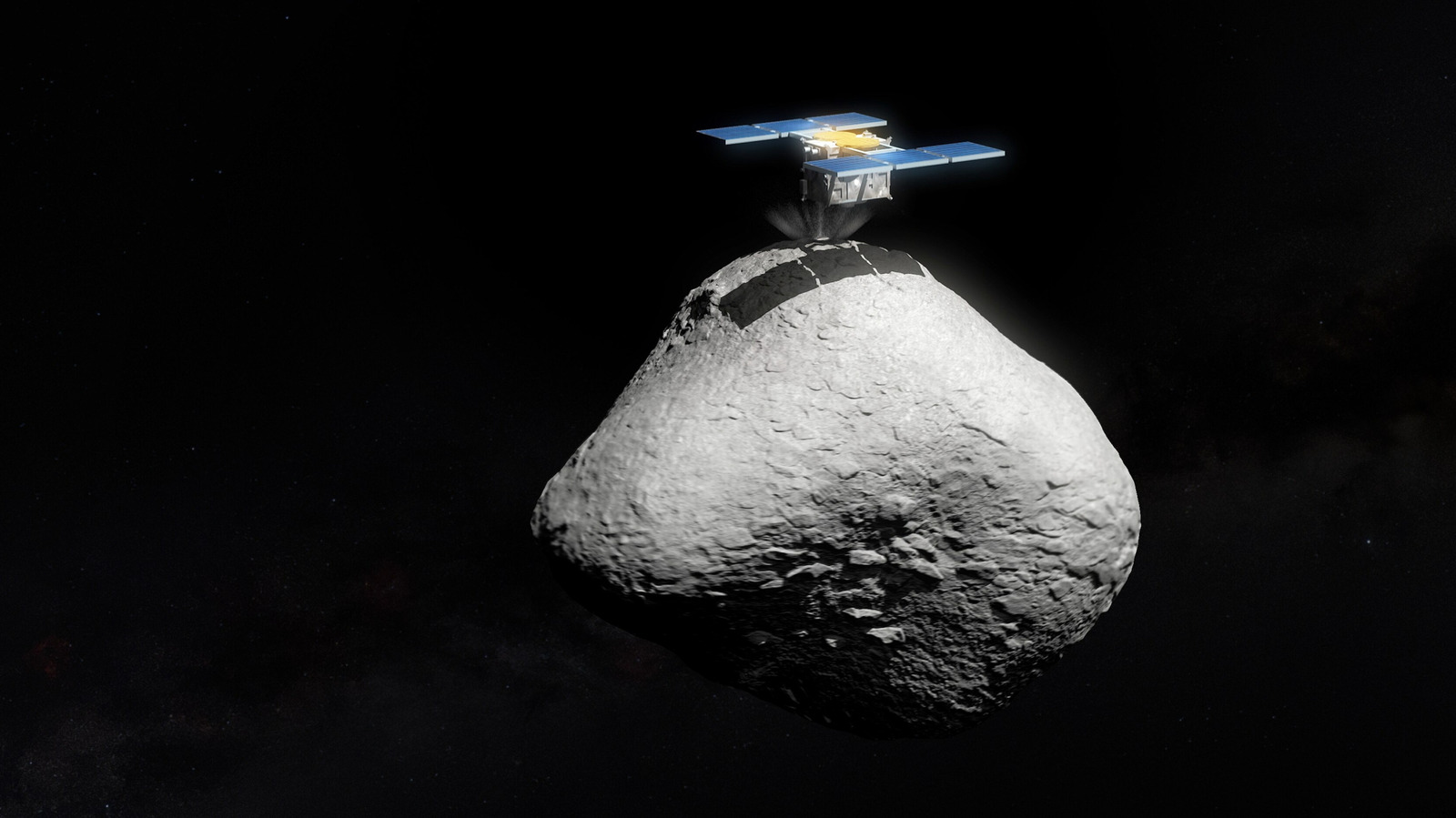
Despite the ongoing debate surrounding 1998 KY26, efforts to study this enigmatic object have not stalled. The Japan Aerospace Exploration Agency (JAXA) previously launched the Hayabusa2 mission to gather more data about 1998 KY26, though this endeavor faced challenges and was subsequently aborted due to engine complications.
Conclusion
In conclusion, 1998 KY26 stands as a puzzling figure within our solar system, prompting a flurry of theories and speculation. As researchers continue to investigate this object’s properties and behavior, it highlights the complexities of celestial dynamics and the enduring mysteries that lie beyond our planet.
