


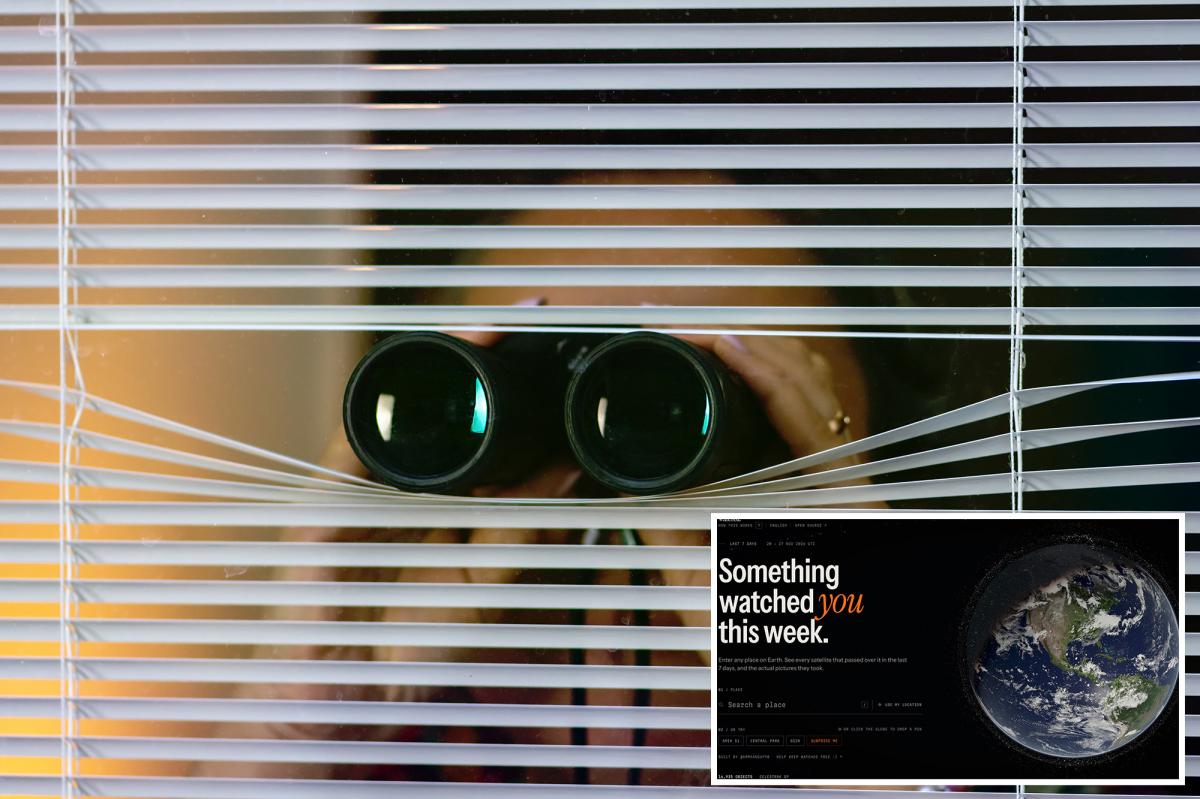
Watched: A New Digital Surveillance Tool Using Satellite Imagery
In a world where personal data is increasingly at risk, a new website, Watched, has surfaced, distilling the concept of digital surveillance into an accessible platform. This tool enables users to ascertain how many satellites have documented any location on Earth within the past week, stirring concerns about privacy and digital transparency.
Understanding Watched: How It Works
By entering a specific location—be it a residence, workplace, or notable landmark—users can quickly determine the satellite activity linked to that spot. Watched compiles data from approximately 400 satellites, including imaging, weather, radar, and crewed satellites, to provide up-to-date information. The website is free to use, does not require any login, and can perform all operations directly within the browser.
Satellite Surveillance Levels Explained
Watched categorizes its surveillance findings into four distinct levels:
- Watched: An actual image of the location is available in public archives.
- Likely watched: An always-active satellite camera has covered the area, although no image is published.
- Could have pointed here: A steerable or commercial satellite was in range and able to focus on this area.
- Passed overhead: A satellite traversed above without capturing any images.
Privacy Concerns and Data Impressions
While the information offered by Watched can sound alarming, it is vital to note that the resolution of images is limited to a maximum of 10 meters per pixel. This constraint means that while general images of locations may be available, individual people or vehicles cannot be distinctly identified. For example, when a news outlet tested its own address, they found it was recorded by satellites 225 times in the previous week, with over 2,000 images publicly available.
Public Reaction: Intrusive or Insightful?
General sentiment regarding Watched has been mixed. Some individuals expressed discomfort about the apparent intrusiveness of the service, sharing comments on social media voicing their concerns. Conversely, others found the tool fascinating, appreciating the real satellite imagery it offers.
Exploring Historical Locations
Intriguingly, not even secretive sites like Area 51 are exempt from satellite scrutiny. According to the site, this notorious military base has been captured in 2,048 images by 265 different satellites. Notably, well-known public landmarks such as Central Park have similarly been monitored regularly.
Final Thoughts: The Dual-Edged Sword of Technology
The emergence of Watched casts a spotlight on contemporary societal challenges regarding digital privacy. As an emerging tool, it provides remarkable insights while simultaneously raising pivotal questions about the boundaries of surveillance in today’s connected age. As we navigate these technological advances, remaining aware and cautious of how our surroundings can be digitally observed may be wise.
