


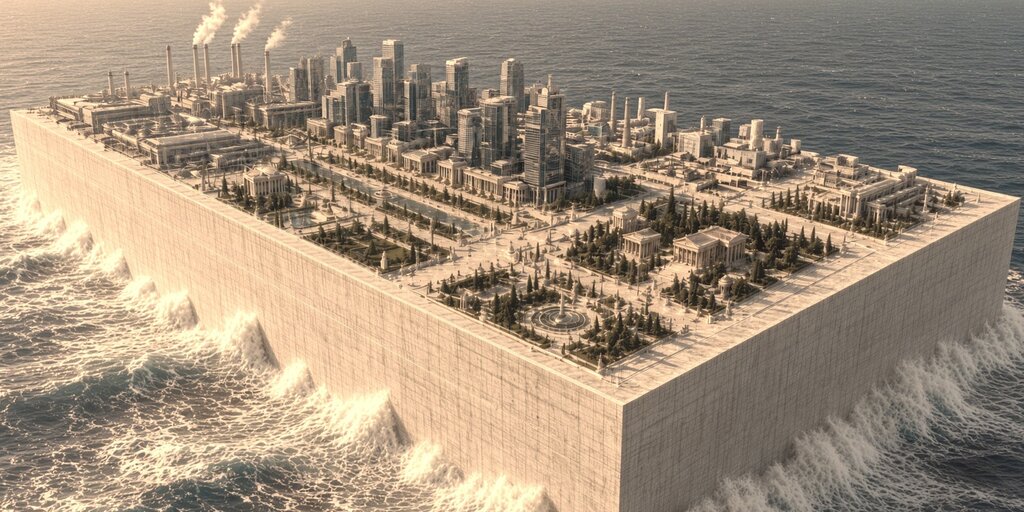
Palmer Luckey’s SLAB: An Ocean Platform for Unfettered Industry
Overview of SLAB
Palmer Luckey, the visionary behind Oculus and the defense technology entity Anduril, has unveiled his ambitious project known as SLAB. This proposed ocean platform is designed with a longevity of 1,000 years and aims to enable American industries to circumvent certain regulations imposed by state and local authorities.
While Luckey cites a substantial investment backing SLAB, having reached a valuation of $1 billion back in 2017, he has not released details surrounding its exact location, the status of its construction, or its operational timeline.
Strategic Goals and Vision
Luckey disclosed his plans for SLAB on X, emphasizing his desire to establish a platform where various industries, including metal processing and oil refining, can thrive without the constraints of existing laws. His ultimate goal is not merely to escape American regulations but to create an “industrial base cheaper than land” that would foster innovation, described by him as a “relief valve” for outdated regulations.
“Selling Oculus to Facebook in 2014 gave me money for helicopter flight lessons and developing a seastead called SLAB with a 1,000-year design life,” stated Luckey.
He believes this project could support vital sectors, including medical research, thereby generating significant advancements in treatments currently restricted in the United States.
Regulatory Considerations
The implementation of SLAB, however, introduces complex legal questions. Luckey acknowledged in discussions on X that while he aims to operate outside traditional legal boundaries, the ocean does not inherently grant immunity from U.S. jurisdiction.
For instance, when queried about the proximity SLAB could maintain to San Francisco while avoiding jurisdiction, Luckey noted a distance of “three miles,” correlating to California’s coastal boundaries. However, federal jurisdiction extends much further, encompassing a 12-nautical-mile limit on territorial waters and a wider economic zone of 200 nautical miles.
The distinction is crucial, as the legal framework applicable to SLAB would depend on whether it is anchored to the seabed or remains a floating structure.
Challenges in Medical Research
Luckey’s aspirations for SLAB include facilitating medical treatments that are currently illegal in the U.S. In a debate with journalist Joshua Topolsky regarding the efficacy of building an offshore platform, Topolsky posited that regulatory enhancements could solve existing issues without necessitating a physical relocation.
Luckey countered, expressing a preference for creating a space where “safe but currently illegal medicine” could be made available promptly rather than awaiting legislative progress. He contends that significant political and pharmaceutical interests hinder meaningful regulatory reform.
The Future of SLAB
Despite excitement surrounding the potential of SLAB, many unanswered questions remain regarding its construction and operational framework. Luckey has not provided specific details about the types of industries that would inhabit the platform or how he plans to navigate the intricacies of existing laws.
In light of previous attempts at seasteading that encountered legal challenges, including confrontations with authorities in international waters, the viability of SLAB as a fully functional, legally permissible venture remains to be seen.
