


Satya Nadella’s Insights on AGI and Its Implications for Economy and Politics
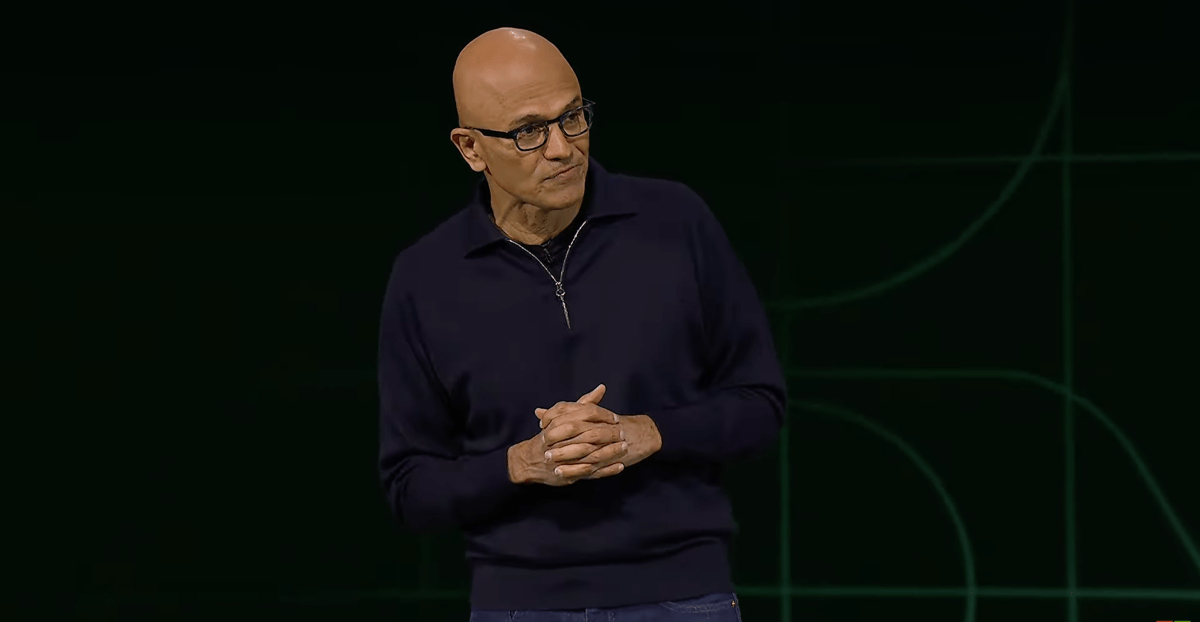
During a recent discussion following his keynote address at Microsoft Ignite in San Francisco, CEO Satya Nadella shared his perspectives on Artificial General Intelligence (AGI) and its possible ramifications for the economy and political landscape. Nadella, who identifies as “AGI-pilled,” raised essential questions about how businesses and governments will adapt to the challenges posed by advanced AI technologies.
The Nature of AGI and Corporate Ethics
Nadella expressed skepticism regarding the consciousness of advanced AI models, such as those developed by competitors like Claude. He stated, “I don’t think so,” concerning the notion that these models possess awareness. He aligns with Microsoft AI CEO Mustafa Suleyman, who has cautioned against attributing rights to AI systems, arguing that such an approach could lead to ethical pitfalls. Suleyman has previously critiqued other companies’ stances on this matter, suggesting that they have become overly focused on theoretical considerations that lack practical basis.
Concerns About Economic Stability
One of Nadella’s pressing concerns is the potential repercussions of a monopoly in AGI development. He warned about the risks tied to a singular AI entity gaining dominant market power, which could destabilize both the economy and democratic governance. “If the Marxist sort of view is that there’s only one firm, then it’s over, right? For all of us,” he noted, highlighting the dangers of centralized control in technology.
The Expansiveness of AI
Nadella emphasized that AI influences various sectors beyond the technology industry. He pointed out that an advanced model could operate effectively across healthcare, finance, and even governmental functions, leading to unpredictable shifts in power dynamics. “But remember, the model has no limits. It’ll be a healthcare company. It can be a financial services company. It can be anything if it wants to be,” he explained.
Rethinking Company Structures
The conversation also delved into the evolving nature of corporations in the era of AGI. Nadella raised critical queries about what it means to be a firm when intelligence can exhibit network effects that disrupt traditional business models. “If intelligence has network effects, what is the future of a firm?” he asked, indicating that the concept of human capital may increasingly be challenged by technological advancements.
The Future of Employment and Economy
Nadella warned that a shift in the economic landscape dominated solely by capital, without labor, could undermine democratic processes. He articulated, “No one — at least in a democracy — can even win an election if this just goes that way, if there’s only capital and there’s no labor.”
Encouraging Diverse Participation
In his concluding remarks, Nadella stressed the importance of fostering a diverse array of AI models to promote healthy competition and prevent centralization of power. “If you believe that the world, the economy needs more than one firm or two firms, then by definition, there need to be as many models as firms of some sort,” he stated, reinforcing the notion that a multi-faceted ecosystem is essential for a balanced economy.
This conversation illustrates the complex interplay between technology and society, as leaders like Nadella navigate the potential disruptions posed by AGI. As discussions continue, the focus will be on ensuring that advancements benefit a broad spectrum of society while minimizing risks associated with power imbalances.
