Close Menu
Newsward
  • World
  • US
    • Politics
  • Tech
    • Science/Tech
  • Money
    • Business and Market Watch
    • Crypto
    • Career
  • Health
    • Fitness
  • State of Women
  • Opinion
  • Sports
    • NFL
    • MLB

Subscribe to Updates

Get the latest creative news from FooBar about art, design and business.

What's Hot

'It was jaw-dropping': The shocking lessons from an infamous experiment in obedience – BBC

October 18, 2026

Zelda: Ocarina of Time remake reveals new display modes, other settings, controls

October 18, 2026

Drones Hit St. Petersburg Oil Terminals, VK Data Center, and Bridge

October 18, 2026
Newsward
  • World
  • US
    • Politics
  • Tech
    • Science/Tech
  • Money
    • Business and Market Watch
    • Crypto
    • Career
  • Health
    • Fitness
  • State of Women
  • Opinion
  • Sports
    • NFL
    • MLB
Subscribe
Newsward
Home » Scientists discover that some of the universe’s biggest explosions may have never happened at all
Science/Tech

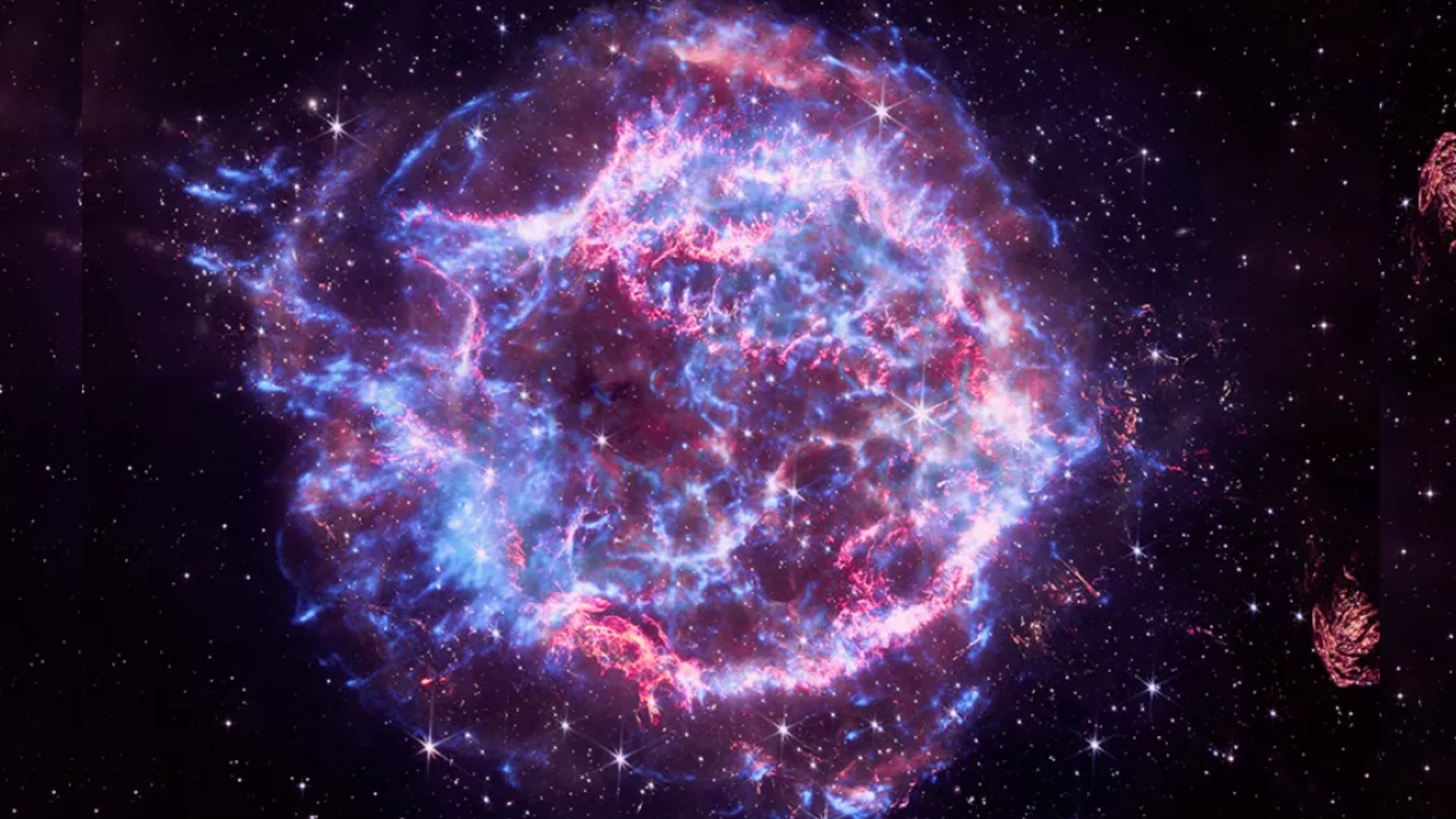
Scientists discover that some of the universe’s biggest explosions may have never happened at all

Kabil Bendress<span class="bp-verified-badge"></span>By Kabil BendressOctober 14, 2026No Comments3 Mins Read
Facebook Twitter Pinterest LinkedIn Tumblr WhatsApp VKontakte Email
Scientists discover that some of the universe's biggest explosions may
Share
Facebook Twitter LinkedIn Pinterest Email

Challenging the Existence of Hypernovas: New Insights into Stellar Explosions

Recent research has cast doubt on the existence of hypernovas, some of the universe’s most powerful stellar explosions, previously thought to outshine regular supernovas. Initially theorized to explain specific anomalous stars found both in our Milky Way and nearby dwarf galaxies, hypernovas were believed to occur from the remnants of extraordinarily massive stars.

The Shift in Understanding Supernova Mechanisms

A groundbreaking investigation led by Anmol Aggarwal from University College London (UCL) proposes that the peculiar stars once attributed to hypernova explosions may actually emerge from standard supernova events. The critical distinction lies in how the debris is ejected during these explosions. Instead of the expected uniformity, the distribution of expelled elements from these stars can be non-uniform and chaotic.

“If we look at a supernova today, the star’s materials are not spread evenly. Oxygen might predominantly fly in one direction, sulfur in another,” said Aggarwal. “New stars could arise from a mixture of these materials rather than the overall composition of the supernova.” The mathematical models developed suggested that stars with unusual chemical compositions are likely formed from regular supernovae rather than hypernovas.

Defining Supernova and Hypernova Events

To fully grasp this research, it is essential to understand the foundational concepts of supernovas and hypernovas. Supernovas occur when massive stars exhaust their nuclear fusion fuel, resulting in a core collapse that triggers a dramatic outward explosion. In contrast, hypernovas are theorized to originate from even larger and more rapidly spinning stars, resulting in explosions of significantly greater energy.

Both types of explosions disseminate heavy elements into space, contributing to the cosmic material that will eventually form new stars. These chemical signatures provide valuable insights into the evolution and familial history of these celestial bodies.

Research Methodology and Findings

The research team analyzed four stars initially believed to be products of hypernovae. Their findings indicated that three of these stars more plausibly originated from ordinary supernova explosions. Ralph Schoenrich, also from UCL, commented, “Before a star goes supernova, its layers resemble an onion, with heavier elements at its core and lighter ones further out. Our model assesses how much material from each layer would be needed to match the composition of the observed star.”

To further substantiate their conclusions, the team investigated a singular red giant star in the Milky Way’s halo with a distinctive chemical composition demonstrating an abundance of heavy elements such as silver and uranium. These elements are typically forged in extremely massive stars destined for hypernovae. While neutron star collisions can also create heavy elements, certain expected other heavy elements were missing from the observed red giant, indicating that its formation was not a result of such a collision.

Conclusion: Trees without Hypernova Roots

By utilizing a rapidly evolving galactic model, the team discovered that the distinctive star likely originated from a merging event involving a neutron star and a conventional supernova, with no need for hypernova involvement. The implications of this research challenge long-held notions about stellar death and rebirth within our universe, urging astronomers to reevaluate chemical evolution models in galaxies.

This comprehensive study was documented in two publications in the Monthly Notices of the Royal Astronomical Society, presenting a paradigm shift in understanding how stellar explosions shape the universe.

Biggest Discover explosions happened Scientists universes
Share. Facebook Twitter Pinterest LinkedIn Tumblr WhatsApp Email
Previous ArticleFortune Names Vinamilk CEO Among Asia’s 100 Most Powerful Women for the Third Consecutive Year
Next Article The No. 1 Daily Exercise to Boost Joy — and Longevity — From a Psychologist
Kabilbendress0
Kabil Bendress

Related Posts

'It was jaw-dropping': The shocking lessons from an infamous experiment in obedience – BBC

October 18, 2026

Did an eruption of poop trigger the biggest explosion of life and diversity Earth has ever seen?

October 18, 2026

VIDEO: Kilauea spews sheets of lava during 55th eruptive episode

October 17, 2026

Physicists Simulated What Might Happen When Two Wormholes Collide, And Things Got Weird : ScienceAlert

October 17, 2026

Top Articles

Bill Maher, 70, Defends Trump Comments About Bombing L.A.

October 11, 2026

Senate ratings change: Kansas and Minnesota tighten

October 13, 2026

Scientists discover genetic code that breaks rules of life

October 13, 2026

4 mental tricks to help you remember things you tend to forget

October 11, 2026

Don't Miss

Science/Tech

'It was jaw-dropping': The shocking lessons from an infamous experiment in obedience – BBC

By Kabil BendressOctober 18, 20260

Understanding Obedience: Insights from a Pivotal Experiment Introduction to Obedience The human tendency to comply…

Zelda: Ocarina of Time remake reveals new display modes, other settings, controls

October 18, 2026

Drones Hit St. Petersburg Oil Terminals, VK Data Center, and Bridge

October 18, 2026

BTC, ETH, AI Stock Perpetuals Suddenly Dump as ‘Black Monday’ Fears Surge

October 18, 2026

Subscribe to Updates

Subscribe to our newsletter and stay updated with the latest news and exclusive offers.

About Us
About Us

NEWSWARD is an independent news and media company covering the economy, politics, international affairs, and a changing world. Through articles, podcasts, video, and candid conversations, we connect major events to their impact on your life, your livelihood, and your future.

Our purpose is simple: help you understand what matters, think critically, and make informed decisions.

See what’s happening now. Know what’s next.

Don't Miss

'It was jaw-dropping': The shocking lessons from an infamous experiment in obedience – BBC

October 18, 2026

Zelda: Ocarina of Time remake reveals new display modes, other settings, controls

October 18, 2026

Drones Hit St. Petersburg Oil Terminals, VK Data Center, and Bridge

October 18, 2026
Most Viewed

Bill Maher, 70, Defends Trump Comments About Bombing L.A.

October 11, 2026

Senate ratings change: Kansas and Minnesota tighten

October 13, 2026

Scientists discover genetic code that breaks rules of life

October 13, 2026
  • About Us
  • Contact Us
  • Privacy Policy
  • Terms and Conditions
  • Disclaimer
© 2026 Newsward. All Rights Reserved.

Type above and press Enter to search. Press Esc to cancel.