


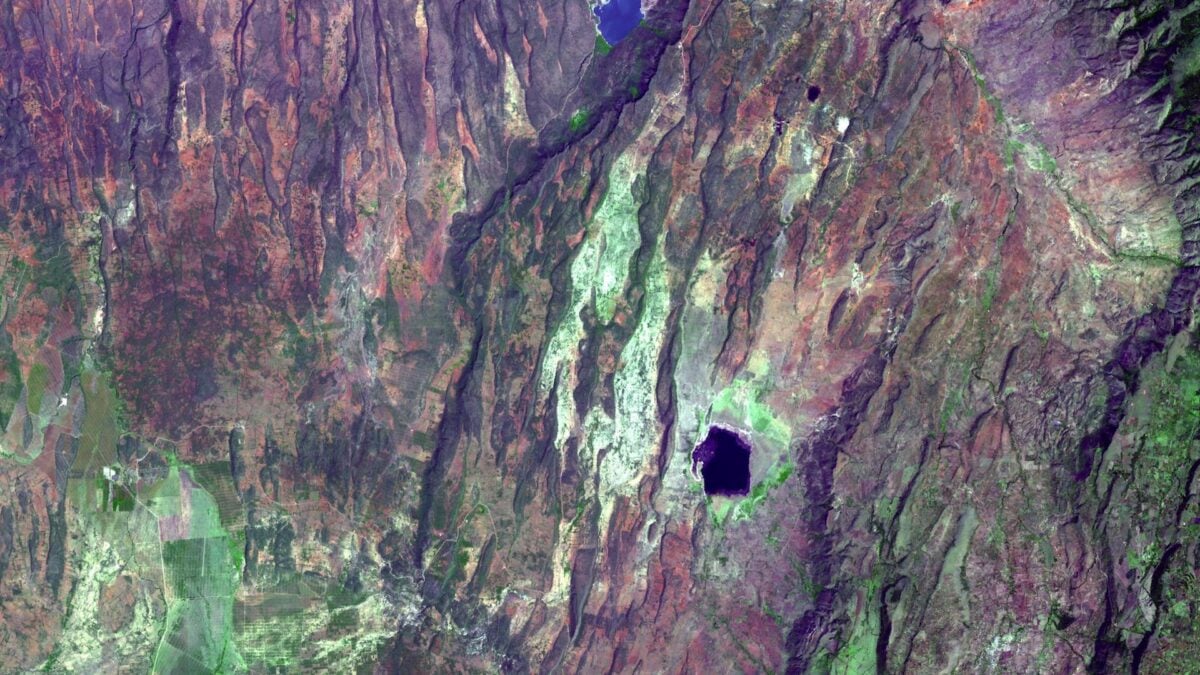
Renewed Geological Activity in Botswana: Insights into Ancient Rift Systems
In April 2017, a strong magnitude 6.5 earthquake shook central Botswana, raising questions about the seismic stability of a region long considered geologically stable. The quake’s occurrence within the Kalahari Craton—a resilient segment of the Earth’s continental crust—was unexpected, prompting further investigation into the underlying geology.
A decade later, researchers are exploring the conditions that may have sparked this seismic event. A recent study, detailed in the journal Tectonics, indicates that an ancient rift system beneath Botswana is reawakening, offering new insights into the tectonic forces that influence eastern Africa.
Understanding Rift Formation
Continental rifts emerge when tectonic forces pull Earth’s crust apart, resulting in stretching and fracturing along significant faults. This process can lead to a continental split over millions of years, creating new oceanic basins. Interestingly, not all rifts successfully progress to this stage; many stall and remain inactive.
On the contrasting side, the Kalahari Craton, a geological structure in eastern Botswana, has stood strong and stable for billions of years. Notably, the presence of rifts in such a solid region raises critical questions about tectonic dynamics.
“The question of whether rifts can extend through cratons is significant in geoscience,” stated Boniface Kgosidintsi, a researcher with the Botswana International University of Science and Technology and the lead author of the study.
Investigative Findings: The Khurutshe Fault
To delve deeper into the potential reactivation of the rift, scientists focused on the Khurutshe Fault, a major fissure near the epicenter of the 2017 earthquake. This fault, approximately 50 miles (80 kilometers) long, shows evidence of historical movement but needed further examination to determine its current activity level.
The research team employed trenching and advanced imaging techniques, including electrical resistivity tomography, to investigate the fault’s underground rock layers. Their findings indicated that the region experienced significant geological activity approximately 180 million years ago during the Jurassic Period, with recent movements indicated by displacement in younger Kalahari sand layers formed in the last 2.6 million years. This suggests that the fault’s dormancy may be ending and a new phase of activity may be beginning.
Geological Implications of Ancient Weaknesses
The study raises intriguing possibilities about the development of the rift in an unexpected geological context. Researchers propose that the rift may have taken advantage of ancient, less stable geological seams known as intra-cratonic suture zones, which formed billions of years ago when disparate blocks of crust converged.
Despite the apparent stability of the surrounding craton, these ancient weaknesses enable tectonic forces to exploit and potentially fracture the crust. “While cratons are considered robust geological structures, they do possess zones of vulnerability that can lead to the formation of new tectonic boundaries,” explained Folarin Kolawole, a structural geologist associated with the Lamont-Doherty Earth Observatory and co-author of the study. “Multiple attempts might be necessary before a rift successfully develops.”
Future of Tectonics in Southern Africa
The findings may also reshape our understanding of the tectonic architecture of southern Africa. Historically, the area south of the Okavango Rift Zone was regarded as part of a relatively stable microplate, termed the San Plate. The renewed evidences of fault activity, however, indicate that it may not function as a singular, coherent geological entity.
Some scientists speculate that over time, the San Plate may evolve into two distinct tectonic plates, adding further complexity to the intricate network of rifts currently at work in the African continent. While this does not imply an immediate formation of a new ocean, it reinforces how previously stable geological regions can begin to experience significant tectonic changes over extensive periods.
Overall, the ongoing research into the Khurutshe Fault and its implications could provide vital clues about the dynamic forces reshaping our planet, particularly in regions thought to be stable.
