


Groundbreaking Discovery of Red Blood Cells in Dinosaur Fossil
Recent research reveals potentially significant evidence of red blood cells found in a dinosaur fossil dating back 115 million years, shedding light on dinosaur biology. This discovery could transform our understanding of the preservation of biological materials in fossils.
Challenges of Fossil Preservation
Soft tissues and cells are rarely found intact in the fossil record due to the conditions required for fossilization. Although some earlier studies from the late 1990s have reported structures resembling red blood cells in ancient fossils, the authenticity of these findings has been widely debated within the scientific community.
New Evidence from the Aratasaurus Fossil
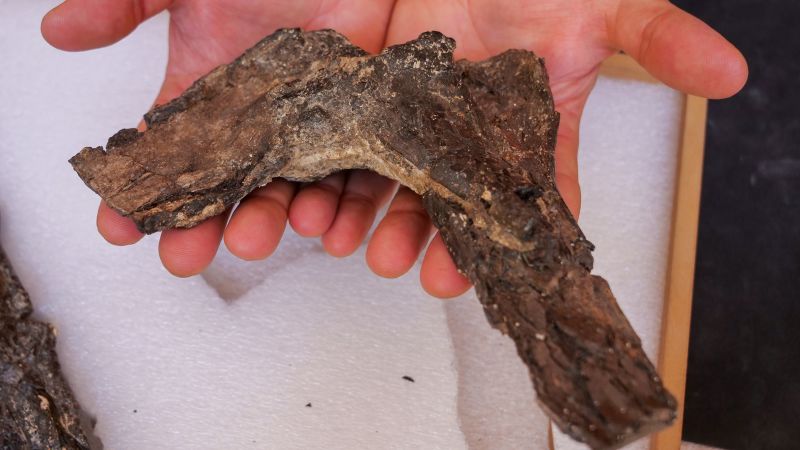
A study published in the Proceedings of the National Academy of Sciences presents new evidence supporting the existence of red blood cells in a theropod dinosaur fossil, identified as Aratasaurus museunacionali. Researchers utilized a combination of advanced microscopic imaging and chemical analysis, which unveiled not just structures resembling red blood cells but also identified the presence of heme, a key component of hemoglobin that transports oxygen in blood.
Methodology and Findings
The fossil, a hind limb bone, was unearthed in 2008 from the Romualdo Formation in Brazil, an area renowned for its excellent fossil preservation. The research team discovered oval-shaped microstructures within the bone’s vascular canals, which closely resemble red blood cells. Notably, this study marks the first instance where heme has been detected in situ within dinosaur fossil structures.
According to Kliti Grice, the lead author of the study and an organic geochemist at Curtin University in Australia, “The exciting implication is not just what we have found in this dinosaur. It is that we now have approaches that can be applied to other fossils to ask how much original biological information may still be hidden within them.”
Community Response and Future Research
Despite the promising findings, skepticism remains within the scientific community regarding the validity of the red blood cell structures. Further validation hinges on the discovery of similar evidence across additional fossil samples. Grice indicated that establishing such evidence could enhance our understanding of extinct animal physiology.
Future research endeavors will focus on analyzing fossils from various species, time periods, and environments to determine the broader implications of red blood cell preservation across different organisms.
Understanding Dinosaur Biology
The preservation of molecular and cellular structures could open new avenues for investigating how dinosaurs functioned biologically, specifically how they transported oxygen within their bodies and how their physiological functions compared to modern animals.
Implications for Historical Biology
While the prospect of recovering DNA from dinosaur fossils—often popularized in fiction such as “Jurassic Park”—remains unlikely, the study underscores the importance of examining molecular traces in ancient biological materials. As noted by Timothy Cleland from the Smithsonian Institution, “This study opens new research avenues to explore heme b preservation within bone.”
Conclusion
This groundbreaking research highlights a pivotal shift in paleontological studies, as it contests the long-held belief regarding the impossibility of preserving soft tissue remnants in fossils. As scientists continue to explore these findings, the potential to unlock secrets of prehistoric life grows, offering insights into the complex biology of dinosaurs that roamed the Earth millions of years ago.
Fossilized remains of Aratasaurus

