


The Cometary Impact Hypothesis: New Findings Challenge the Origins of Life Theory
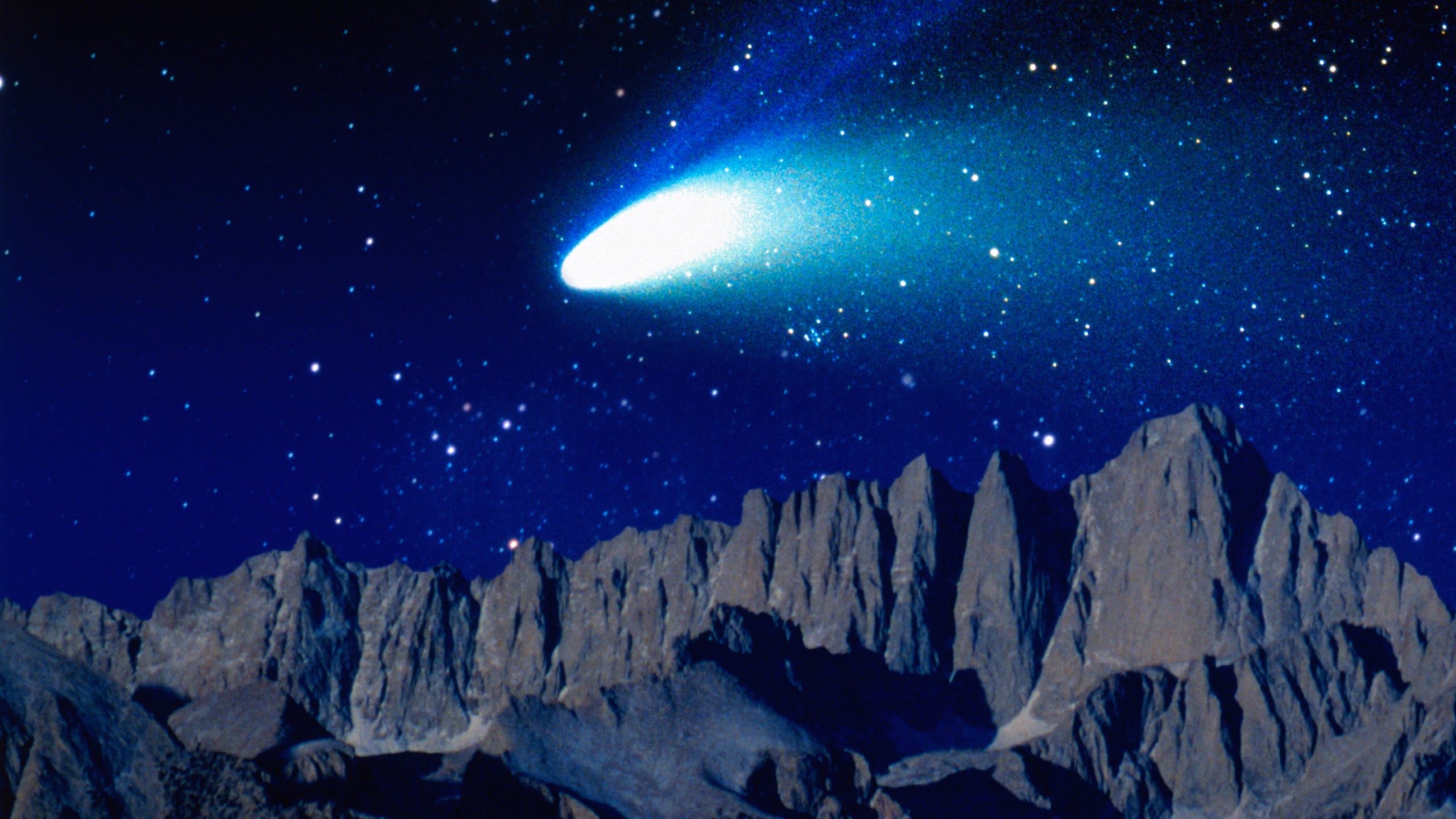
The question of where life began has fascinated scientists for generations, with some theorizing that the seeds of life on Earth were delivered via comets from outer space. This theory posits that organic molecules crucial to life arrived on our planet through celestial bodies, possibly contributing to the emergence of life.
Recent research conducted by astronomer Richard Anslow and his team at the University of Cambridge presents new insights into this long-standing hypothesis. Their study, published in Scientific Reports, used advanced simulations to explore the likelihood of comets transporting the necessary prebiotic chemicals to Earth.
Hydrogen Cyanide: A Potential Building Block of Life
The focus of the study was on hydrogen cyanide, a molecule identified as a potential precursor to various essential components of life, such as lipids, sugars, and nucleotides. While hydrogen cyanide has been detected in comets, the research indicates that the conditions required for this molecule to successfully reach Earth are exceedingly rare.
Simulations Reveal Low Probability for Successful Delivery
The research team conducted an extensive series of 100,000 simulations to mimic the chaotic period when comets bombarded the early Earth. They aimed to determine if these comets could deliver adequate amounts of hydrogen cyanide. The findings were striking:
- In approximately 54% of the simulations, no comets succeeded in delivering enough hydrogen cyanide to Earth’s surface due to disintegration during atmospheric entry, heat loss, or impacts with oceans, where the chemical would be diluted.
- Only in 46% of simulations did at least one comet successfully transport the necessary chemicals, but even these scenarios provided only a fleeting chance for prebiotic chemistry to flourish.
Challenges to the Cometary Impact Theory
Anslow remarked, “It would really have to be a one-in-a-million occurrence,” highlighting the precise conditions needed for the successful delivery of life-sustaining molecules. The study does not entirely discount the theory but suggests that it may be less feasible than previously believed.
Importantly, while the research indicates that hydrogen cyanide delivery via comets is improbable for Earth, it raises the question of whether similar mechanisms could be more plausible on other celestial bodies. For example, Mars may present a more favorable environment for such impacts, potentially providing a better fit for the cometary impact hypothesis.
The Importance of Continued Exploration
As researchers continue to explore the origins of life in the universe, these findings highlight the necessity of rigorous testing of established theories. While the role of comets in seeding life on Earth may be questionable, this does not eliminate the possibility for other planets or moons within our solar system, or beyond, where similar processes may yet prevail.
The implications of this study are profound, not only reshaping our understanding of life’s origins on Earth but also guiding future explorations in the search for extraterrestrial life.
