


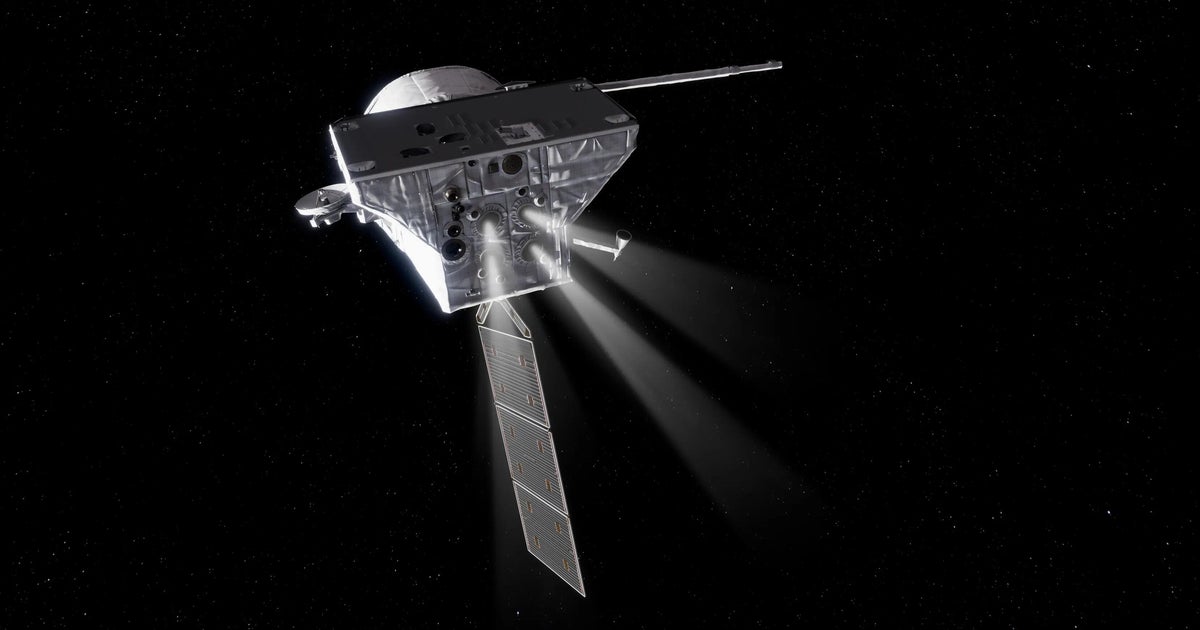
BepiColombo Successfully Enters Mercury Orbit After Technical Hurdle
On November 21, the BepiColombo spacecraft successfully entered the orbit of Mercury after an extensive eight-year journey marked by significant challenges.
Mission Overview
BepiColombo, a collaborative initiative between the European Space Agency (ESA) and the Japan Aerospace Exploration Agency (JAXA), was launched in October 2018. Its primary objective is to conduct in-depth scientific observations of Mercury, the innermost planet of our solar system.
Entering Orbit: The Critical Maneuver
The spacecraft’s insertion into Mercury’s orbit involved a critical maneuver that began with a brief communication blackout with mission control based in Darmstadt, Germany. Despite encountering a unexpected technical glitch, BepiColombo fired its axial thrusters effectively, decelerating to secure its position around Mercury.
During this maneuver, the spacecraft came as close as 400 miles to the planet’s surface. The thruster burn was designed to last approximately 37 minutes, but analysis revealed that the maneuver was interrupted and only 77% of it was completed before the spacecraft entered a safe mode, halting non-essential functions.
According to Ignacio Tanco, ESA’s BepiColombo flight operations director, “Upon finding Bepi in safe mode, it was like flipping a switch. Everybody was focused in understanding what had happened.” The root cause of the issue was identified as a software flaw related to attitude control and thruster management, and investigations into the glitch are ongoing.
Successful Confirmation and Future Maneuvers
After six hours of monitoring, ESA confirmed that BepiColombo had successfully achieved its orbital insertion around Mercury. In the coming weeks, the spacecraft will perform minor thruster burns to refine its orbit and ultimately reach the optimal position, akin to “braking a car at just the right moment.” This strategy also helps conserve fuel during the mission.
Upcoming Scientific Goals
On December 9, BepiColombo is set to deploy its two science orbiters:
- Mercury Planetary Orbiter (MPO): Operated by ESA, it will spend additional months adjusting its orbit before initiating scientific operations in April 2027. Its focus includes investigations into Mercury’s interior and surface characteristics.
- Mercury Magnetospheric Orbiter (Mio): Managed by JAXA, Mio will explore Mercury’s magnetosphere, analyze interplanetary dust, and study electric fields surrounding the planet.
Geraint Jones, lead project scientist for BepiColombo at ESA, emphasized the mission’s ambitious scientific objectives, which aim to enhance our understanding of Mercury’s complex environment.
