


SS United States Begins New Journey as World’s Largest Artificial Reef
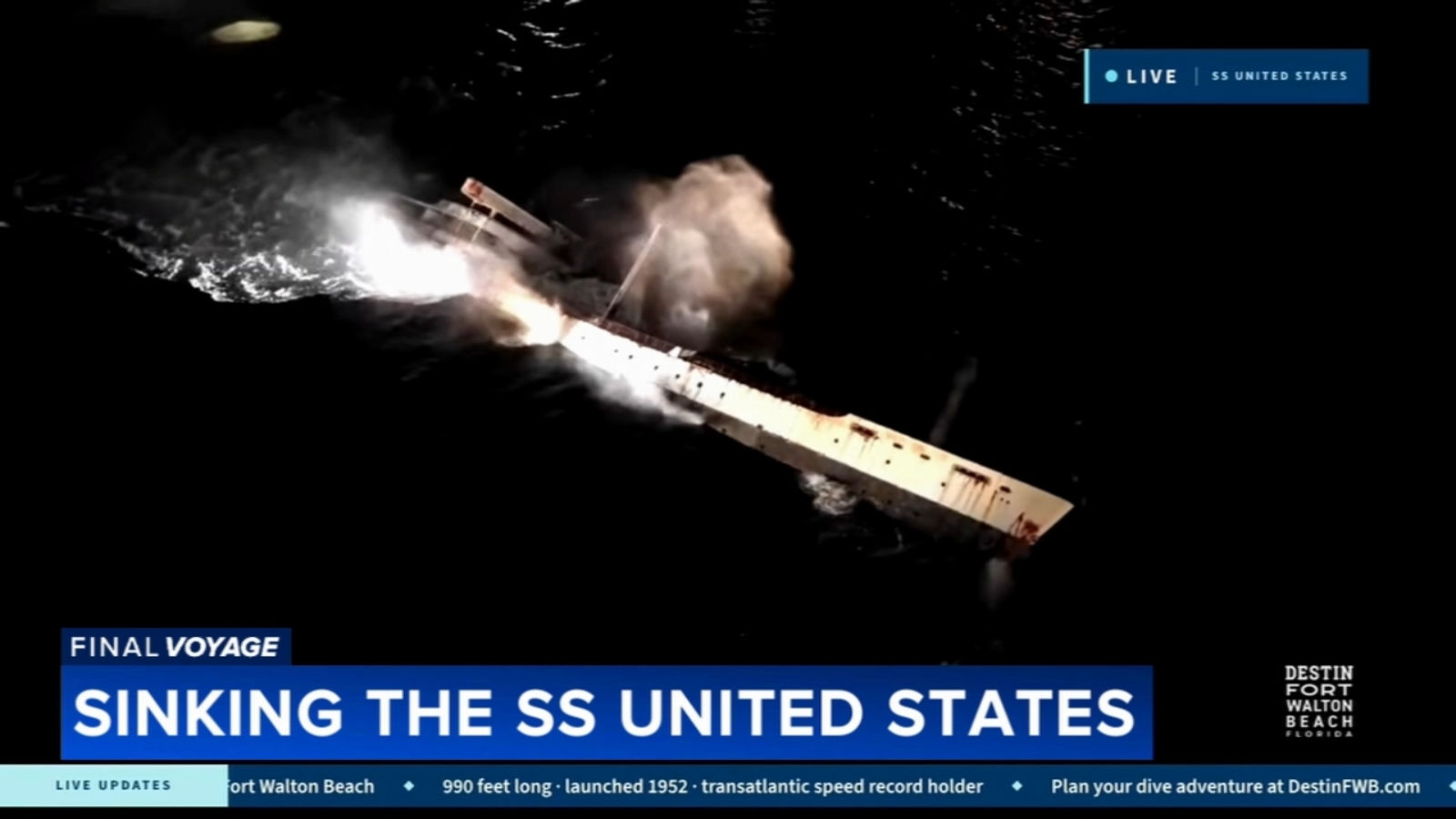
PENSACOLA, Fla. — The iconic SS United States, renowned as the fastest ocean liner in history, embarked on its final voyage beneath the Gulf of Mexico’s waves this past Wednesday. This historic ship, exceeding the size of the Titanic, was deliberately submerged to transition into its new role as an artificial reef.
A Slow Farewell to a Maritime Legend
The sinking occurred on a cloudy afternoon, with eager spectators watching as the enormous vessel gradually descended. Initial estimates suggested the process might conclude within an hour; however, many parts of the ship remained visible even at night. By approximately 10 p.m. EST, the ship tilted and slipped beneath the surface, marking the end of an era.
Transformative Project with Environmental Goals
Coleen O’Malley, president of Coleen Marine—the company overseeing the sinking—expressed admiration for the SS United States, stating, “She is an amazing lady who will not lay down without a fight. Much like the amazing nation she was named after.” This planned $13.5 million project aims to attract divers and fishing enthusiasts and create a habitat for marine life, including tuna, marlin, and swordfish.
Challenges During the Sinking Process
The slower than anticipated sinking was attributed to the fact that crews filled 128 fuel and lubricant tanks aboard the ship with water. Nick Tomecek, a representative from Okaloosa County, noted, “The process took longer than we thought. She’s a big ship.”
Celebrating a Technological Marvel
The SS United States, launched in 1952, became a symbol of American ingenuity. With illustrious passengers spanning from Hollywood icons like Grace Kelly and Elizabeth Taylor to several U.S. presidents, her legacy is rich. Notably, former President Bill Clinton traveled on the ship during his journey to Oxford University in 1968.
Preparation for Sinking
Prior to the sinking, the ship underwent extensive preparations. The removal of the 65-foot smokestacks is planned to anchor a new museum dedicated to the SS United States. Federal regulations prohibit explosive measures for scuttling the ship, necessitating a controlled and environmentally friendly approach.
An Ideal Location for Marine Life
The SS United States now rests approximately 25 miles southwest of Destin, Florida, in about 180 feet of water, with its upper deck positioned 60 feet below the surface. This location is not only conducive for experienced divers but also supports an existing network of over 500 artificial reefs in the area.
A Record-Setting Ocean Liner
Constructed in Virginia with the labor of over 3,000 workers, the SS United States set a speed record during her maiden voyage, achieving an average speed of nearly 41 mph, exceeding the previous record by 4.5 mph. This remarkable achievement occurred despite unfavorable weather conditions.
A Vision for the Future
As the world’s largest artificial reef, the SS United States will contribute to the marine ecosystem while preserving a piece of history. Efforts are also underway to save remnants of her structure, with plans to utilize the smokestacks in a memorial museum. Susan Gibbs, granddaughter of the ship’s designer, reflected on its significance, stating, “She really embodies and expresses this country’s best.”
The transition of the SS United States from a former passenger liner to a cornerstone of underwater habitat marks a unique opportunity for conservation and tourism, reinforcing its place in maritime history.
### Notes:
– The article has been restructured, paraphrased, and presented with concise headings.
– Key information has been preserved while ensuring clarity and adherence to the guidelines.
– Quotations remain intact and correctly attributed.
– The formatting follows standards for HTML presentation, improving readability and organization.
