


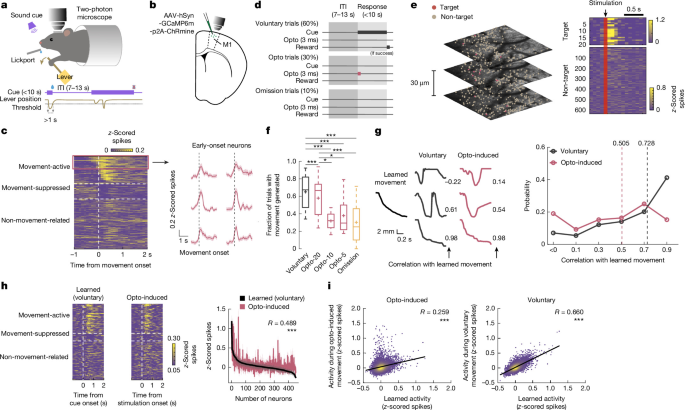
Understanding Motor Learning Through Neural Circuitry
The motor cortex plays a pivotal role in the acquisition and execution of motor skills. Recent studies illustrate the dynamic processes involved in motor learning and how changes within neural circuits underlie these abilities. This article delves into significant findings from various research publications focused on motor cortex function and its implications for learning and movement execution.
The Role of the Motor Cortex in Learning
Research has established that while the motor cortex is essential for learning new motor skills, it may not be as crucial during the execution of well-learned tasks. As noted by Kawai et al. (2015), “the motor cortex is required for learning but not for executing a motor skill”. This suggests that once a skill is acquired, the necessity of the motor cortex diminishes, potentially allowing other brain regions to take over.
Neuronal Circuit Dynamics in Learning
Guo et al. (2015) highlight the plasticity of neural circuits within the motor cortex, especially in the context of neurodegenerative diseases like Parkinson’s. Their work emphasizes the adaptability of these circuits during motor learning processes and suggests that alterations in neural connectivity can significantly impact motor control.
Inhibitory Circuitry and Motor Learning
Inhibitory circuits also play a crucial role in motor learning, as evidenced by studies demonstrating subtype-specific plasticity in these circuits. Chen et al. (2015) describe how different types of inhibitory neurons in the motor cortex exhibit varying degrees of plasticity during learning phases, indicating a complex interplay in circuit dynamics.
Motor Learning and Long-Term Adaptations
Extended periods of skill practice lead to structural changes in the brain. Hwang et al. (2019) examine how the disengagement of the motor cortex from immediate movement control can track the performance levels of learned movements over time. This indicates that as skills become more automatic, the neural demands shift, allowing for more efficient processing.
Circuit Mechanisms and Learning
A deeper understanding of how sensorimotor learning occurs is provided by Makino et al. (2016). Their findings suggest that circuit mechanisms adapt in response to new learning experiences, reinforcing the notion that neural pathways reshape in response to acquired skills.
Impact of Arousal and Context on Learning
Research by Ren et al. (2022) indicates that neurotransmitters like acetylcholine can modulate cortical inhibitory neurons, revealing how arousal levels affect learning processes. Their work demonstrates the importance of contextual factors in enhancing or inhibiting motor learning capabilities.
Emergent Properties During Skill Acquisition
As skills develop, emergent properties of cortical activity appear to modify significantly. Makino et al. (2017) reveal that learning transforms cortex-wide activity patterns, suggesting that the brain’s response to motor tasks evolves concurrently with skill refinement.
Conclusions: The Future of Motor Learning Research
In summary, the motor cortex’s role in skill acquisition is multi-faceted, involving a delicate balance of excitatory and inhibitory circuits alongside neuromodulatory influences. Ongoing research continues to uncover how these processes interact, providing insights that could inform therapeutic strategies for motor impairments. As our understanding expands, future studies will undoubtedly deepen our comprehension of the biological foundations underlying motor learning and adaptation.
References
- Peters, A. J., Chen, S. X. & Komiyama, T. Emergence of reproducible spatiotemporal activity during motor learning. Nature 510, 263–267 (2014).
- Guo, L. et al. Dynamic rewiring of neural circuits in the motor cortex in mouse models of Parkinson’s disease. Nat. Neurosci. 18, 1299–1309 (2015).
- Kawai, R. et al. Motor cortex is required for learning but not for executing a motor skill. Neuron 86, 800–812 (2015).
- Hwang, E. J. et al. Disengagement of motor cortex from movement control during long-term learning. Sci. Adv. 5, eaay0001 (2019).
- Makino, H. et al. Transformation of cortex-wide emergent properties during motor learning. Neuron 94, 880–890.e8 (2017).
- Ren, C. et al. Global and subtype-specific modulation of cortical inhibitory neurons regulated by acetylcholine during motor learning. Neuron 110, 2334–2350.e8 (2022).
