


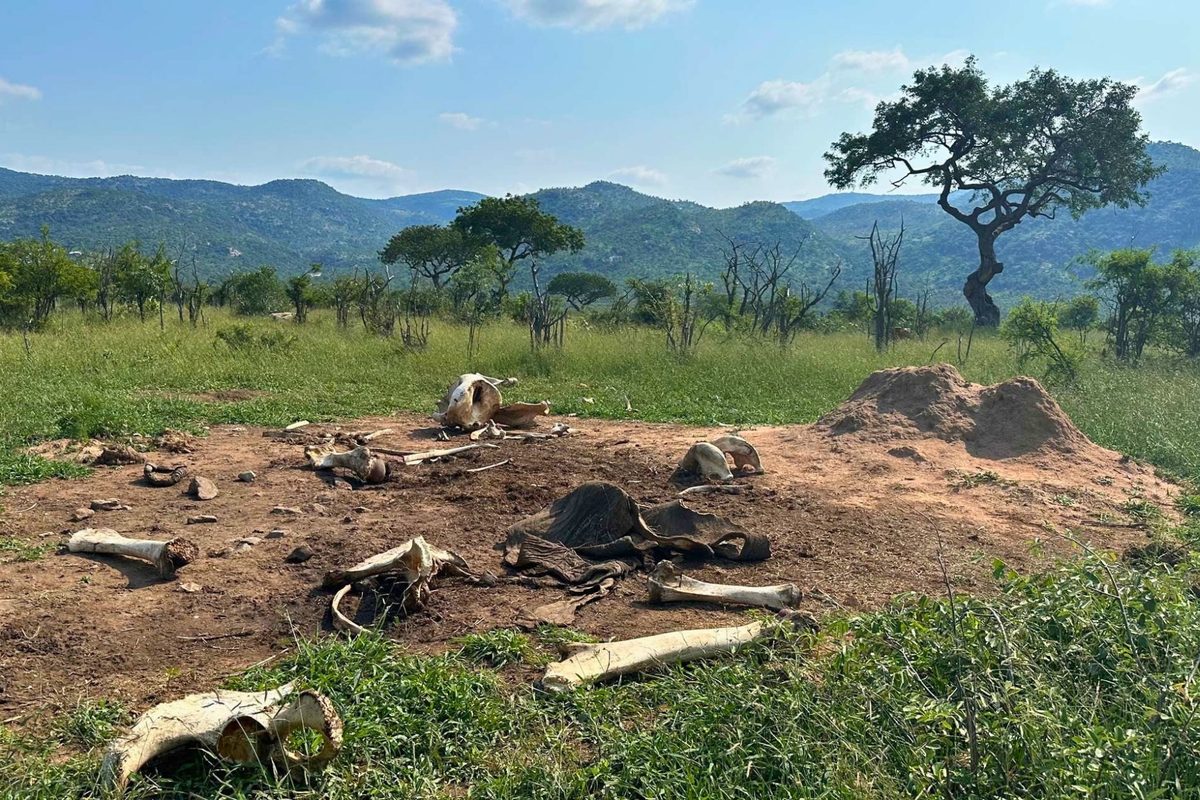
The Ecological Legacy of Elephant Carcasses
In 2009, a lone elephant named Alexander died in Kruger National Park, South Africa. This event sparked curiosity in researcher Dave Thompson, leading him to study the carcass’s impact on the surrounding ecosystem over the subsequent months. The findings contribute to understanding how elephant deaths can influence soil, plants, and animal life long after they have passed.
Elephants as Ecosystem Engineers
Elephants play a vital role in their ecosystems while alive. By consuming vegetation, uprooting trees, and dispersing seeds, they create habitats for numerous other species. The question arises: what happens to this ecosystem-enhancing role after an elephant’s death?
Research Methodology
In pursuit of this question, Thompson and his team studied various elephant carcasses at different stages of decomposition. They measured changes in soil composition, microbial activity, plant growth, and the activities of herbivores in the vicinity of the carcasses. The study’s findings were published in the Proceedings of the National Academy of Sciences.
Initial Impact of Decomposition
The immediate vicinity of fresh elephant carcasses showed dramatic changes—for instance, nitrogen levels in the soil could spike up to 3,000 times higher than normal. Tercia Midzi from Kruger National Park remarked, “That amount of ammonium was not on my bingo card.” This surge in nitrogen initially hindered plant growth, demonstrating the complex repercussions of such macroscopic events.
Microbial Dynamics
The soil microbial community also felt the influence of the decomposing carcass. While overall microbial diversity diminished, certain fast-growing bacterial species thrived, significantly increasing their metabolic activity. These changes highlight how ecosystems can adapt in unexpected ways to the death of a large herbivore.
Long-term Ecological Effects
Over time, as nutrient levels normalized, a shift occurred in plant communities. Although plant diversity remained limited, certain fast-growing, nutrient-rich grasses became prevalent. According to Deron Burkepile from UC Santa Barbara, these grasses transformed from “watery iceberg lettuce into a juicy romaine,” providing a new source of food for herbivores.
Herbivore activity around the carcass contributed further by enriching the soil with additional nutrients through their waste, a cycle that continued for at least eight years after the death of the elephant.
Conclusion
This research illustrates how the death of a single elephant can leave a profound and lasting impact on its habitat. As noted by Izak Smit from South African National Parks, “It was such a powerful reminder that what we see in nature is often shaped by legacies from the past, even when the causes of those legacies have long since disappeared from view.” Understanding these legacies can enhance conservation efforts and highlight the interconnectedness within ecosystems.
